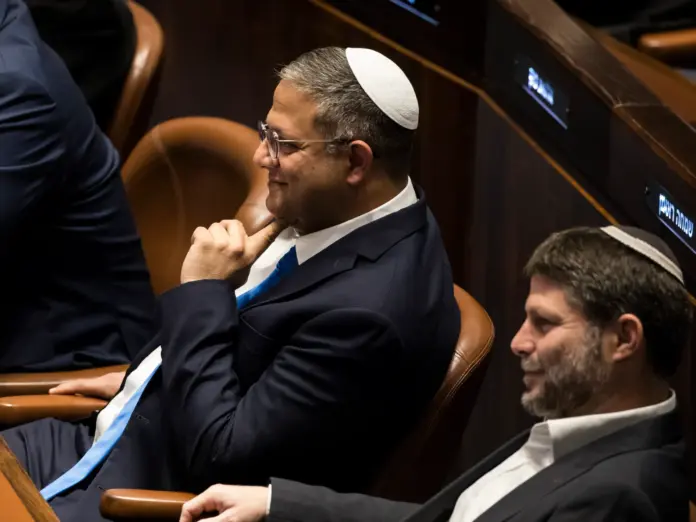
Dublin — Ireland has barred two of Israel’s most controversial cabinet members from entering the country, with Taoiseach Micheal Martin confirming Friday that National Security Minister Itamar Ben-Gvir and Finance Minister Bezalel Smotrich are now subject to a formal travel ban.
Ben-Gvir Smotrich Travel Ban — Justice Minister Jim O’Callaghan issued instructions to immigration officers to refuse entry to both men, who have become internationally polarising figures for their hardline positions on Palestinian territories and their roles in Prime Minister Benjamin Netanyahu‘s right-wing governing coalition.
The decision places Ireland alongside a growing bloc of European nations that have moved to restrict the ministers’ movements. Britain, Spain, and Slovenia have all previously enacted similar bans, while France barred Ben-Gvir from entry last month. Ireland’s action represents the latest and most diplomatically significant escalation in a pattern of European censure directed at the two men.
Recommended Reading
Ben-Gvir and Smotrich have drawn sustained international condemnation for their repeated calls to annex Palestinian territories and to expel Palestinians from Gaza. Smotrich, who himself resides on an illegal Israeli settlement in the occupied West Bank, has openly stated his ambition to eliminate the prospect of Palestinian statehood entirely, declaring he hopes to ‘kill the idea’ of a Palestinian state. Ben-Gvir, meanwhile, drew widespread outrage after sharing video footage of himself mocking detained pro-Palestinian activists from a Gaza-bound aid flotilla — individuals shown blindfolded, hands bound, and kneeling on the floor.
Both ministers entered government in 2022 after an alliance between Ben-Gvir’s party and Smotrich’s Religious Zionist Party finished third in legislative elections, giving them significant leverage within Netanyahu’s coalition. Their influence has since made them central figures in the Israeli government’s approach to the Gaza conflict and to broader questions of Palestinian self-determination.
Martin has pushed for action beyond Ireland’s borders. Speaking at a summit in Montenegro, he called on the European Union to impose sanctions against both ministers — a signal that Dublin intends to use its EU membership to amplify pressure on individuals it regards as obstacles to a peaceful resolution.
Ireland’s stance is consistent with its broader posture since the outbreak of Israel’s military campaign in Gaza. The country has been among the most outspoken critics of Israeli conduct within the EU, a position that has strained bilateral relations significantly. In 2024, Ireland formally recognised Palestinian statehood — a decision that prompted Israel to order the closure of its embassy in Dublin.
The travel ban adds a new dimension to that deteriorating relationship. Where previous tensions centred on diplomatic recognition and rhetorical condemnation, the exclusion of sitting government ministers represents a direct and concrete act of censure — one that carries symbolic weight even if its practical effect on Ben-Gvir and Smotrich’s day-to-day activities is limited.
Ben-Gvir Smotrich Travel Ban: Regional Implications
The two ministers have shown little sign of moderating their positions in response to international pressure. Their rhetoric on annexation and Palestinian displacement has, if anything, intensified since the Gaza conflict began, and their continued presence in Netanyahu’s cabinet suggests the prime minister remains dependent on their political support to maintain his governing majority.
For Ireland, the ban is both a statement of values and a calculated diplomatic signal — one directed as much at Brussels as at Jerusalem. By framing the exclusion of Ben-Gvir and Smotrich within a call for EU-wide sanctions, Martin is seeking to transform a bilateral dispute into a broader European policy question, testing whether other member states are willing to move beyond condemnation and toward coordinated action.
Whether the EU will follow Dublin’s lead remains uncertain. Sanctions against sitting ministers of a close Western ally would mark a significant departure from the bloc’s existing approach to the conflict — but Ireland’s willingness to act unilaterally may increase pressure on other governments to consider similar measures.