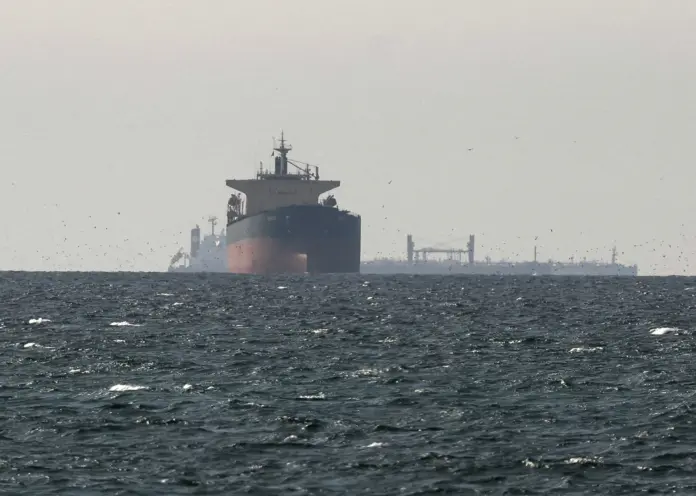
Iran Conflict Fertiliser Supply — A potential disruption to shipping through the Strait of Hormuz carries consequences far beyond the oil markets — it threatens to unravel the fragile food security of dozens of nations across the Global South, where fertiliser supply chains and household budgets leave little room for error.
The Gulf region is the world’s most concentrated source of nitrogen-based fertilisers, accounting for approximately 30 percent of global ammonia exports and 35 percent of global urea exports. Nearly all of that output moves through the Strait of Hormuz before reaching agricultural markets in South Asia, Southeast Asia, Africa, and Latin America. Natural gas — abundant and cheap across the Gulf — underpins the economics of this dominance, comprising between 70 and 80 percent of the variable cost of ammonia production worldwide.
Any sustained closure or militarisation of the strait would therefore strike at two pressure points simultaneously: the physical flow of fertiliser and the energy costs embedded in producing it. Fertiliser price increases historically follow energy price shocks within months. Food price increases, in turn, follow fertiliser cost spikes within roughly two planting seasons — a lag that offers governments little warning and even less time to respond.
Recommended Reading
The precedent from the Red Sea is instructive and sobering. When Houthi attacks on commercial shipping began in late 2023, container traffic through the Bab el-Mandeb strait collapsed almost immediately. Two years on, Red Sea traffic remains significantly below pre-2023 levels. Tankers and cargo vessels rerouting around the Cape of Good Hope face a transit time penalty of 16 to 32 additional days and absorb roughly $1 million in extra fuel and capital costs per voyage. Those costs do not disappear — they are passed along supply chains and ultimately absorbed by consumers, with the heaviest burden falling on the poorest.
In low-income countries, food accounts for an average of 44 percent of household expenditures, compared with just 16 percent in advanced economies. That asymmetry means a food price shock that registers as a manageable inconvenience in Paris or Toronto can translate into acute hunger, political instability, or sovereign debt crisis in Nairobi, Dhaka, or Colombo.
History offers repeated warnings. The Arab Spring of 2010–2011 was significantly shaped by a wheat price shock that eroded purchasing power across the Middle East and North Africa. Sri Lanka’s government collapsed after pandemic-era pressures compounded pre-existing foreign exchange and debt vulnerabilities. Pakistan experienced serious civil unrest in 2022–2023 following a balance-of-payments crisis worsened by the global energy price surge that year — itself a downstream consequence of the Ukraine war, whose economic shockwaves continue to reverberate.
Manufactured goods prices typically follow energy price changes within 12 to 18 months, meaning the full inflationary impact of any Hormuz disruption would ripple through import-dependent economies long after any immediate military confrontation subsided. The experience of Iraq after the 1990 Gulf War is a stark illustration of how durable such damage can be: Iraqi crude production did not recover to pre-war levels for a full decade, and the country paid $52.4 billion in United Nations-mandated compensation to Kuwait — a liability that was not fully discharged until 2022.
Iran Conflict Fertiliser Supply: The Energy Security Dimension
International financial institutions have tools designed for precisely these scenarios. The International Monetary Fund maintains both a Resilience and Sustainability Trust and a historical Exogenous Shocks Facility for economies blindsided by externally generated crises, and its Catastrophe Containment and Relief Trust was deployed extensively during the COVID-19 pandemic. Whether those mechanisms are sufficiently scaled or rapidly deployable to address a simultaneous fertiliser, energy, and food shock affecting dozens of countries remains an open question.
The geopolitical architecture surrounding the strait adds further complexity. The Organisation of Islamic Cooperation and the G77 bloc of developing nations have consistently called for de-escalation, acutely aware that their member states sit at the end of the supply chains most exposed to disruption. Yet the strategic calculus of the principal actors — Iran, Israel, and the United States — is driven by security imperatives that rarely assign primacy to commodity market stability.
For now, the strait remains open. But the architecture of global food production has been quietly built around its continued accessibility, and the margin for disruption is thinner than most policymakers have publicly acknowledged.