Iran Hormuz Strikes — Direct military exchanges between the United States and Iran erupted near the strategically vital Strait of Hormuz on Thursday, threatening to unravel a fragile ceasefire and sending shockwaves through global financial markets. The confrontation, centred on the port city of Bandar Abbas, marked the third time since the ceasefire’s announcement that the two adversaries have engaged each other militarily.
The Islamic Revolutionary Guard Corps announced it struck a US military base at 4:50 am local time — 0120 GMT — in direct retaliation for what it described as an American aerial assault on the outskirts of Bandar Abbas Airport. Iranian media reported the explosions caused no casualties or property damage. The IRGC Navy had earlier fired on a US tanker it accused of crossing the Strait of Hormuz with its radar switched off, a provocation that US forces answered by striking near the port.
A US official characterised Washington’s response as "measured, purely defensive and intended to maintain the ceasefire." American forces shot down four Iranian attack drones and subsequently struck a ground control station in Bandar Abbas that was preparing to launch a fifth. The US framed its strikes on May 28 as targeting military threats to its personnel and to maritime traffic through the strait.
Recommended Reading
![A ship remains anchored in the Strait of Hormuz near Larak Island, Iran [File: Majid Saeedi/Getty Images]](https://world-tension.s3.us-east-2.amazonaws.com/articles/1170/b3eb206559414110ad71e95871bcf9ba.webp)
The escalation quickly spread beyond Iranian and American forces. Kuwait’s military activated its air defences in response to what it described as an enemy attack, with warning sirens sounding across the country. Kuwaiti authorities confirmed their interception systems had engaged hostile missiles and drones, attributing the explosion sounds heard by residents to those defensive operations.
Iran’s foreign ministry spokesman Esmaeil Baghaei warned that Tehran would "take all necessary measures to defend its national sovereignty," while Ebrahim Azizi, head of the Iranian parliament’s national security committee, dismissed US pressure as insufficient to force Iran away from its core demands — the right to enrich uranium and authority over the Strait of Hormuz, alongside the lifting of sweeping American sanctions.
The military clashes unfolded against a backdrop of collapsing diplomatic momentum. Iranian state television claimed to have obtained an unofficial draft agreement that would restore commercial shipping through the strait to pre-war levels within a month, with Iran and Oman jointly managing traffic under the proposed framework. The reported deal also envisioned the US lifting its blockade of Iranian ports and withdrawing military forces from Iran’s vicinity.
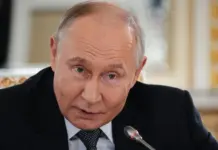
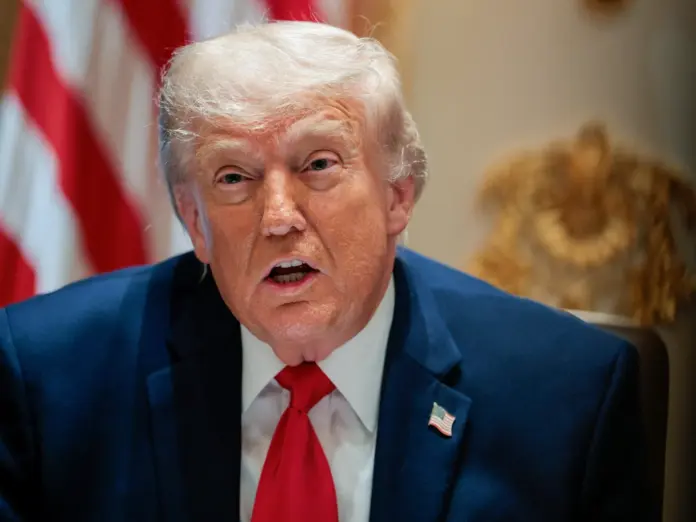
President Donald Trump flatly rejected the characterisation of any compromise at a cabinet meeting on Wednesday. "Nobody’s going to control the strait," Trump declared, describing it as international waters. He went further, threatening force against Oman — a longtime US ally and key mediator in Iran-US negotiations — if it cooperated with Tehran to manage the waterway. "Oman will behave just like everybody else or we’ll have to blow them up," Trump said. Oman has not proposed jointly overseeing the strait with Iran.
Trump also insisted the US was not discussing easing sanctions on Iran and demanded that Tehran surrender its enriched uranium stockpile — a condition Iran has repeatedly rejected. He said Washington wanted a "great deal" but would walk away from anything falling short of American interests.
Doug Bandow, a senior fellow at the Cato Institute, described the core contest as primarily economic, noting that dual blockades are currently in place in the Strait of Hormuz. Bandow characterised Trump as being in a "very difficult position" in negotiations, caught between maximalist demands and the practical costs of sustained confrontation.
Iran Hormuz Strikes: Regional Implications
Financial markets reacted sharply to the day’s events. Oil prices fell more than 5 percent on Wednesday before rebounding on escalation reports, with US crude futures gaining more than 3 percent. Stock prices declined and the dollar strengthened as investors processed the renewed hostilities.
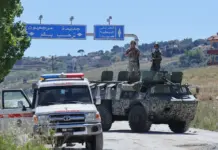
The violence was not confined to the Gulf. In southern Lebanon, the Israeli military ordered residents of parts of Tyre city and the Zaqqoq al-Mufdi area to evacuate immediately, directing them north of the Zahrani River — roughly 40 kilometres from the Israeli border — citing proximity to Hezbollah facilities. Hezbollah claimed dozens of operations against Israeli troops, tanks, engineering vehicles and military positions across southern Lebanon and northern Israel, including strikes on Merkava tanks, an Iron Dome platform, and drone attacks on positions in the Galilee.
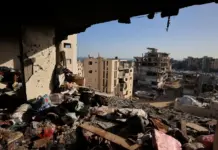
In Gaza, Israeli forces killed Mohammad Odeh, commander of Hamas’s armed wing, in a strike on Tuesday night — approximately one week after Israel eliminated his predecessor, Izz al-Din al-Haddad. Dozens of Palestinians marched through Gaza City carrying Odeh’s body.
Despite the intensity of Thursday’s exchanges, neither Washington nor Tehran declared the ceasefire formally collapsed, leaving the region suspended in a volatile ambiguity that analysts warn could tip into broader conflict with any further miscalculation.