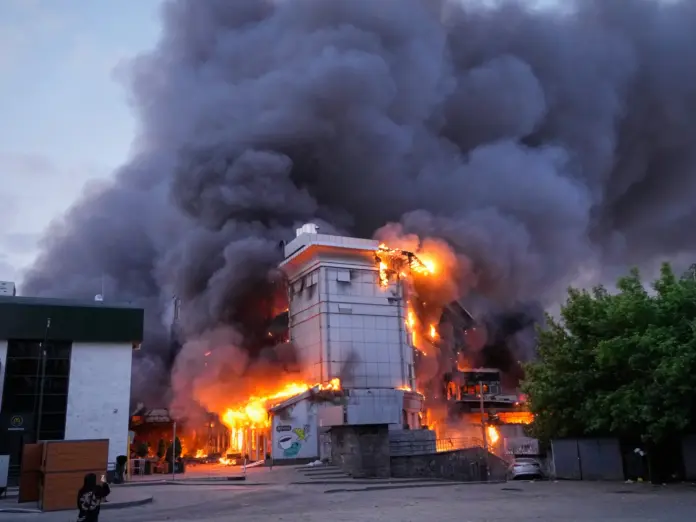
Oreshnik Hypersonic Missile — Russia launched a massive overnight assault on Kyiv and its surrounding region, deploying a nuclear-capable Oreshnik hypersonic ballistic missile alongside hundreds of drones and conventional missiles in an attack that killed at least four people and left more than 60 wounded. The strikes, which began just after 1am local time on Sunday, represented only the third use of the Oreshnik weapon in the four-year war.
Ukraine’s air force reported that Russian forces fired a combined total of 600 drones and 90 missiles — including Iskander air-launched ballistic missiles, Kinzhal hypersonic air-launched ballistic missiles, and Tsirkon cruise missiles — in one of the most complex aerial bombardments of the conflict. Air defence units destroyed or jammed 549 drones and 55 missiles, while a further 19 failed to reach their targets. Despite those interceptions, the sheer scale of the barrage overwhelmed defences in multiple locations.
Kyiv Mayor Vitali Klitschko confirmed two people were killed in the capital and 56 wounded, with damage recorded in every district of the city. Among the injured were three children. Regional head Mykola Kalashnyk reported two additional fatalities and nine wounded in the broader Kyiv region as explosions reverberated across the area throughout the night.
Recommended Reading
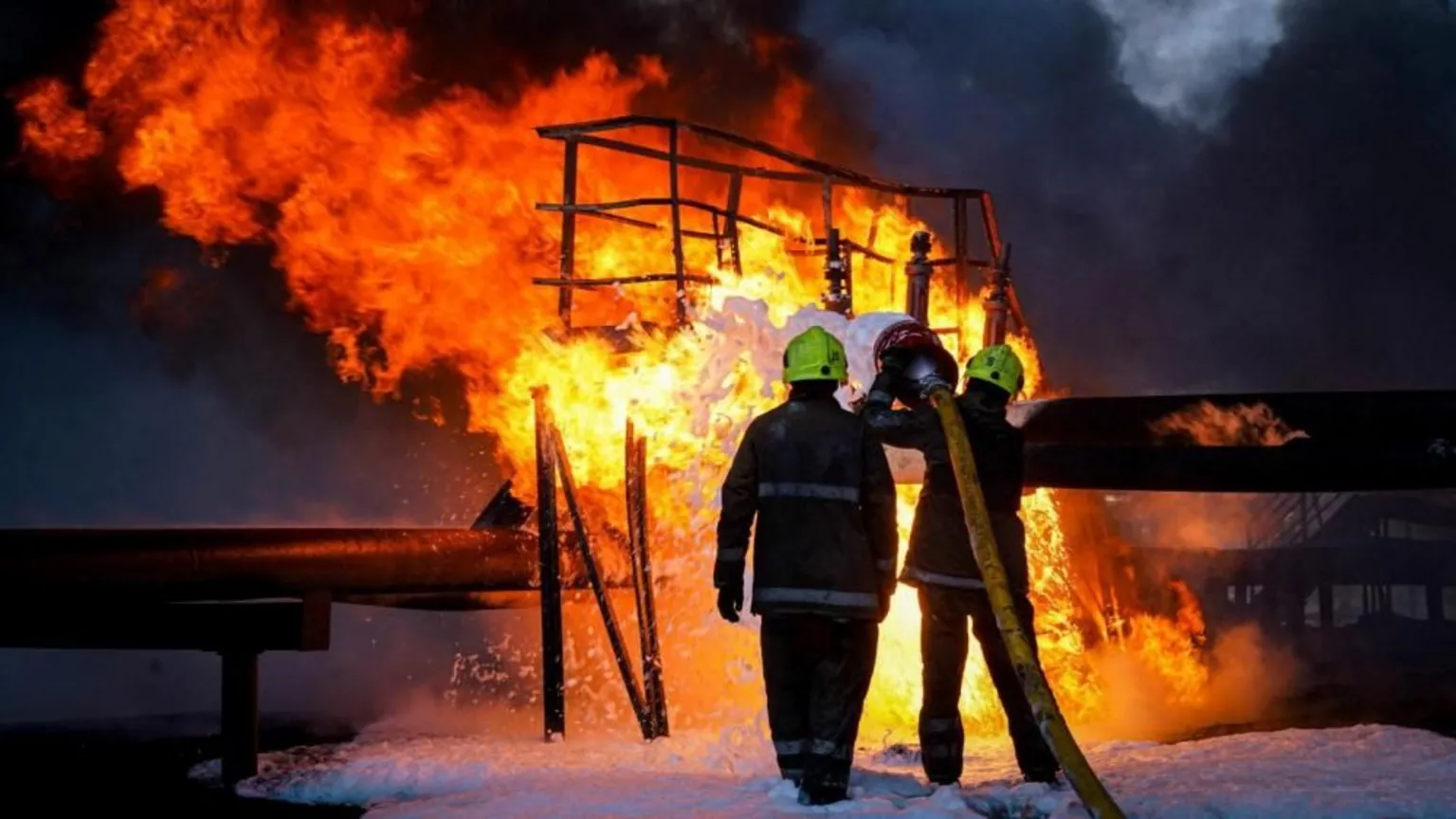
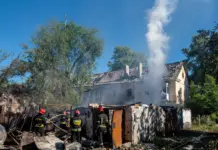
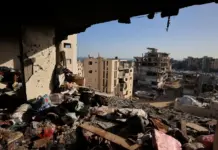
The destruction was widespread. Falling debris ignited fires in residential buildings, warehouses, a supermarket, and a shopping centre. In the Shevchenko district, a person was killed after a nine-storey residential building was struck, with flames breaking out on the upper floors. A strike near a school air raid shelter in the same district buried its entrance under rubble, trapping several people inside. Emergency services worked across multiple scenes simultaneously, treating the injured and clearing debris. A post office on Independence Square was among the civilian landmarks damaged, along with the foyer of a metro station, offices, and shops. In total, more than 40 locations sustained damage across Kyiv’s districts, including residential buildings and schools.
The Oreshnik missile, which President Vladimir Putin has claimed is impossible to intercept, travels at more than ten times the speed of sound. Its deployment for only the third time since the conflict began underscored Russia’s willingness to escalate the use of its most advanced weapons systems. Ukraine’s air force had issued a warning ahead of the attack that a hypersonic ballistic missile launch was possible — a rare pre-strike alert that reflected the gravity of the anticipated assault.
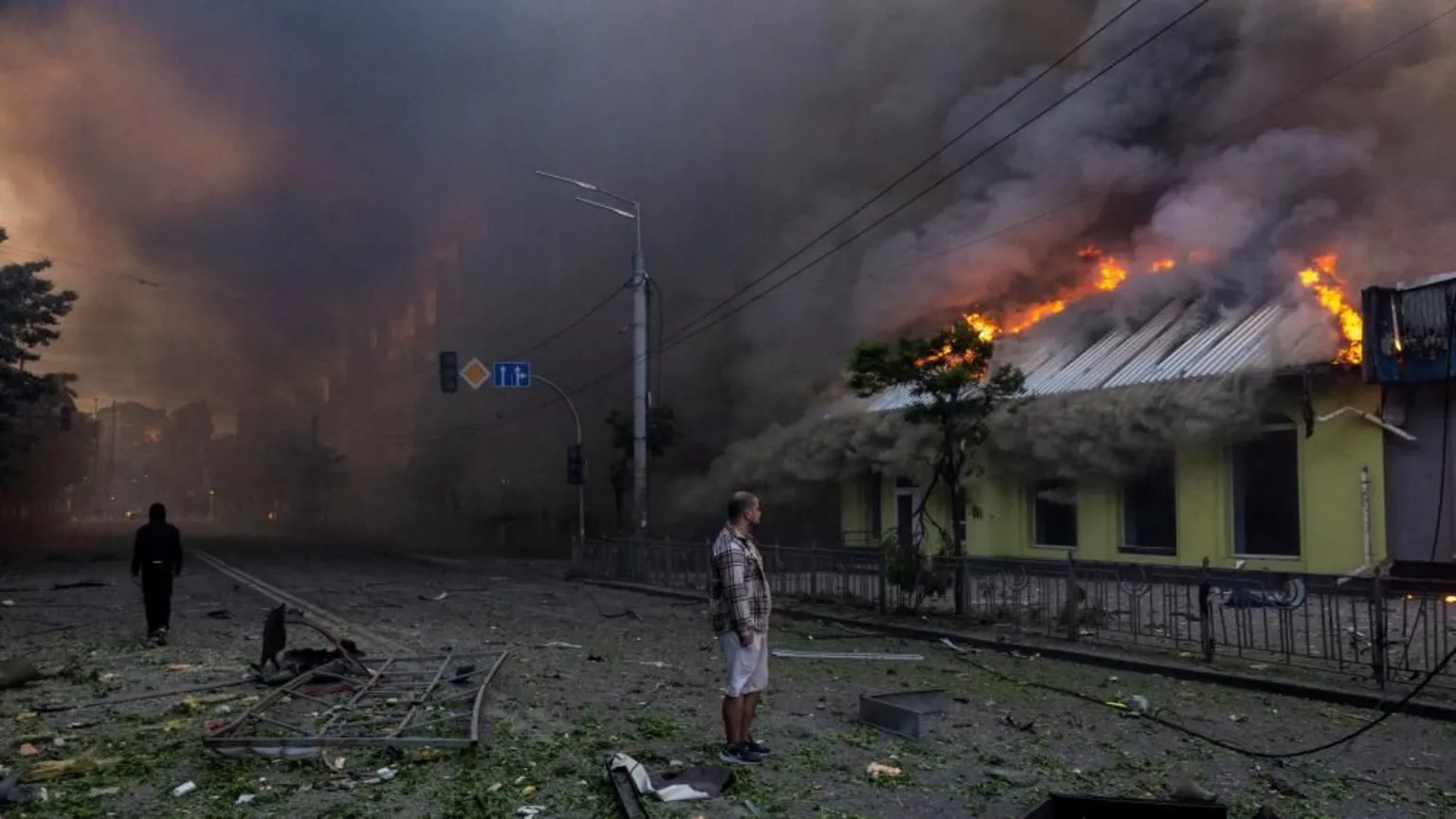
Tymur Tkachenko, head of Kyiv’s military administration, cautioned residents after the strikes that further launches remained possible, urging continued vigilance.
The assault came in direct response to Ukrainian drone strikes on Starobilsk in the Russian-occupied Luhansk region, which took place overnight Thursday into Friday. Ukraine’s general staff acknowledged carrying out an attack near Starobilsk, stating that it had targeted an elite Russian military unit in the area. Russia, however, claimed the strike hit a college dormitory, killing at least 18 people and wounding 42, with some trapped beneath debris. Putin vowed retaliation, framing Sunday’s bombardment as punishment for what Moscow characterised as an attack on civilian students.
Oreshnik Hypersonic Missile: The Wider European Impact
Ukrainian President Volodymyr Zelensky had warned in the days prior that intelligence indicated Russia was preparing a large-scale combined strike on Ukrainian territory. Sunday’s attack appeared to confirm those assessments, combining hypersonic, ballistic, and cruise missile systems with an unprecedented drone barrage in a coordinated effort to saturate air defences and maximise damage across the capital.
The strikes add to a pattern of intensifying Russian aerial campaigns targeting Kyiv’s civilian infrastructure as the conflict enters its fourth year, with both sides escalating the use of long-range precision weapons against each other’s rear areas and occupied territories.