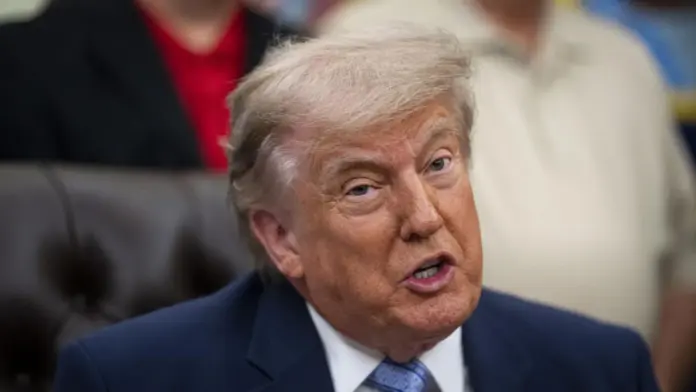
Washington / Tehran — President Donald Trump declared that Iran is moving closer to a nuclear agreement with the United States, saying he had personally reviewed a draft deal and would only sign one that delivers everything Washington demands. The statement came amid a flurry of weekend diplomacy involving multiple world leaders and a backdrop of intensifying military pressure on Tehran.
Iran Nuclear Deal — "It will absolutely prevent Iran from getting a nuclear weapon," Trump said, adding that the two sides were making meaningful progress. He simultaneously signalled his resolve, stating he would not accept any arrangement that fell short of American objectives. The president cancelled plans to attend his son Donald Jr.’s wedding in order to remain in Washington, underscoring the urgency he attached to the negotiations.
Iranian Foreign Ministry spokesman Esmaeil Baqaei confirmed that the two countries’ positions had been converging over the past week. Tehran has outlined a framework built around a 14-point memorandum of understanding, with Baqaei indicating that further rounds of talks could take place within 30 to 60 days. Notably, he said the question of nuclear weapons would not feature in any initial proposals — a position that stands in direct tension with Washington’s stated red lines.
Recommended Reading
Secretary of State Marco Rubio reinforced those red lines unambiguously. Iran must not be permitted to acquire a nuclear weapon, he said, and must surrender its stockpile of highly enriched uranium. Rubio suggested an update on the state of negotiations could come as early as this weekend, raising expectations of a near-term announcement.
The diplomatic push extended well beyond Washington and Tehran. French President Emmanuel Macron held calls with Trump and the leaders of the United Arab Emirates, Qatar, Saudi Arabia, and Jordan on Saturday to coordinate positions ahead of any potential agreement. France’s principal concern centres on the Strait of Hormuz — Paris has made a complete reopening of the waterway a priority in any final settlement. Trump was also expected to speak by phone with leaders from Saudi Arabia, Qatar, the UAE, Egypt, Turkey, and Pakistan on the same day, reflecting the breadth of regional stakeholders watching the talks closely.
The negotiations are unfolding against a backdrop of significant military pressure. A temporary ceasefire between Iran and the United States took effect in early April, but the US has maintained a naval blockade of Iranian ports since 13 April. Admiral Brad Cooper of US Central Command said American forces had redirected 100 vessels, disabled four, and allowed 26 humanitarian aid ships to pass since the blockade began — achieving, in his words, zero trade into or out of Iranian ports.
The Strait of Hormuz has become a particular flashpoint. Iran has asserted military control over the area surrounding the waterway and declared that all transit must be coordinated through the Persian Gulf Strait Authority. The United States and its Gulf allies have flatly rejected that claim, and Washington has instructed commercial shipping not to comply with Iranian directives. The strait carries a significant share of the world’s oil exports, making its status a matter of acute concern for global energy markets.
Iran Nuclear Deal: The Nuclear Dimension
Adding to the pressure, anonymous US officials briefed on Friday that the administration was actively preparing options for fresh military strikes against Iran should diplomacy fail. The disclosure appeared calibrated to reinforce Washington’s negotiating leverage at a critical juncture.
The contours of a potential deal remain contested. While both sides acknowledge movement, the gap between Trump’s insistence on a comprehensive agreement that eliminates Iran’s nuclear ambitions and Tehran’s preference for a phased approach beginning with a limited memorandum of understanding is substantial. Iran’s exclusion of the nuclear weapons question from initial proposals directly contradicts the core demand articulated by both Trump and Rubio.
The coming days are likely to prove decisive. With regional powers engaged, military options openly on the table, and a draft text already in circulation, the window for a breakthrough — or a breakdown — appears narrow. Whether the convergence Baqaei described translates into a signed agreement, or whether the unresolved gaps prove insurmountable, will shape the security architecture of the Middle East for years to come.