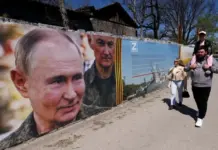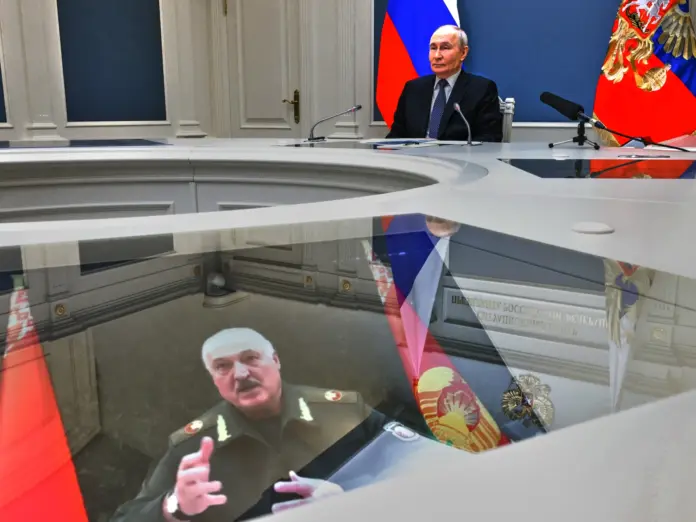
Russia-Belarus Nuclear Drills — Russian President Vladimir Putin and Belarusian President Alexander Lukashenko participated via video conference on Thursday in a landmark joint nuclear forces exercise — the first time either leader has directly taken part in such a combined training event. The three-day drills, conducted from Tuesday to Thursday, were broadcast live on the Kremlin’s official website, signalling a deliberate and public display of nuclear coordination between Moscow and Minsk.
The exercises marked the inaugural joint training of the armies of Russia and Belarus on managing both strategic and tactical nuclear forces. While senior military officials from both countries have conducted similar drills on a quarterly basis, the direct involvement of the two heads of state elevated the event to an unprecedented level of political significance.
The live-fire component of the exercise was extensive. Russia launched a Yars intercontinental ballistic missile from the Plesetsk Cosmodrome, which travelled toward a testing range in the Kamchatka region. A nuclear-powered submarine crew launched a Sineva intercontinental ballistic missile from a submerged position, while a MiG-31 aircraft deployed a Kinzhal hypersonic missile. Tu-95MS strategic bombers launched hypersonic air-launched cruise missiles, and a Zircon hypersonic missile was also fired during the drills. Belarus contributed a practical launch of a ballistic missile from an Iskander-M missile system at the Kapustin Yar testing range.
Recommended Reading
Putin described nuclear weapons as ‘an extreme and exceptional measure for ensuring the national security’ of the two allied states. Lukashenko, for his part, characterised the exercises as purely defensive, calling them ‘the only demonstration from our side.’ Both leaders sought to frame the drills as a deterrent rather than a provocation, though the timing and scale of the exercises drew immediate international attention.
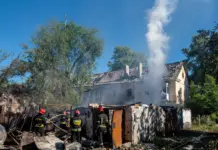
The drills unfolded against a backdrop of sharply escalating hostilities. Earlier in the week, Ukraine launched what Russian officials described as one of the largest drone barrages of the war, targeting Moscow and killing at least five people. In a separate incident, a Ukrainian drone strike on Unecha station in Russia’s Bryansk region killed three rail workers — a locomotive driver, his assistant, and the assistant’s son.
Ukraine’s Security Service (SBU) confirmed that its units and armed forces had implemented enhanced security measures across northern regions bordering Belarus. Kyiv has repeatedly accused Moscow of planning to use Belarusian territory as a staging ground for a renewed offensive against Ukraine or neighbouring NATO allies, concerns that the joint nuclear exercises did little to dispel.
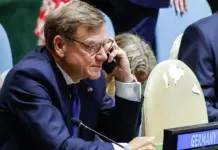
The geopolitical reverberations extended to Helsingborg, Sweden, where NATO foreign ministers gathered Thursday and Friday to discuss ensuring sustained support for Ukraine. The alliance’s meeting came at a moment of acute pressure, with member states weighing long-term military and financial commitments to Kyiv as the conflict grinds into its fourth year.
Russia-Belarus Nuclear Drills: The Nuclear Dimension
The Russia-Belarus nuclear exercise represents a significant deepening of military integration between the two countries. Moscow has stationed tactical nuclear weapons on Belarusian soil in recent years, a move that drew sharp condemnation from Western governments and NATO. Thursday’s drills formalised command-and-control coordination at the highest political level, a development analysts are likely to view as a direct message to the alliance.
The combination of live intercontinental ballistic missile launches, hypersonic weapons tests, and submarine-launched strikes demonstrated the full spectrum of Russia’s nuclear delivery capabilities — a comprehensive signal delivered at a moment when diplomatic channels between Moscow and the West remain largely frozen and battlefield violence shows no sign of abating.