Washington / Beijing — Donald Trump announced Monday that he placed a hold on a planned military strike against Iran, disclosing he had been "an hour away from making the decision to go" before pulling back at the urging of Qatar, Saudi Arabia, and the United Arab Emirates. The dramatic revelation came as Trump simultaneously claimed a significant diplomatic assurance from Chinese President Xi Jinping — that China would not supply weapons to Iran.
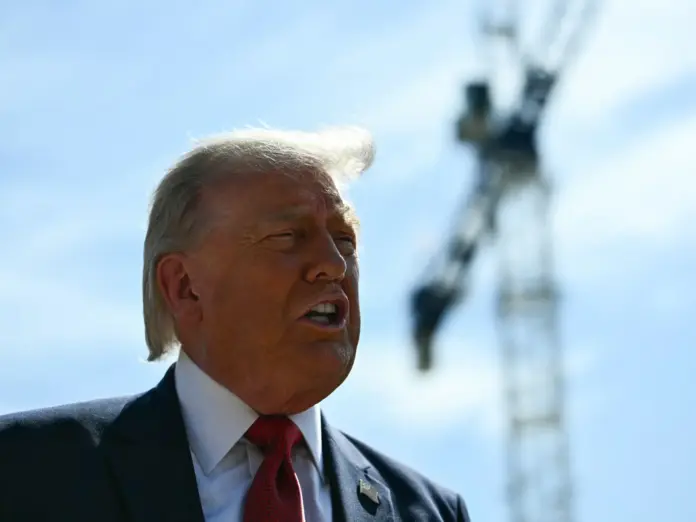
Iran Strike Paused — Trump made the remarks at a White House ballroom construction site, telling reporters he had agreed to give Tehran a matter of days to return to the negotiating table. He floated a loose timeline — "Friday, Saturday, Sunday, something, maybe early next week" — for a final decision, while warning that further military action remained firmly on the table. "We may have to give them another big hit," Trump said, having earlier posted a blunt social media warning that the "Clock is Ticking" for a ceasefire.
The announcement followed Trump’s return from a three-day visit to China, during which he said he secured several trade agreements but made no major breakthrough on the ongoing US-Israel war against Iran. Despite the lack of a headline diplomatic achievement on the conflict, Trump characterised Xi’s private assurance on weapons as significant. Xi also conveyed, according to Trump, that China wants the Strait of Hormuz to remain open — a waterway critical to global energy flows that any escalation in the Gulf could threaten.
Recommended Reading
The timing of Trump’s China trip carried its own geopolitical weight. Vladimir Putin arrived in China during the same period, underscoring Beijing’s complex positioning between Washington and Moscow. Russia has supplied weapons to Iran for years, making Xi’s reported pledge — if honoured — a meaningful shift in the diplomatic landscape surrounding Tehran’s military capacity. China has otherwise largely avoided deeper involvement in the conflict.
Before Trump’s departure for Beijing, his administration sent contradictory signals about whether the Iran war would feature prominently in his discussions with Xi, adding to the uncertainty that has characterised Washington’s approach to the conflict in recent weeks.
On the Iranian side, Tasnim News Agency — a state-affiliated outlet — reported Monday that Tehran submitted a revised 14-point peace plan aimed at ending the war. The proposal’s emergence coincides with a pause in active fighting that has persisted since April 8, creating a narrow but tangible diplomatic opening that Gulf Arab leaders appear eager to preserve.
Ebrahim Azizi, head of the Iranian parliament’s national security committee, struck a defiant tone in response to continued US pressure. Any new American attack, Azizi warned, would be met with "a decisive military response and a unified nation." The statement reflects Tehran’s effort to project resolve even as it simultaneously advances a peace framework.
Iran Strike Paused: Regional Implications
The Gulf states’ intervention in persuading Trump to delay the strike illustrates the degree to which regional powers — all deeply exposed to any escalation near the Strait of Hormuz — are working to prevent a wider conflagration. Saudi Arabia, Qatar, and the UAE each have enormous economic and security stakes in keeping the waterway open and avoiding a conflict that could destabilise energy markets and draw in outside powers.
Trump’s willingness to pause, even briefly, suggests the administration is weighing military options against the diplomatic momentum generated by Iran’s revised peace plan and the Gulf states’ appeals. Whether that window holds through the coming days remains the central question. Trump himself left little ambiguity about the stakes, framing the next few days as decisive for determining whether diplomacy or force will define the next phase of the conflict.