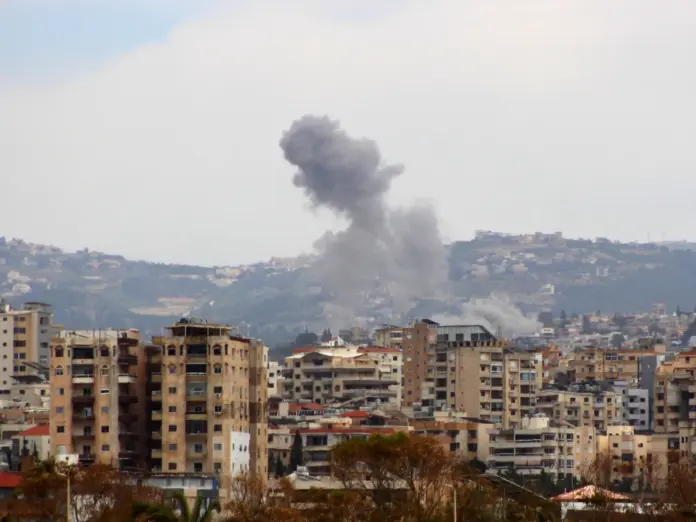
Israel Lebanon Strikes — Israeli military operations across southern Lebanon killed at least 22 people in a single 24-hour period on Tuesday, according to Lebanon’s Health Ministry, bringing the country’s cumulative death toll to 3,042 since hostilities resumed on March 2. The surge in casualties — up from 3,020 the previous day — came as the conflict entered its fourth month and as the Israeli military issued forced displacement warnings to residents of a dozen towns and villages in the south.
The deadliest single strike levelled a residential home in the al-Mahfara neighbourhood of Kfar Sir, a town situated north of the Litani River. Four people were killed and two others injured when an Israeli warplane destroyed the building. The strike underscored the geographic expansion of Israeli operations beyond the river, a boundary that has carried strategic and symbolic weight throughout the conflict.
Separate drone strikes compounded the toll. In the municipality of Harouf, near the municipal building, a drone targeted a vehicle and killed one person, also wounding a local council member. A man who had been preparing to distribute bread to residents of the town was present when the strike occurred. In the municipality of Froun, near Bint Jbeil, another Israeli drone struck a motorcycle, killing one person. Lebanon’s National News Agency reported at least six deaths from dawn strikes alone.
Recommended Reading
Among the most alarming incidents reported Tuesday was the use of incendiary white phosphorus bombs by Israeli forces against farmers harvesting watermelons at the al-Mansouri junction in the Tyre district. Three such munitions were deployed. No injuries were reported from the attack, but the use of phosphorus in agricultural areas drew immediate attention given the substance’s capacity to cause severe burns and its contested status under international humanitarian law when deployed in civilian areas.
Israeli forces also established a checkpoint at the Mari-Halta junction, where three Lebanese nationals were detained and their mobile phones confiscated. The checkpoint operation reflected a pattern of ground-level control measures accompanying the aerial campaign.
The Israeli military’s displacement warnings on Tuesday named 12 specific towns and villages: Toura, Nabatieh At-Tahta, Habbouch, Bazouriyeh, Tayr Debba, Kfar Houneh, Ain Qana, Libbaya, Jebchit, Chehabiyeh, Burj Shemali, and Houmin al-Fawqa. The warnings, characterised as forced displacement threats, added to the already severe humanitarian pressure on communities throughout the south. In Tyre, large numbers of residents were reported to be seeking shelter as destruction across the district mounted.
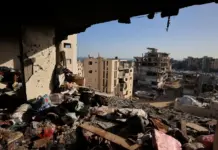
The scale of displacement and physical devastation was visible across the region. Reporting from Tyre on Tuesday described widespread destruction and ongoing population movement, with communities struggling to sustain basic functions amid the relentless pace of strikes.
Israel Lebanon Strikes: Regional Implications
The violence is unfolding against the backdrop of a 45-day ceasefire extension that was in place at the time of the attacks — an arrangement whose terms appear to have done little to halt Israeli military activity on the ground. Fighting between Israel and Hezbollah had originally resumed on March 2 following a prior cessation of hostilities, and the conflict has now stretched across nearly four months with no clear diplomatic resolution in sight.
The Lebanese Health Ministry’s toll of 3,042 dead represents a significant accumulation of casualties across a conflict that has struck civilian infrastructure, agricultural workers, municipal officials, and residential neighbourhoods alike. International concern over the humanitarian trajectory of the war has grown steadily, though concrete external pressure to halt the fighting has yet to produce a durable outcome.