Sudan Blue Nile Offensive — Sudan’s national army announced Friday the recapture of Khor Hassan, a strategically significant town in southeastern Blue Nile state, dealing a notable blow to the Rapid Support Forces (RSF) and their allied militia in one of the war’s most contested border regions.
Military commanders said the operation inflicted heavy losses on RSF fighters in both personnel and equipment. The paramilitary force had held Khor Hassan since March, when it seized the town with the support of the Sudan People’s Liberation Movement-North (SPLM-N), a rebel faction that has aligned itself with the RSF in the region.
The recapture carries consequences well beyond the town itself. Blue Nile state borders Ethiopia and serves as a gateway to central Sudan, making it a pivotal theatre in the broader civil war. The nearby town of Kurmuk, situated close to the Ethiopian frontier, functions as a vital corridor for cross-border trade and provides access to the strategically important Al-Roseires Dam. The RSF has been using Kurmuk as a launchpad to expand its territorial foothold in the area.
Recommended Reading
Control of Blue Nile state also carries significant economic weight. The region holds large deposits of natural resources, including gold, and its border location has allowed the RSF to maintain supply lines into Sudan from across the frontier — a logistical advantage the army’s latest offensive seeks to disrupt.
The Sudanese government has repeatedly accused Ethiopia and the United Arab Emirates of providing material support to the RSF, allegations both countries deny. The RSF’s presence along the Ethiopian border has sharpened those accusations, with Khartoum arguing that the porous frontier enables resupply operations that have prolonged the conflict.
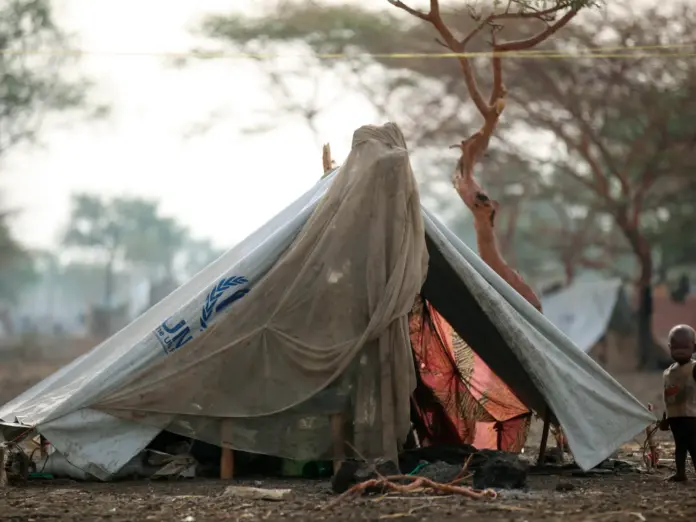
The war erupted in April 2023 from a power struggle between Abdel Fattah al-Burhan, who commands the national army, and Mohamed Hamdan Dagalo, widely known as Hemedti, who leads the RSF. What began as a confrontation between two former allies has since metastasised into one of the world’s most devastating humanitarian catastrophes. More than 150,000 people have been killed, and upwards of 12 million have been forced from their homes — a displacement crisis that ranks among the largest on the planet.
After more than three years of fighting, neither side has achieved a decisive military advantage across Sudan’s vast territory. The army has made incremental gains in certain regions while the RSF continues to hold large swaths of Darfur and parts of Khartoum. Blue Nile state has emerged as a secondary but increasingly important front, with both sides recognising its value as a resource corridor and strategic buffer along the Ethiopian border.
Sudan Blue Nile Offensive: The Broader African Context
The recapture of Khor Hassan represents one of the army’s more significant recent territorial gains in the southeast, though analysts caution that the RSF has demonstrated a capacity to absorb setbacks and regroup. The SPLM-N’s involvement in the region adds a further layer of complexity, reflecting how local armed factions have been drawn into the national conflict, often shifting allegiances based on territorial and resource interests.
With no ceasefire negotiations currently active and international diplomatic efforts largely stalled, the battle for Blue Nile state is likely to intensify. Control of its border crossings, dam infrastructure, and mineral wealth makes it a prize neither the army nor the RSF is prepared to concede.