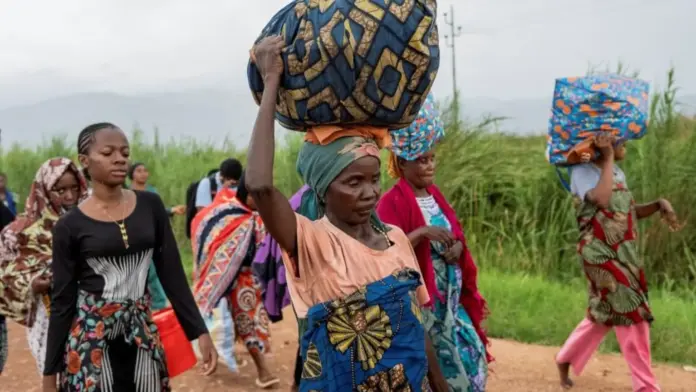
Uvira, eastern Democratic Republic of Congo — At least 53 civilians were executed during the occupation of Uvira by M23 rebels and Rwandan forces, Human Rights Watch has found, with investigators uncovering mass graves and testimony describing systematic atrocities against a population that had already been driven from its homes by the tens of thousands.
M23 Uvira Atrocities — The victims included 46 men, one woman, and six children. Investigators visited three mass graves in the lakeside city — one of them located at a site previously controlled by United Nations peacekeepers — and conducted interviews with 130 residents to piece together what happened during the occupation. Among the documented cases was that of a 12-year-old boy who was shot by M23 fighters and then stabbed in the leg with a bayonet.
Uvira, situated on the shores of Lake Tanganyika and considered the gateway to Burundi — a key military ally of DR Congo — fell to M23 in December. The city’s strategic significance made its capture a major escalation in a conflict that has destabilised eastern Congo for years. M23 withdrew in January following intense diplomatic pressure, but the human cost of the occupation is only now becoming fully visible.
Recommended Reading
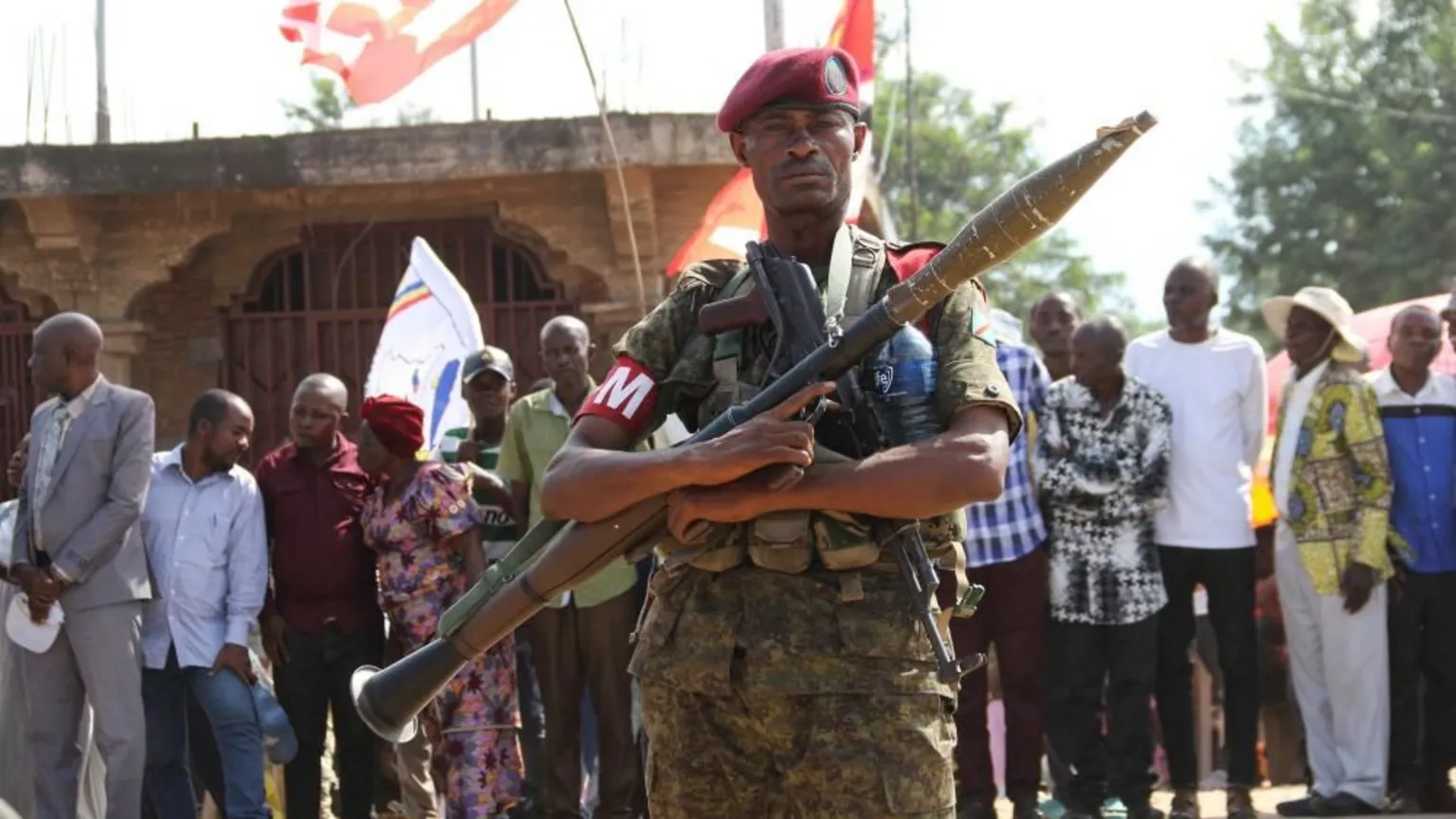
Human Rights Watch also documented eight cases of rape allegedly committed by rebels and Rwandan soldiers during the weeks of occupation. The broader catalogue of alleged abuses includes abductions, enforced disappearances, and the forced recruitment of civilians. Children were among those targeted and shot after being accused by rebels of fighting for the government.
In April, Human Rights Watch wrote to both the Rwandan government and M23 leadership requesting responses to the allegations. Neither replied.
Rwanda has consistently denied providing support to M23 or deploying its own soldiers into eastern Congo. That position, however, is directly contradicted by findings from UN experts, who have accused Kigali of exercising de facto control over M23’s operations. The same experts found that M23 recruits were trained under Rwandan supervision and equipped with high-tech Rwandan weaponry. The United States and European powers have also formally accused Rwanda of backing the rebel offensive.
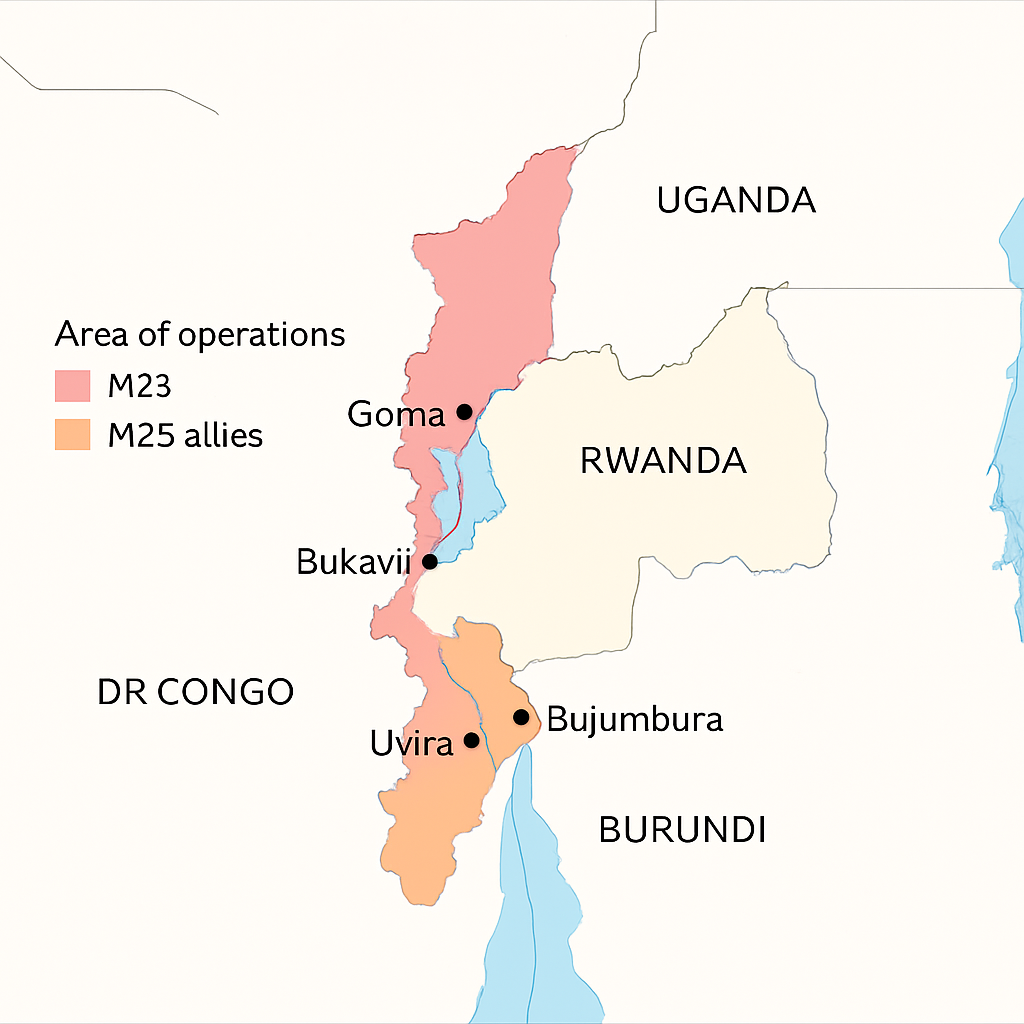
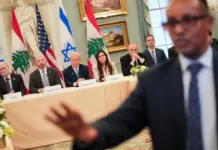
The Uvira findings arrive against the backdrop of a fragile diplomatic process. US President Donald Trump brokered a peace agreement between Congolese President Felix Tshisekedi and Rwandan President Paul Kagame, aimed at ending the fighting in a region rich in minerals and long contested by armed groups. Whether that deal can hold — and whether accountability for documented atrocities will follow — remains deeply uncertain.
M23 Uvira Atrocities: The Broader African Context
The scale of suffering extends far beyond Uvira. In South Kivu province alone, nearly two million people have been displaced by persistent violence. Across North and South Kivu, the United Nations Children’s Fund recorded more than 35,000 cases of sexual violence against children in just the first nine months of 2025, the vast majority concentrated in those two provinces.
The pattern documented in Uvira — mass civilian killings, sexual violence, the targeting of children — reflects a broader collapse of protection for non-combatants in eastern Congo. Human rights investigators warn that without meaningful accountability mechanisms, the peace deal risks becoming a political arrangement that leaves victims without justice and armed actors without consequence.
M23 first emerged as a significant force in eastern Congo years ago, drawing on longstanding ethnic and political tensions in the region. Its resurgence, backed by what UN experts describe as substantial Rwandan military and logistical support, has transformed the conflict into one with direct state-level dimensions — complicating both diplomatic resolution and any future prosecution of those responsible for crimes against civilians.