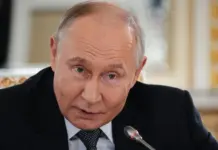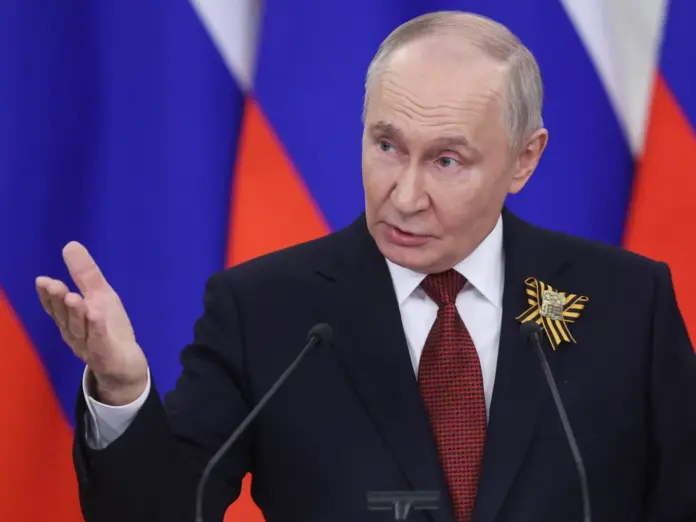
MOSCOW — Russian President Vladimir Putin declared Sunday that the war in Ukraine is drawing to a close and expressed willingness to hold direct negotiations with Ukrainian President Volodymyr Zelenskyy, either in Moscow or on neutral ground — a significant rhetorical shift that nonetheless came laden with conditions that Kyiv has consistently rejected.
Putin Direct Talks Zelenskyy — Putin made the remarks in the aftermath of Victory Day commemorations in Moscow, the annual celebration marking the Soviet Union’s defeat of Nazi Germany in 1945. The timing was deliberate: framing Russia’s position from a platform steeped in national pride and historical resonance.
Despite the conciliatory language, Putin made clear he would only sit across from Zelenskyy once the terms of a peace agreement had already been settled — a sequencing that effectively reduces any proposed summit to a ceremonial signing rather than a genuine negotiation. He also reiterated longstanding Russian demands, including opposition to Ukraine’s membership in NATO and insistence on full control over the eastern Donbas region, a condition Kyiv has flatly refused.
Recommended Reading
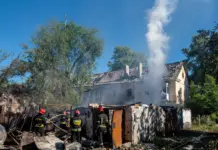
The declarations arrived against a volatile backdrop. Russia and Ukraine are nominally observing a three-day ceasefire backed by US President Donald Trump, who publicly endorsed the truce on Friday. Yet Ukrainian officials reported that Russian strikes on Sunday killed at least three civilians. Close to 150 combat engagements were recorded along the front lines in the 24 hours prior, underscoring the fragility of any pause in hostilities.
Russia controls nearly one-fifth of Ukrainian territory after more than three years of grinding warfare since its February 2022 invasion. Moscow has struggled to fully consolidate its hold over Donbas, while Ukrainian counteroffensives have failed to reclaim significant occupied ground. The conflict has killed tens of thousands of combatants and civilians on both sides, earning the grim distinction of being Europe’s deadliest conflict since World War II.
Putin’s diplomatic overtures extended beyond Kyiv. He indicated a willingness to negotiate new security arrangements with European nations, though Moscow’s relations with the continent are at their lowest point since the Cold War. In a striking detail, Putin named Gerhard Schroeder — Germany’s former chancellor who became chairman of a German-Russian gas pipeline consortium after leaving office in 2005 — as his preferred European interlocutor, a choice likely to draw sharp criticism from Berlin and Brussels.
The Kremlin’s posture toward Washington remains complicated. Moscow rejected a trilateral meeting proposed by Trump in August 2025, signalling that while Russia welcomes American pressure on Kyiv, it is not prepared to accept Washington as an equal mediator at the table.
Trump, who placed ending the Ukraine war at the centre of his 2024 re-election campaign, has pushed hard for a negotiated settlement. His administration’s backing of the current ceasefire reflects ongoing US engagement, though the durability of any truce remains deeply uncertain given the pace of front-line activity.
Putin Direct Talks Zelenskyy: The Wider European Impact
Keir Giles, a fellow at Chatham House, and other analysts have long cautioned that Moscow’s stated openness to talks has historically served as a tool to consolidate territorial gains rather than a genuine pathway to peace. Putin has previously cited NATO expansion as the primary justification for the invasion — a framing rejected by Western governments and Ukraine alike.
Ukraine, for its part, has refused to concede any territory as part of peace negotiations, a position that remains fundamentally incompatible with Russia’s demand for formal recognition of its occupation of Donbas and other seized regions. The gap between the two sides’ opening positions remains vast, and Sunday’s statements from Moscow did little to narrow it in any concrete way.
The war, now in its fourth year, has reshaped European security, strained global energy markets, and triggered sweeping Western-led sanctions that have weighed on Russia’s $3 trillion economy. Whether Putin’s Victory Day rhetoric signals a genuine shift toward diplomacy or simply a recalibration of messaging for domestic and international audiences remains the central question facing capitals from Kyiv to Washington to Brussels.