Us Sanctions Cuba — The United States has sanctioned Cuba’s state-owned oil and gas company, Union Cuba-Petroleo, in the latest escalation of a sustained pressure campaign by the Trump administration aimed at forcing political change in Havana.
Secretary of State Marco Rubio announced the measures on Thursday, characterising Union Cuba-Petroleo as a financial instrument of Cuba’s ‘repressive security apparatus’ and asserting that the company’s assets ‘were unlawfully expropriated from American owners years ago.’ The Cuban government nationalised oil production in 1960, a move that prompted President Dwight Eisenhower to cut off US oil exports to the island that same year.
The new sanctions freeze any US-based assets the company may hold and prohibit any entity with American operations from conducting business with it. The move tightens an economic vice that has been closing around Cuba since President Donald Trump returned to office in January, with the administration cutting off Venezuelan energy exports to Cuba and threatening tariffs against any country that ships oil to the island.
Recommended Reading
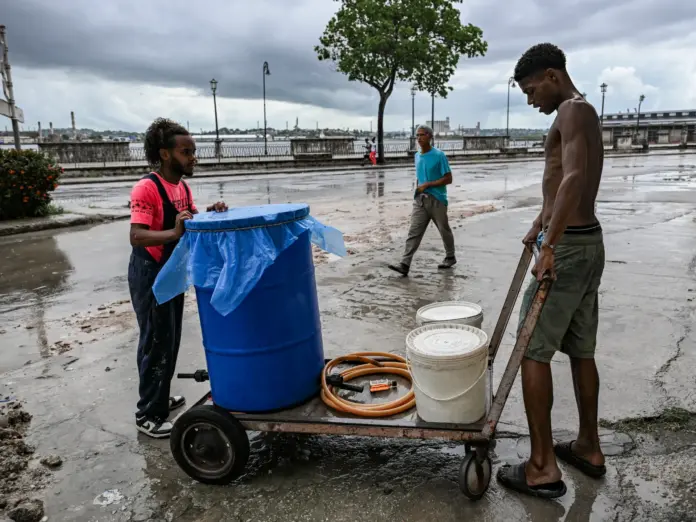
The consequences for ordinary Cubans have been severe. The International Energy Agency estimated in 2023 that Cuba produces only 40 percent of the oil it consumes, leaving the country acutely vulnerable to external supply disruptions. Cuba suffered two island-wide blackouts in March, and only a single Russian oil tanker has reached the island since late January. Volker Turk, the UN High Commissioner for Human Rights, has warned that fuel restrictions imposed since early 2026 are directly harming the Cuban population.
Rubio made clear the sanctions are not a standalone measure but part of a broader strategy of coercion. The United States, he stated, will continue targeting Cuba with sanctions until a change of government takes place. Trump himself drew a stark parallel in March, comparing his intentions for Cuba to a military offensive launched against Venezuela on January 3, and declaring that ‘Cuba’s in its last moments of life as it was.’
The political dimensions of the campaign extend beyond economic pressure. The Trump administration filed a criminal indictment against former Cuban President Raul Castro over the 1996 downing of an activist aircraft, and separately proposed the removal of current President Miguel Diaz-Canel — Cuba’s first non-Castro leader since 1959 — according to reporting from March.
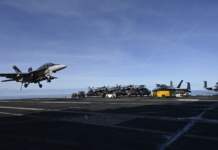
Military signalling has accompanied the economic offensive. The USS Nimitz aircraft carrier arrived in the Caribbean in May, and General Francis Donovan, commander of US Southern Command, visited the American naval base at Guantanamo Bay in recent weeks. Defence Secretary Pete Hegseth also travelled to Guantanamo Bay this week, issuing a pointed warning to Havana on Wednesday against making a ‘wrong decision’ that ‘creates the kind of threat the United States may have to deal with.’
Us Sanctions Cuba: Regional Political Context
The convergence of sanctions, energy blockade, criminal indictments, and military deployments represents one of the most aggressive US postures toward Cuba in decades. Washington’s strategy appears designed to accelerate the collapse of the Cuban government by strangling its energy supply while simultaneously raising the spectre of direct military consequences for any perceived provocation.
Cuba’s government has not publicly responded to the latest round of sanctions, but the cumulative weight of the pressure campaign is increasingly visible in the daily lives of Cuban citizens, who face chronic fuel shortages, rolling blackouts, and an economy with no clear path to relief. The administration’s explicit linkage of sanctions relief to regime change leaves little diplomatic off-ramp for either side.