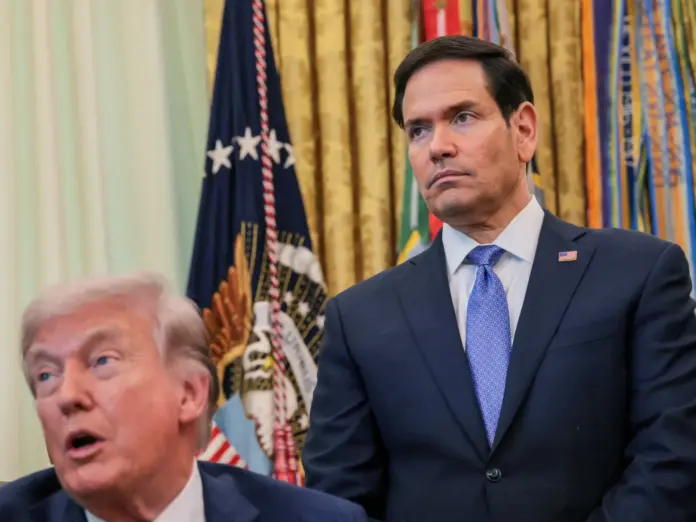
WASHINGTON/HAVANA — President Donald Trump declared Thursday that he is likely to be the American president who finally takes military action against Cuba, as his administration dramatically escalated a multi-front pressure campaign against Havana that includes sanctions, a fuel blockade, and a landmark criminal indictment of a former head of state.
Us Military Threat Cuba — Secretary of State Marco Rubio told reporters that Cuba represents a direct national security threat to the United States, pointing specifically to the island’s deepening intelligence and security relationships with China and Russia. While Rubio described a negotiated resolution as Washington’s preferred outcome, he was blunt about the odds, saying the path of diplomacy with Cuba is ‘not high’ and accusing Havana of spending decades ‘buying time and waiting us out.’
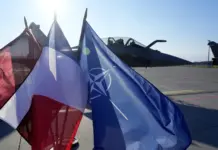
Trump, speaking to reporters, acknowledged that US presidents have contemplated intervening in Cuba for generations — but suggested his administration would be the one to act. The remarks came as several US Navy vessels, including an aircraft carrier, arrived in the Caribbean on Wednesday for what officials described as maritime exercises, a deployment that analysts viewed as a deliberate show of force.
Recommended Reading
The diplomatic and military pressure is unfolding on multiple tracks simultaneously. On Wednesday, the Trump administration secured a federal indictment against Raul Castro, Cuba’s former president, in connection with the 1996 downing of a civilian aircraft. A day later, Adys Lastres Morera, the sister of a senior executive within the GAESA conglomerate, was arrested. GAESA is a military-controlled economic empire that dominates vast portions of Cuba’s commercial activity, and the US has made bypassing it a central condition of any potential aid arrangement.
That condition has complicated what appeared to be a tentative opening. Cuba had signalled acceptance of a $100 million US aid offer contingent on reforms, but Washington’s insistence on circumventing GAESA — the very institution through which the Cuban military exercises economic control — has stalled any progress. The Trump administration has imposed numerous additional sanctions on the Cuban government over the past week, compounding an already severe fuel blockade that has deepened the country’s energy crisis.
Cuban Foreign Minister Bruno Rodriguez flatly rejected Rubio’s framing, dismissing the characterisation of Cuba as a threat to the United States. Havana has long maintained that American pressure campaigns amount to economic warfare against its civilian population.
The international response was swift. China said Friday it ‘firmly supports’ Cuba and called on Washington to de-escalate tensions. Kremlin spokesperson Dmitry Peskov condemned what he described as methods ‘bordering on violence’ being used against heads of state, a reference widely interpreted as encompassing both the Castro indictment and the treatment of Venezuelan President Nicolas Maduro.
Us Military Threat Cuba: Regional Political Context
The Cuba escalation is being closely watched in the context of Venezuela, where the Trump administration has already demonstrated its willingness to pursue aggressive extraterritorial action. Maduro was seized in a military operation in January and transported to the United States, where he faces charges of narcoterrorism. Analysts note that Trump and Rubio appear to be pursuing a comparable regime-change trajectory in Cuba, using legal, economic, and military instruments in concert to destabilise the government in Havana.
The Caribbean build-up marks a significant shift in regional posture. The Trump administration has overseen a sustained military expansion in the area since returning to office, and the arrival of naval assets this week underscores that Washington is prepared to back its rhetoric with visible force projection. Whether that posture translates into direct military action — or serves primarily as leverage in a coercive diplomatic strategy — remains the central question facing both Havana and its international backers in Beijing and Moscow.
Cuba, already battered by fuel shortages, economic contraction, and the compounding weight of US sanctions, faces the most concentrated American pressure campaign in decades. With diplomatic channels described by Rubio himself as nearly exhausted, and military assets now positioned in the surrounding waters, the trajectory of the crisis appears to be narrowing toward confrontation.