Lebanon Ceasefire Frays — Israeli airstrikes killed at least nine people across Lebanon on Wednesday, striking vehicles, an ambulance, and a military convoy even as diplomats from both countries gathered in Washington in a fragile attempt to consolidate a partial ceasefire announced just days earlier.
Among the dead were two paramedics whose ambulance was struck in the Chehour area of southern Lebanon. The vehicle belonged to the Risala Scouts Association, an organisation affiliated with the Amal movement. Their deaths brought to at least 128 the number of paramedics and healthcare workers killed in Israeli attacks on ambulances and medical facilities over the past three months — a toll that has drawn sharp international condemnation.
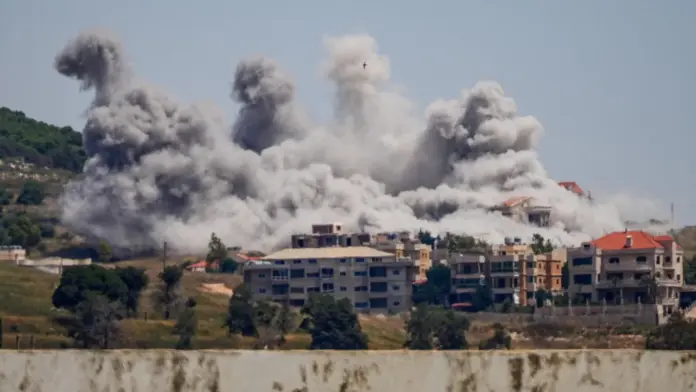
Six more people, including four Syrians and two Palestinians, were killed in a strike near the coastal city of Tyre, in the al-Housh area. A Lebanese soldier died when his vehicle was hit on the road between Nabatieh and Kfar Tebnit, roughly 27 kilometres north-east of Tyre. Two additional Lebanese soldiers were wounded in a separate strike on their vehicle on the road between Deir Zahrani and Nabatieh. In the Khaldeh area on the southern outskirts of Beirut, an Israeli strike on a car injured two people. In total, Israeli forces struck at least ten vehicles across Lebanon during the day.
Recommended Reading
![Lebanese soldiers and first reponders inspect the site of an Israeli drone strike near a vehicle on the Khaldeh highway at the southern entrance to Beirut, June 3 [AFP]](https://world-tension.s3.us-east-2.amazonaws.com/articles/1268/ec69dfc7ef684937b4b6643ab5900d86.webp)
Hezbollah responded by firing rockets into northern Israel, targeting what it described as a gathering of Israeli troops. The Israeli military said it intercepted a hostile aircraft near the Manara and Kiryat Shmona areas, along with two projectiles that crossed the border from Lebanon.
The violence unfolded against the backdrop of a partial ceasefire that US President Donald Trump announced on Wednesday, saying he had personally called Prime Minister Benjamin Netanyahu and pressed him to halt the fighting in Lebanon. Trump said Netanyahu had committed to cancelling planned strikes on Beirut, and described himself as "a little bit perturbed" at Israel "constantly fighting with Lebanon." Netanyahu’s office, however, immediately qualified the commitment, stating that Israel reserved the right to strike Beirut if Hezbollah attacks continued. Netanyahu publicly insisted that Israel must "disarm Hezbollah" and "demilitarise Lebanon," and confirmed the military would keep operating in the south regardless of any ceasefire arrangement.
The partial agreement — under which Israel would refrain from bombing Beirut in exchange for Hezbollah not attacking Israel — was agreed on Monday. But its durability appeared questionable almost immediately. Hezbollah senior official Mahmoud Qamati flatly denied any ceasefire existed, describing the arrangement as nothing more than protection for the Dahieh district of Beirut. Qamati said Hezbollah would not consider itself bound by any commitments made during the Washington negotiations.
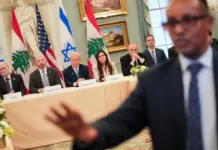
Those talks, now in their second day, brought together Israeli and Lebanese diplomats under US mediation. Secretary of State Marco Rubio expressed hope that the discussions would produce a concrete action plan for establishing security in Lebanon independent of Hezbollah’s influence. Iran, meanwhile, warned that any regional ceasefire framework must include Lebanon. Foreign Minister Abbas Araghchi cautioned that a future Israeli attack on Beirut would "have grave consequences and lead to a full resumption of war," adding that Iranian armed forces had been placed on full alert for a potential counterattack.
Lebanon Ceasefire Frays: Regional Implications
The war began on 2 March, when Hezbollah launched rockets into Israel in retaliation for an Israeli strike that killed Iran’s supreme leader. Israel responded with a sweeping air campaign across Lebanon and a ground invasion in the south. A US-brokered ceasefire on 16 April failed to hold, and Israel has broken subsequent ceasefire arrangements on a near-daily basis. Netanyahu subsequently ordered the military to intensify strikes on Hezbollah and push deeper into Lebanese territory.
The human cost has been staggering. Lebanon’s health ministry reports at least 3,516 people killed since the war began. More than one million people have registered as displaced, and Israeli evacuation orders now cover more than an eighth of the country’s territory. Israel has acknowledged 26 soldiers and four civilians killed on its side during the conflict.
With Hezbollah rejecting the ceasefire’s terms, Netanyahu refusing to constrain ground operations, and Iran signalling readiness to escalate, the diplomatic effort in Washington faces enormous obstacles — even as the bodies of two more paramedics were pulled from the wreckage of their ambulance in the south.