Iran Hormuz Deal — A diplomatic breakthrough between Washington and Tehran appears increasingly within reach, with Donald Trump announcing that a memorandum of understanding to reopen the Strait of Hormuz has been "largely negotiated" — a development that could reshape the geopolitical landscape of the Middle East after months of escalating conflict.
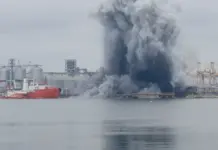
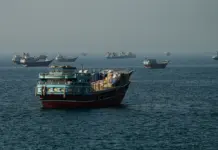
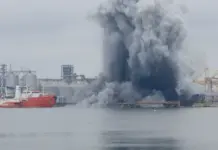
The strait, one of the world’s most critical maritime chokepoints, has been closed since the United States and Israel launched coordinated military operations in February. Its closure has sent shockwaves through global energy markets and intensified pressure on all parties to find a diplomatic resolution.
Pakistan has emerged as a key broker in the negotiations, with Prime Minister Shehbaz Sharif serving as mediator between Washington and Tehran. Pakistani Foreign Minister Ishaq Dar described "meaningful progress" in the talks, a characterisation echoed by US Secretary of State Marco Rubio, who declared "significant progress" had been achieved while speaking during a visit to India. A Qatari team was also present in Tehran for parallel consultations, underscoring the multilateral nature of the diplomatic effort.
Recommended Reading
Iran’s state-affiliated Fars News Agency reported that the draft agreement would leave Iran in charge of the strait — a provision likely to prove contentious in Israel and among hawkish factions in Washington. Under the proposed terms, any naval blockade would be required to be completely lifted within 30 days of the agreement taking effect.
Iranian Foreign Ministry spokesman Esmaeil Baghaei expressed cautious optimism, saying he hoped the details of a final agreement could be resolved within 30 to 60 days once the initial framework was in place. However, Iranian President Masoud Pezeshkian made clear that no final decision would be taken without the explicit approval of Supreme Leader Mojtaba Khamenei — a reminder of the layered power structure that has historically complicated Iranian diplomatic commitments.
Trump, who skipped the Florida wedding of his son Donald Trump Jr. to Bettina Anderson — citing his "love of the United States" and the need to remain in the capital — appeared personally invested in securing the deal. The optics of a president forgoing a family milestone to manage a high-stakes foreign policy negotiation were not lost on observers.
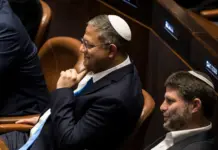
In Israel, Prime Minister Benjamin Netanyahu was expected to convene a security cabinet meeting to assess the proposed agreement. The prospect of Iran retaining authority over the Strait of Hormuz under any deal is certain to generate fierce debate within the Israeli government, which has pursued an aggressive military posture toward Tehran and its proxies throughout the conflict.
That conflict continues to exact a devastating toll. In Lebanon, despite a ceasefire between Israel and Hezbollah that came into effect on April 22, violence has not fully subsided. Israeli attacks have killed 3,123 people since March 2, according to Lebanon’s Ministry of Public Health. One Israeli soldier was killed near the Lebanese border, bringing the total number of Israeli soldiers killed in fighting with Hezbollah since March 2 to 22. Lebanon’s Civil Defence agency reported that its regional facility in Nabatieh was destroyed in an Israeli strike.
Iran Hormuz Deal: Regional Implications
In Gaza, an Israeli air strike killed three members of a Palestinian family, among them a one-year-old boy, in the central part of the territory. The strike drew renewed international condemnation as diplomatic efforts focused on the broader regional framework.
The international dimensions of the crisis extended further when British and Irish activists aboard the Gaza-bound Global Sumud Flotilla were seized by Israeli forces in international waters and subsequently deported. The activists later returned to London and Dublin, with their detention adding to mounting criticism of Israeli operations beyond its recognised borders.
On the margins of the diplomatic drama, Iran’s football federation announced it would relocate its World Cup training base from Tucson, Arizona, to Mexico — a move approved by FIFA. The decision reflects the broader deterioration of US-Iran relations and the practical complications the conflict has created for Iranian nationals seeking to operate within the United States.
The coming weeks will test whether the framework taking shape in back-channel talks between Washington, Tehran, Islamabad, and Doha can be translated into a durable agreement — one capable of satisfying Iran’s insistence on sovereignty over the strait while addressing the security concerns of the United States and its regional allies.