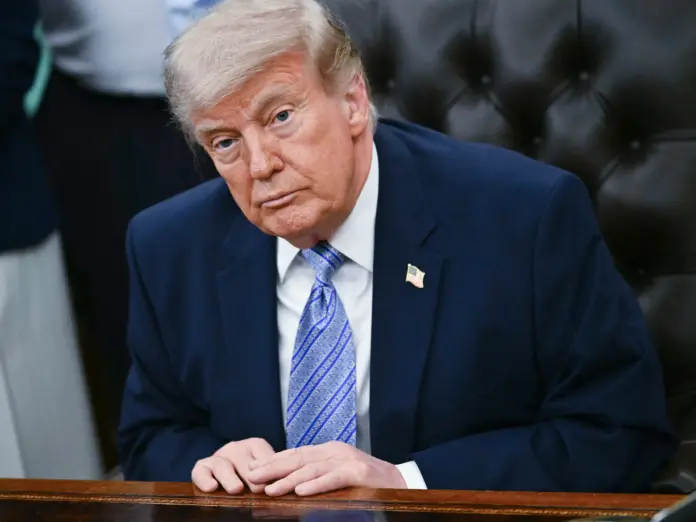
Washington / Tehran — A landmark agreement between the United States and Iran is on the verge of completion, President Donald Trump announced on social media, describing the deal as largely negotiated between Washington, Tehran, and a coalition of regional powers, pending final formalisation.
Iran Nuclear Deal — The prospective memorandum of understanding sets out a structured timeline: 30 days for procedures related to the Strait of Hormuz — a critical global oil chokepoint whose reopening forms a central pillar of the agreement — and 60 days for subsequent nuclear negotiations. Tehran has made clear, however, that its nuclear programme will not be on the table during the initial phase, with Iran’s Foreign Ministry insisting that talks focus first on ending hostilities across all fronts, including in Lebanon.
Iran has also conditioned any agreement on the release of at least a portion of its frozen overseas funds during the first phase of negotiations, a demand that adds a significant financial dimension to what is shaping up as one of the most consequential diplomatic undertakings in decades.
Recommended Reading
Pakistan’s quiet diplomacy proved instrumental in reaching this point. Prime Minister Shehbaz Sharif confirmed that the next round of US-Iran talks will take place very soon, following what he described as highly productive discussions between Pakistani officials and Iranian leaders in Tehran. The country’s military chief, Asim Munir, visited Tehran twice during the conflict and secured the first formal round of negotiations in Islamabad — characterised by Pakistani Foreign Minister Ishaq Dar as the highest-level direct engagement between American and Iranian officials in nearly 50 years.
Dar also highlighted a call convened by Trump with the leaders of Pakistan, Saudi Arabia, Turkiye, Qatar, Egypt, the UAE, and Jordan, describing it as a significant step toward regional peace and stability. Turkish President Recep Tayyip Erdogan added his country’s weight to the effort, stating that Ankara stands ready to provide every form of support during the implementation of any final deal.
The emerging agreement has not been universally welcomed. Israeli Prime Minister Benjamin Netanyahu is expected to convene a limited security cabinet meeting to assess the implications of the deal, having already communicated to Trump his concern over two specific clauses: one addressing a truce in Lebanon, and another that would defer nuclear negotiations to a later phase. For Israel, the prospect of Iran retaining its nuclear infrastructure — even temporarily — represents a fundamental strategic risk.
Within the United States, the deal has drawn sharp criticism from prominent Republican voices. Former CIA Director Mike Pompeo dismissed it as drawn from the Obama administration playbook, while Senator Ted Cruz said he is deeply concerned by what he has heard. Former US Ambassador to Israel Dan Shapiro offered a more measured assessment, calling the deal weak but preferable to further escalation.
Iran Nuclear Deal: Regional Implications
The diplomatic momentum stands in stark contrast to conditions on the ground across the region. Israel has killed at least 3,123 people in southern Lebanon since March 2, continuing air strikes despite an ongoing ceasefire and active peace negotiations. In Gaza, Israeli naval vessels have been firing heavy machine guns toward the shore of Gaza City, and an air strike on the Nuseirat refugee camp in the central Gaza Strip killed three members of a single family — Mohammad Ibrahim Abu Mlaweh, 38, his wife Alaa Majdi Zaqlan, 36, and their one-year-old son Osama.
Inside Iran, authorities executed a man identified as Mojtaba Kian on charges of espionage, with the country’s judiciary stating he had transmitted data about Iran’s defence industry to the United States and Israel during the war. The execution underscores the internal pressures Tehran faces as it navigates high-stakes external diplomacy.
The potential deal represents a dramatic shift in the geopolitical landscape of the Middle East, bringing together an unlikely coalition of mediators and raising the prospect — however fragile — of de-escalation after years of mounting tension between Washington and Tehran. Whether the final text can satisfy Iran’s economic demands, Israel’s security concerns, and the domestic political pressures facing Trump simultaneously remains the defining question as negotiations enter their final stage.