Iran Hormuz Standoff — The Strait of Hormuz remained largely paralysed on Tuesday as the United States and Iran traded accusations of aggression, civilian casualties, and territorial violations in what has become the most dangerous flashpoint in a war that has already reshaped global energy markets and regional security.
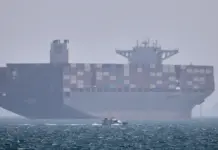
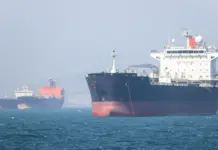
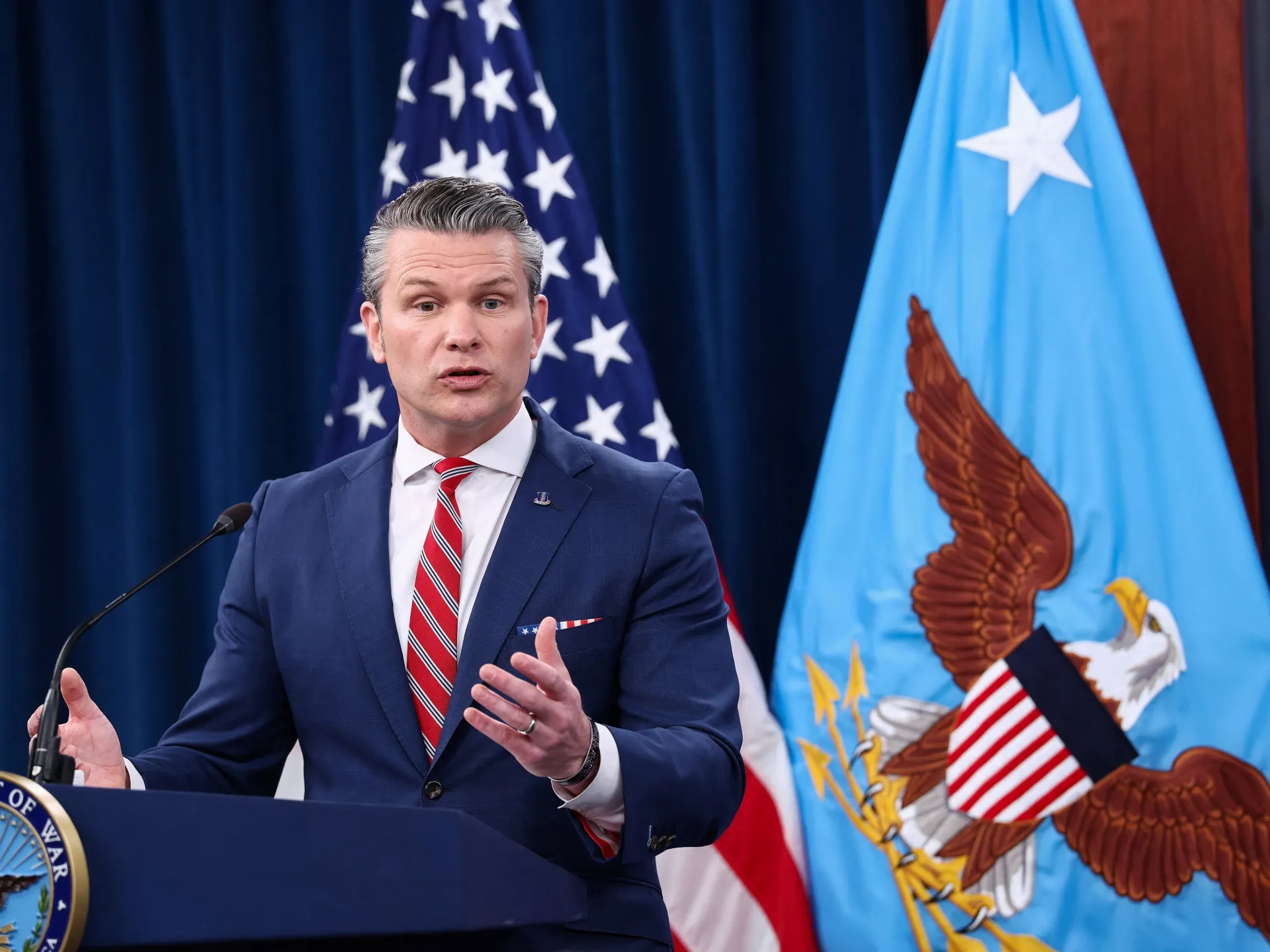
US President Donald Trump launched a naval operation codenamed Project Freedom to force the strategic waterway open, deploying American destroyers backed by hundreds of fighter jets, helicopters, drones, and surveillance aircraft. Pentagon chief Pete Hegseth described the effort as establishing a security ‘dome’ over the strait, claiming US forces had secured passage for two US-flagged commercial ships on Monday. Yet more than 24 hours after the operation began, traffic through the chokepoint remained at a near-total standstill, with approximately 1,550 ships stranded on either side according to US officials — a figure some estimates place closer to 2,000 vessels.
The strait has been almost completely closed since February 28, when Iran successfully sealed it in the immediate aftermath of US-Israeli strikes. In peacetime, roughly 20 percent of the world’s oil and liquefied natural gas passes through those waters. The consequences for consumers are already stark: the average price of a gallon of petrol in the United States climbed to $4.48 on Tuesday, according to the American Automobile Association, compared to below $3 per gallon before the conflict began.
Recommended Reading
Monday marked the highest level of hostilities since a ceasefire between Washington and Tehran came into effect on April 8 — a truce that Hegseth insisted on Tuesday remains technically in place, adding that Trump alone would decide when it ends. The broader US-Israeli military campaign against Iran carries the codename Epic Fury, with Project Freedom operating as its maritime component. A US naval blockade of Iranian ports began on April 13.
The competing accounts of Monday’s engagements illustrate the fog of war enveloping the Persian Gulf. US Central Command (CENTCOM) stated its forces sank vessels belonging to the Islamic Revolutionary Guard Corps (IRGC), with Admiral Brad Cooper citing six IRGC craft destroyed. Trump later put the figure at seven. Iran flatly denied any of its vessels were struck. Conversely, Iran’s Fars News Agency reported that a US warship was hit by two Iranian drones — a claim CENTCOM rejected outright. Iran separately acknowledged firing at US Navy ships during the day’s exchanges.
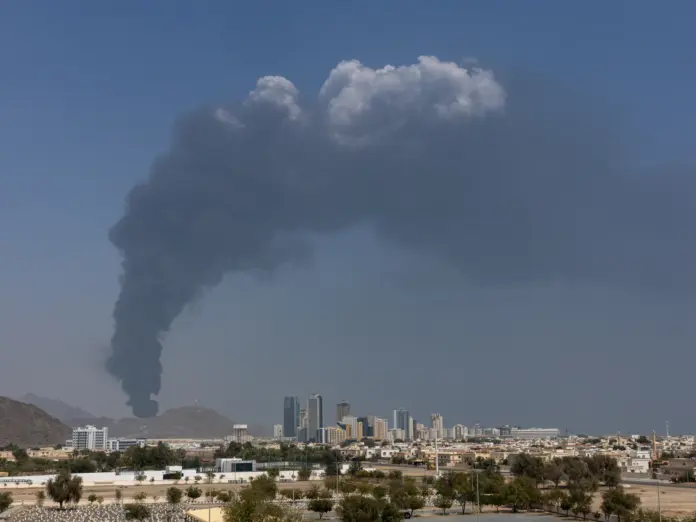
Among the most serious allegations was an Iranian strike on the Fujairah Petroleum Industries Zone in the United Arab Emirates, which set an oil refinery ablaze and wounded three Indian nationals. The UAE Ministry of Defence said its air defences engaged 12 ballistic missiles, three cruise missiles, and four drones on Monday. The UAE’s Ministry of Foreign Affairs issued a stark warning, stating the country reserves the right to respond. An Iranian military official denied any preplanned programme to attack oil facilities in Fujairah, but the strike — if confirmed — would represent the first attack on UAE soil since the April 8 ceasefire. A South Korean ship near Hormuz was also struck in what officials described as a suspected Iranian attack.
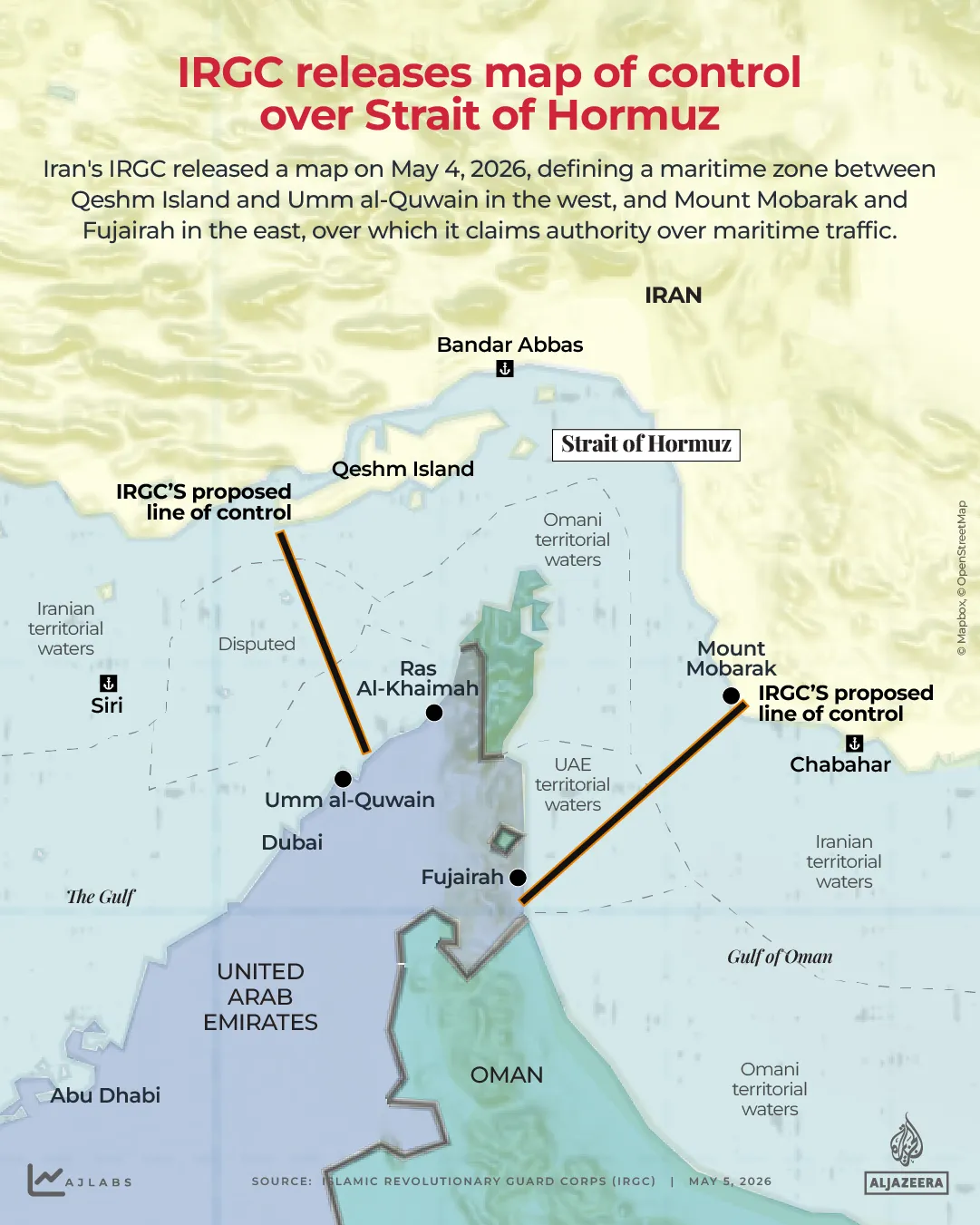
Iran further escalated the diplomatic and territorial dimensions of the crisis by issuing a map showing new boundaries of its controlled area extending farther east and encompassing what the UAE considers its own territorial waters. Tehran also warned that any vessel transiting the strait without explicit authorisation from the IRGC would be fired upon — a declaration that has effectively transformed one of the world’s most critical shipping lanes into a contested war zone.
Civilian casualties added a grim dimension to the day’s events. Iran’s state broadcaster IRIB reported that US forces attacked two small boats carrying passengers from Khasab, Oman to Iran, killing five civilians. CENTCOM did not immediately address the specific allegation.
Iran Hormuz Standoff: Regional Implications
Iranian Parliament Speaker Mohammad Bagher Ghalibaf referenced a ‘new equation’ in Hormuz on Tuesday, signalling Tehran’s intent to hold its position. Analyst Shahram Akbarzadeh observed that Iranian leadership feels compelled to match each US escalation with a countermove of its own, describing a dynamic that makes de-escalation structurally difficult for either side.
Pakistan has attempted to broker a diplomatic off-ramp, but with limited success. US allies have broadly declined Washington’s calls to contribute military assets to the effort to reopen the waterway, leaving the United States largely alone in its naval push. Hegseth acknowledged the operation is intended to be temporary, with the expectation that other nations would eventually assume responsibility for securing passage — though no such arrangement appears imminent.
With global oil supplies constrained, a ceasefire in name only, and both sides claiming the other struck first, the Persian Gulf crisis shows no signs of resolution. The world’s most important energy corridor remains, for now, a battlefield.