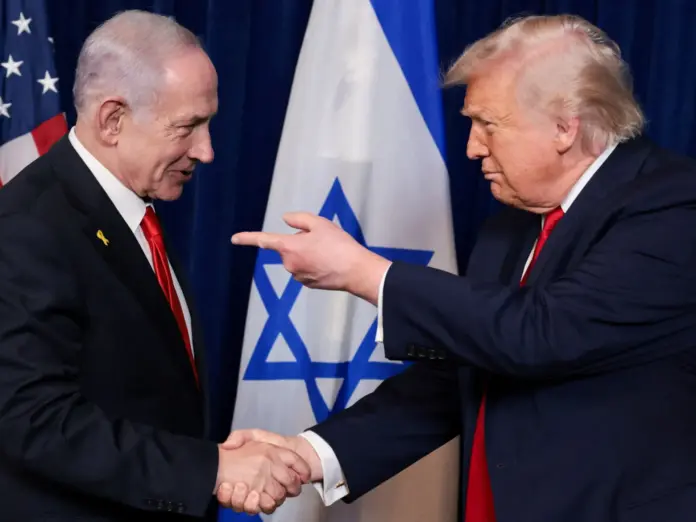
Us-Israel Defence Tech — A little-noticed section of the United States military’s annual funding blueprint could fundamentally reshape how Washington and Jerusalem develop and share weapons technology for decades to come — and it is already drawing fire from both ends of the political spectrum.
Section 224 of the 2027 National Defence Authorisation Act, released this week and titled the United States-Israel Defence Technology Cooperation Initiative, would require the Secretary of Defence to designate a senior official whose sole responsibility is coordinating military cooperation between the two countries. The provision draws heavily from the US-Israel Future of Warfare Act, legislation originally introduced by Representative Ronny Jackson.
The scope of the proposed collaboration is expansive. Priority areas listed in the text include counter-unmanned systems, anti-tunnelling and subterranean threat technologies, and missile and air defence — building on existing joint programmes such as the Iron Dome system. Beyond those established domains, the provision reaches into a broad array of emerging technologies: artificial intelligence, quantum machine learning, autonomous systems, directed energy weapons, advanced sensing, cyber defence, electronic warfare, digital resilience, biotechnology, biomanufacturing, and medical defence.
Recommended Reading
Perhaps most consequentially, the proposal includes language on network integration and data fusion — terms that suggest a far closer merging of the two countries’ military information architectures than currently exists. Analysts warn this could create structural dependencies that outlast any single administration or policy preference.
"This kind of institutional arrangement creates a lock-in effect," said Mark Hilborne, a senior lecturer at the School of Security Studies at King’s College London. "Both countries become simultaneously reliant on each other for military development and procurement, which makes it very difficult to alter the relationship even when political circumstances change."
Imad Salamey, an international relations professor at the Lebanese American University, noted that the timing is significant. Israel is currently advancing into southern Lebanon, and at least 3,000 people have been killed there since the beginning of March. In Gaza, more than 850 Palestinians have died despite a ceasefire nominally in place since last October.
Opposition to the provision has emerged from unexpected quarters. Representative Thomas Massie, a consistent critic of military aid to Israel, signalled he would seek to strip Section 224 from the bill if it reaches the House floor. Massie was defeated in his primary election last month, however, raising questions about whether his opposition will carry sufficient weight during the amendment process. Former Representative Marjorie Taylor Greene also criticised the proposal on social media, and influential conservative commentator Tucker Carlson has grown increasingly vocal in his opposition to US support for Israel more broadly.
Backing for the measure comes from the pro-Israel lobby group AIPAC, which has supported many of the politicians championing the initiative.
Us-Israel Defence Tech: Regional Implications
The political dynamics in Congress are playing out against a backdrop of shifting public opinion. A poll conducted by the Institute for Global Affairs released last week found that only 16 percent of Americans support continuing weapons transfers to Israel without additional restrictions. Thirty-eight percent said the US should halt arms supplies to Israel entirely, while 24 percent said military aid should be conditioned on how the weapons are used. A separate poll by The New York Times in May found that just 30 percent of respondents believed President Donald Trump made the right decision in ordering military strikes against Iran.
Supporters of the initiative argue that deepening technological cooperation serves long-term American strategic interests, particularly as both countries face shared threats from drone proliferation, underground tunnel networks used by militant groups, and increasingly sophisticated missile arsenals across the Middle East. The United States and Israel have cooperated on defence projects for decades, with joint missile defence programmes representing the most visible dimension of that partnership.
Critics counter that embedding such cooperation in statute — rather than leaving it to executive discretion — removes flexibility at precisely the moment when the region is in flux and domestic support for the relationship is eroding.
The 2027 NDAA will undergo further rounds of debate and amendment before it can be signed into law. Whether Section 224 survives that process intact, is modified, or is removed entirely will serve as a significant indicator of where congressional sentiment on the US-Israel relationship stands heading into a period of heightened regional conflict and domestic political pressure.