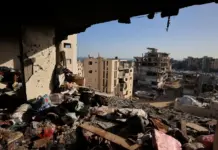
Sudan Hunger Crisis — The guns have fallen mostly silent over Khartoum, but what remains of Sudan’s capital tells a story of almost incomprehensible destruction. Once home to 7 million people, the city now bears the scars of sustained shelling and aerial bombardment — buildings reduced to rubble, hospitals stripped bare, and schools either collapsed or converted into shelters for the displaced.
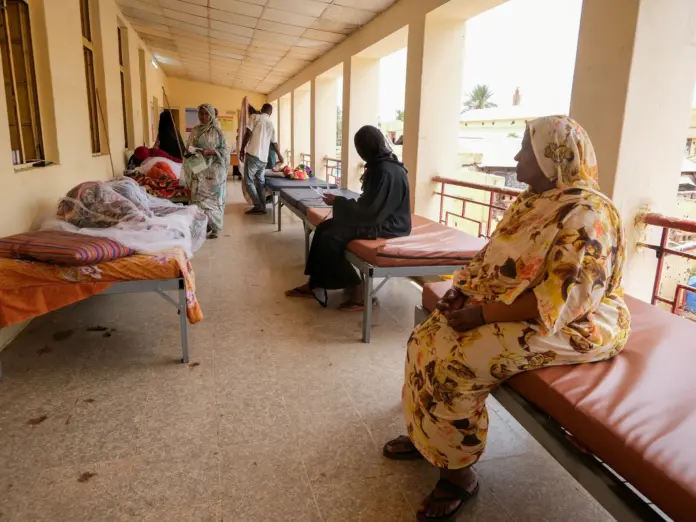
At least 1.3 million people have returned to Khartoum since active fighting subsided, filtering back into a city that can offer them electricity for only a few hours each day. Hospitals that survived the war have been looted and operate at a fraction of their capacity. Approximately 200 schools across the capital remain out of service, their classrooms either destroyed or occupied by families who have nowhere else to go.
The human cost of the conflict has been staggering. More than 58,000 deaths have been formally recorded since the war began, though humanitarian estimates suggest the actual figure may be closer to 150,000. The fighting has also unleashed repeated waves of infectious disease — cholera, viral hepatitis, meningitis, and yellow fever among them — compounding the suffering of a population already pushed to the edge.
Recommended Reading
Islamic Relief, which has maintained operations in Sudan throughout the conflict, surveyed 844 community kitchens across the country and found that 42 percent had shut down in the past six months alone, unable to secure adequate funding or supplies. Food and fuel prices have doubled, placing basic necessities beyond the reach of millions. Sudan now carries the grim distinction of hosting the world’s largest hunger crisis, with 29 million people — representing 62 percent of the entire population — lacking sufficient food.
In the western regions of Darfur and Kordofan, the situation remains acutely dangerous. Drone strikes have targeted hospitals and schools. Aid convoys have been bombed. Civilians continue to flee atrocities in large numbers, with no clear end to the violence in sight. Even Khartoum, despite the relative calm, has not been entirely spared — drone attacks struck the capital within the past month as fighting intensified across several states.
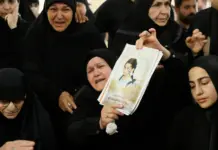
The personal toll is captured in stories like that of Ayesha, a grandmother who lost four of her sons to warring factions. With her grandchildren in tow, she walked for five days to reach a displaced persons camp in Gadarif, a city in eastern Sudan. Her journey is one of millions — a vast, largely invisible exodus unfolding across one of Africa’s largest nations.
Sudan Hunger Crisis: The Broader African Context
World leaders gathered in Berlin last month for a conference marking the third anniversary of the war, a meeting that underscored the international community’s growing alarm but has yet to produce a decisive shift in conditions on the ground. The gap between diplomatic attention and humanitarian reality remains vast.
For the people of Khartoum and the broader country, the immediate future offers little comfort. Rebuilding a city of 7 million requires electricity, functioning hospitals, open schools, and economic stability — none of which currently exist in meaningful measure. The silence that has replaced the sound of artillery is not peace. It is the quiet of exhaustion, of a population waiting to see whether the world will respond before the next wave of crisis arrives.