Sudan Drone Strikes — Sudan has formally accused Ethiopia and the United Arab Emirates of conducting drone strikes on its soil, recalling its ambassador from Addis Ababa on Tuesday in a dramatic escalation that threatens to transform an already devastating civil war into a broader regional conflict.
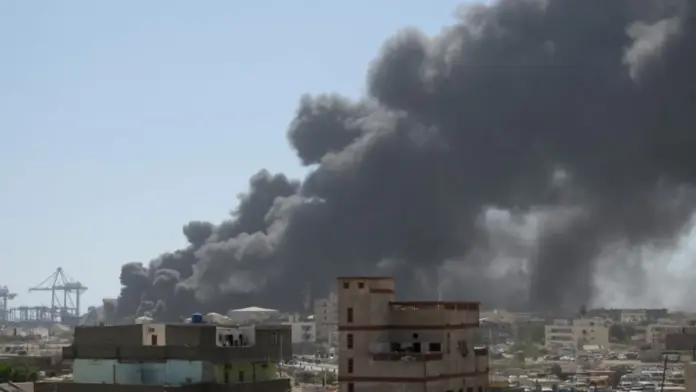
The most consequential of the attacks struck Khartoum International Airport, forcing authorities to suspend operations for three days. The timing was particularly significant: the airport had only recently received its first commercial flight since the war began, a symbolic milestone for a capital that the Sudanese Armed Forces (SAF) retook from the Rapid Support Forces (RSF) in March of last year. More than 1.8 million civilians have returned to Khartoum in recent months, though much of the city remains without electricity or basic services.
Sudan’s military says four separate drone attacks have been launched from Ethiopian territory since early March. Khartoum alleges the UAE supplied the unmanned aerial vehicles used in the strikes — an accusation that, if substantiated, would mark a significant widening of foreign involvement in a war that has already drawn in multiple regional powers.
Recommended Reading
Both governments pushed back forcefully. Ethiopia’s Foreign Ministry dismissed the allegations as ‘baseless’, while simultaneously accusing Sudan of financing rebel fighters aligned with the Tigray People’s Liberation Front (TPLF). A senior TPLF official, Amanuel Assefa, denied any such relationship, stating the group has no connections with Sudanese authorities. The UAE, for its part, has repeatedly denied funding the RSF — the paramilitary force that has been locked in combat with the SAF for more than three years.
The mutual recriminations reflect a conflict that has long ceased to be purely internal. Alan Boswell, Horn of Africa director at the International Crisis Group (ICG), warned that Sudan’s accusations against Ethiopia represent a dangerous new phase. ‘Both Sudan and Ethiopia are facing massive internal challenges,’ Boswell noted, linking the drone strikes to the broader escalation of Sudan’s civil war. He argued that without sustained foreign support, both warring parties inside Sudan would have exhausted their munitions long before now — and cautioned that the region is witnessing an ‘unprecedented’ level of external interference in the conflict.
The war erupted in April 2023 from a power struggle between the SAF and the RSF, two forces that had previously cooperated in suppressing civilian-led democratic movements. What began as an internal military confrontation has since metastasised into one of the most destructive conflicts of the modern era. The United Nations estimates more than 150,000 people have been killed, while approximately 14 million have been displaced — figures that prompted the UN to designate the Sudan crisis as the world’s worst humanitarian emergency.
The drone attacks on Khartoum now threaten to unravel fragile efforts to stabilise the capital. The airport’s brief reopening had offered a rare signal of potential recovery; its forced closure underscores how quickly gains can be reversed. For the millions of returnees who have flooded back into a city still largely without power or running water, the strikes are a reminder that the war is far from over.
Sudan Drone Strikes: The Broader African Context
Diplomatic fallout from the ambassador recall is likely to reverberate across the Horn of Africa, a region already strained by overlapping conflicts, border disputes, and competition for influence among Gulf states. Sudan’s decision to formally blame Ethiopia — a neighbour with which it shares a long and historically fraught border — raises the prospect of a confrontation between two states each grappling with severe internal instability.
Analysts warn that the internationalisation of Sudan’s war makes a negotiated settlement significantly harder to achieve. With multiple foreign actors allegedly supplying arms and drones to opposing sides, the incentives for either the SAF or the RSF to seek a ceasefire diminish as external patrons continue to sustain their capacity to fight. The people of Sudan, already enduring what the UN calls an unparalleled humanitarian catastrophe, face the prospect of a conflict with no clear end in sight.