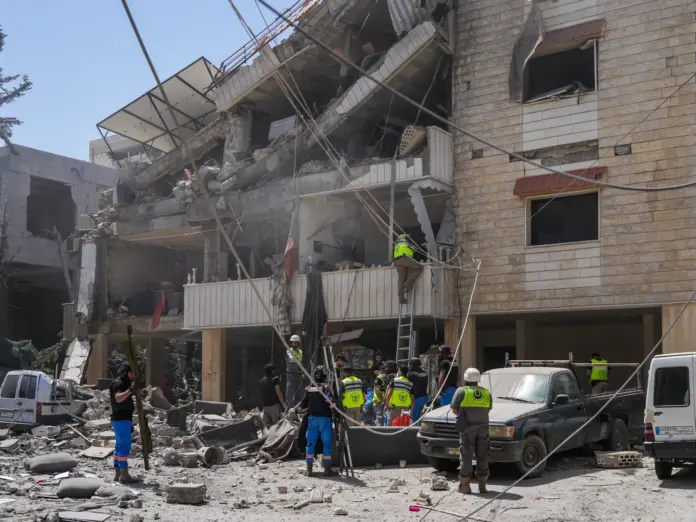
Beirut — Israeli military strikes tore through multiple towns in southern Lebanon, killing at least four people and wounding eight others, even as Washington prepares to host peace negotiations between Israel and Lebanon later this week.
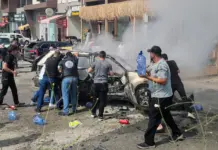
Israeli Strikes Lebanon — Among the deadliest incidents, an air raid on the town of Ebba in the Nabatieh district killed two men and injured five others. A separate drone strike on a vehicle in Haris, in the Bint Jbeil district, killed one man and wounded his brother. In Toul, also in Nabatieh, an air strike hit a civil defence team affiliated with the Islamic Health Society, injuring two medics who had been responding to earlier attacks. Israeli warplanes additionally targeted the home of a former municipal chief in Sajd, with further strikes reported in Kfar Rumman and Safad al-Battikh.
The Israeli military simultaneously issued forced displacement warnings for nine towns across southern and eastern Lebanon. Avichay Adraee, the Israeli army’s Arabic-language spokesman, posted warnings on X urging residents of Rihan, Jarjou, Kfar Rumman, Nmairiyeh, Arabsalim, Harouf, Jmayjmeh, Mashghara and Qlayaa to evacuate immediately, citing the presence of Hezbollah infrastructure in those areas.
Recommended Reading
Israeli forces also suffered casualties. One soldier was killed near the border by a Hezbollah-launched drone, and three others were wounded when a booby-trap drone detonated in southern Lebanon — underscoring the persistent exchange of fire between the two sides despite a ceasefire that technically remains in place.
That ceasefire, which began on April 17 and was subsequently extended to mid-May, has done little to halt the violence on the ground. Israeli forces and Hezbollah have continued trading fire since the agreement took effect, rendering the truce largely nominal in practice.
The human toll of the broader conflict since March 2 has been severe. Lebanese figures place the death toll at a minimum of 2,840 people, with nearly 8,700 injured and more than one million displaced across the country. The scale of displacement has strained Lebanon’s already fragile infrastructure and deepened a humanitarian crisis that predates the current escalation.
Against this backdrop, the United States is preparing to host direct peace talks between Israeli and Lebanese delegations in Washington on Thursday and Friday. The diplomatic effort represents one of the most significant attempts to formalise a durable end to hostilities, though its prospects are complicated by continued fighting and sharp political divisions within Lebanon itself.
Israeli Strikes Lebanon: Regional Implications
Hezbollah has publicly criticised the Lebanese government for agreeing to participate in the Washington talks, signalling the militant group’s opposition to any framework that does not align with its own conditions. The criticism highlights the fractured nature of Lebanese politics and the difficulty of presenting a unified negotiating position.
The juxtaposition of active military strikes with imminent diplomacy reflects the volatile and contradictory dynamics that have defined this conflict. Israeli operations continue to target what the military describes as Hezbollah infrastructure, while displacement orders expand the geographic footprint of the campaign. For the civilians caught between these forces — in Nabatieh, Bint Jbeil and the nine towns now under evacuation warnings — the prospect of Washington negotiations offers little immediate relief.
Whether the peace talks can produce a binding agreement capable of halting the cycle of strikes and retaliatory drone attacks remains deeply uncertain, particularly given Hezbollah’s public rejection of the process and the Israeli military’s apparent determination to press its campaign regardless of diplomatic timelines.