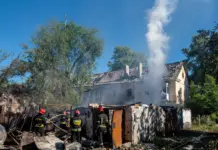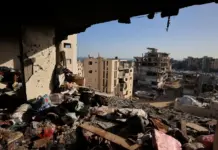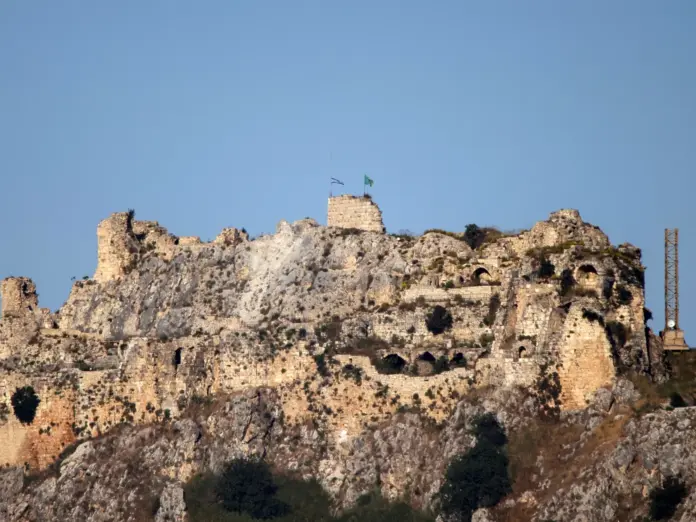
Israel Lebanon Incursion — Israeli forces have seized Beaufort Castle, a 12th-century Crusader fortress perched 700 metres above sea level in southern Lebanon, in what marks one of the most symbolically charged moments of an expanding military campaign that has now pushed Israeli troops deeper into Lebanese territory than at any point in decades.
Israeli Defence Minister Israel Katz announced the capture on Sunday at a memorial ceremony honouring soldiers killed during Israel’s 1982 war in Lebanon — a deliberate choice of venue that underscored the historical resonance of the moment. Following the seizure, both the Israeli national flag and the banner of the elite Golani Brigade were raised over the ancient battlements.
Built by Crusaders in the 12th century, the fortress — whose name derives from the Old French for ‘beautiful fortress’ — overlooks the Litani River and commands sweeping views of the surrounding terrain near Nabatieh, Lebanon’s fifth-largest city. The castle has long held strategic and symbolic weight in the region. Palestinian fighters used it as a base before Israeli forces first captured it during the 1982 invasion, subsequently occupying it as part of a southern Lebanese security zone until a full withdrawal in 2000.
Recommended Reading
Its recapture now comes amid a dramatically escalating Israeli military campaign. Prime Minister Benjamin Netanyahu visited the front lines on Sunday and ordered the military to expand operations in Lebanon, a directive that followed his authorisation last week of a broader offensive push. Israeli forces advanced through rugged terrain near Nabatieh, engaging Hezbollah fighters in clashes that have intensified across the south.
On Sunday alone, Israeli strikes killed at least 12 people and wounded 35 others across more than 36 separate attacks in southern Lebanon. The cumulative toll since early March is staggering: the Lebanese Ministry of Public Health reports more than 3,412 people killed and over 10,269 wounded in Israeli attacks since March 2.
Israeli forces now occupy approximately 2,000 square kilometres of Lebanese territory — roughly 770 square miles, or nearly one-fifth of the entire country. On Monday, Israel issued forced displacement orders to residents of seven villages in the south: Houmine al-Faouqa, Bnaafoul, Arab Salim, Roumine, Aazze, Arkey and Jbaa. Residents were ordered to move at least 1,000 metres from their homes immediately, deepening what has become a severe humanitarian crisis for civilian populations in the region.
The current escalation follows the collapse of a ceasefire announced in November 2024 and is directly linked to the broader regional conflagration triggered by the US-Israel war on Iran, which began on February 28. Hezbollah launched rockets, missiles and drones toward a missile defence site near Haifa in northern Israel on March 2, framing the assault as retaliation for the killing of Iranian Supreme Leader Ali Khamenei. Netanyahu subsequently ordered Israeli bombing of southern Beirut as part of the expanded campaign.
Israel Lebanon Incursion: Regional Implications
The fall of Beaufort Castle carries weight far beyond its tactical value. The fortress has changed hands repeatedly over nine centuries — from Crusader knights to Arab rulers, from Palestinian militants to Israeli soldiers, and back again — making it an enduring emblem of the contested and blood-soaked history of this corner of the Levant. Its latest capture signals that Israel’s current military ambitions in Lebanon extend well beyond the border skirmishes of recent years, raising urgent questions about the trajectory of a conflict that shows no signs of abating.
With Israeli ground forces entrenched across a vast swathe of Lebanese territory, displacement orders expanding, and the death toll climbing daily, international pressure for a return to negotiations is mounting — though no diplomatic framework to halt the fighting has yet emerged.