Israel Iran Strikes — A dramatic and dangerous escalation between Israel and Iran unfolded on Monday as the two adversaries traded direct military blows, striking each other’s territory in a spiral of retaliation that pushed the region to the edge of broader war and sent oil prices surging past $97 a barrel.
Iran’s Islamic Revolutionary Guard Corps (IRGC) launched missile and drone attacks against Israel’s Nevatim and Tel Nof airbases in the early hours of Monday, retaliating for Israeli air strikes that had destroyed radar installations across Iranian territory overnight. Within hours, Israeli forces struck Tehran and other Iranian cities, while also hitting military targets at the Mahshahr petrochemical complex in southwestern Iran — one of the country’s most strategically significant industrial sites.
The exchange followed a Sunday barrage in which Iran fired a wave of missiles at northern Israel — the first such attack since a truce agreed in April — in response to Israeli strikes on Beirut’s southern suburbs, the densely populated district known as Dahiyeh and a stronghold of Hezbollah. Those Beirut strikes were themselves the first on the Lebanese capital since Washington announced a ceasefire extension in Lebanon the previous week. The Iranian barrage against northern Israel caused no injuries.
Recommended Reading
![The Israeli invasion has deepened tensions between Iran, which backs Hezbollah, and the Lebanese government, which is seeking exclusive control over weapons in the country [File: Vahid Salemi/AP Photo]](https://world-tension.s3.us-east-2.amazonaws.com/articles/1352/56a880ab0f3d4aaba8f761c1905c4e7f.webp)
Explosions were reported in Tehran, Tabriz, and Isfahan following Israeli strikes on Monday. Yemen’s Iran-aligned Houthis joined the assault on Israel, firing a salvo of projectiles and announcing a ban on Israeli maritime navigation in the Red Sea — a move with significant implications for global shipping lanes already strained by the earlier closure of the Strait of Hormuz, which Iran blocked following joint US-Israeli attacks on its territory on February 28.
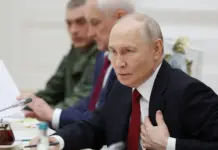
IRGC spokesperson Ebrahim Zolfaghari accused the United States of authorising Israel’s strikes on Beirut, deepening tensions between Washington and Tehran at a moment when the two governments were engaged in talks over extending a ceasefire aimed at reopening the Strait of Hormuz. US President Donald Trump acknowledged speaking with Israeli Prime Minister Benjamin Netanyahu on Sunday night, urging him to avoid further military action. Trump told Fox News he had instructed Netanyahu not to retaliate against Iran, and in a separate interview stated the latest flare-up would not derail ongoing negotiations with Tehran.
Netanyahu, meanwhile, convened an emergency security cabinet meeting at 11am local time (08:00 GMT) on Monday. The mood in his government was far from restrained: National Security Minister Itamar Ben-Gvir posted "Tehran must burn" on X, reflecting the hawkish pressure Netanyahu faces from within his own coalition.
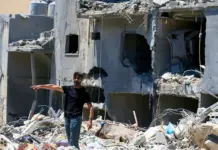
![Heavy machinery operates to remove the rubble in the aftermath of an Israeli attack on the southern suburbs of Beirut, Lebanon, June 7, 2026 [Mohamed Azakir/Reuters]](https://world-tension.s3.us-east-2.amazonaws.com/articles/1352/b232b8183ea34a919003769576e563b9.webp)
The crisis has its roots in a ceasefire framework negotiated in April that was meant to stabilise Lebanon and reduce direct Iran-Israel hostilities. Under that agreement, armed groups — including Hezbollah — were to withdraw south of the Litani River, with the Lebanese army assuming sole authority in pilot zones in the south. Hezbollah has refused to participate in direct talks with Israel, which are currently being held in Washington between Israeli and Lebanese officials. Lebanese President Joseph Aoun has maintained that only negotiation and diplomacy can end the war, a position Iranian Foreign Minister Abbas Araghchi publicly challenged on Saturday via X.
Despite the April truce, Israel has continued striking Lebanon and last month crossed the Litani River — a line it had itself designated as a buffer zone — citing ongoing rocket and drone fire from Hezbollah into northern Israel. The IRGC warned as recently as Thursday that there would be no calm in the region while Israel maintained its occupation of southern Lebanon. Iran has also stressed that any durable peace agreement with the United States depends on an end to Israel’s military campaign in Lebanon.
Israel Iran Strikes: Regional Implications
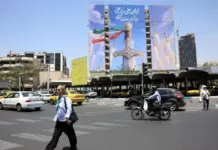
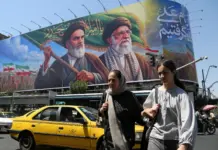
Analysts have described the targeting of Dahiyeh as a serious escalation, given its symbolic and strategic significance to Hezbollah. The Azadi Tower in Tehran was draped with a Hezbollah flag on Friday, signalling the depth of Iranian solidarity with the Lebanese militant group. At a gathering near Enghelab Square in downtown Tehran the same night, Iranian state television analyst Abbas Abdi addressed a crowd amid rising public tension.
![Pro-government Iranian demonstrators wave flags of Iran and Hezbollah in Tehran, June 7, 2026 [Vahid Salemi/AP Photo]](https://world-tension.s3.us-east-2.amazonaws.com/articles/1352/6cafb9d3adde4812bc12f7f0823364f5.webp)
Some Iranian lawmakers have expressed scepticism about US intentions. Amirhossein Sabeti, a Tehran representative in the hardline-dominated parliament, claimed Trump was managing the situation to preserve stability only until the FIFA World Cup — co-hosted by the United States, Canada, and Mexico — concludes.
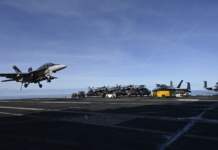
The IRGC also launched missiles and drones at US CENTCOM bases in Kuwait and Bahrain, broadening the theatre of conflict and placing American forces directly in the crossfire. With Brent crude surging, global markets reacted sharply to the prospect of a sustained disruption to Gulf energy flows. Whether diplomatic channels — already under severe strain — can contain the escalation before it becomes irreversible remains deeply uncertain.