Washington — Donald Trump has ruled out releasing frozen Iranian assets before a permanent ceasefire agreement is in place, drawing a firm line that threatens to deepen an already fragile diplomatic impasse between Washington and Tehran.
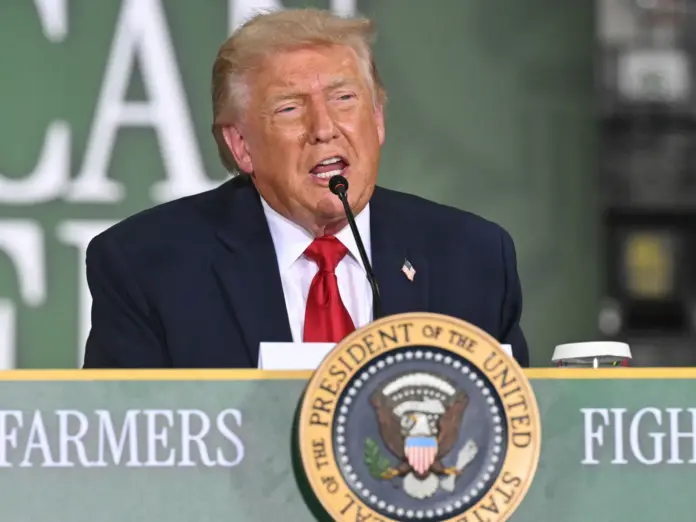
Iran Frozen Assets — Speaking in an interview filmed at a barn in Wisconsin on Friday and broadcast Sunday on NBC’s Meet the Press, Trump was unequivocal: any unfreezing of Iranian funds ‘comes after’ a deal is reached, not before. The declaration directly contradicts Tehran’s position that access to those funds is a prerequisite for building the trust necessary to conclude a lasting agreement.
Iran holds more than $100 billion in frozen accounts across the world as a result of decades of international sanctions. Iranian state media has reported that Tehran is seeking the release of between $12 billion and $24 billion as part of any ceasefire arrangement, with half disbursed upon signing and the remainder released at a later stage. For Trump, that sequence is simply unacceptable.
Recommended Reading
The gulf between the two sides was underscored on Saturday when Mohsen Rezaee, a military adviser to Iran’s Supreme Leader Ayatollah Mojtaba Khamenei, told CNN that ‘negotiations are at a deadlock’ — a blunt assessment that reflects the mounting frustration in Tehran over the pace and direction of talks.
The broader diplomatic context is extraordinarily fraught. The United States launched military operations against Iran twice during the ongoing negotiation period, and Trump has repeatedly threatened renewed strikes throughout ceasefire discussions. Fighting between US-Israeli forces and Iran has been largely paused since April 8, but the situation remains volatile.
Iran’s Supreme Leader himself is a figure shrouded in uncertainty. Ayatollah Mojtaba Khamenei assumed leadership after his father, Ali Khamenei, was killed shortly after the United States and Israel began launching strikes on Iran on February 28. The younger Khamenei has not been seen in public since sustaining wounds in US strikes early in the conflict. Despite this, Trump indicated he would be willing to speak directly with him — a notable diplomatic signal amid the deadlock.
The stalled asset question is just one of several deeply contested issues. Negotiators remain divided over the future governance of the Strait of Hormuz, one of the world’s most strategically critical waterways, as well as the long-term trajectory of Iran’s nuclear programme. The 2015 nuclear accord — which saw Tehran curtail its atomic activities in exchange for sanctions relief — collapsed after Trump unilaterally withdrew from it in 2018, leaving a diplomatic vacuum that has never been fully repaired.
Iran Frozen Assets: Regional Implications
Complicating matters further is the situation in Lebanon, where Israel’s continued strikes against Hezbollah have repeatedly threatened to derail broader negotiations. Iran’s parliamentary speaker, Mohammad Bagher Ghalibaf, warned on Sunday that Iran could retaliate in response to Israeli attacks on southern Beirut. Trump, however, distanced Washington from that dimension of the conflict, stating he was ‘not demanding’ that Lebanon be incorporated into any ceasefire framework. A US official separately characterised Hezbollah as ‘exclusively to blame’ for the fighting in Lebanon — a framing that aligns closely with Israel’s position and is unlikely to find favour in Tehran.
The interplay between the Lebanon front and the broader Iran negotiations illustrates the layered complexity facing diplomats on all sides. Each Israeli strike risks inflaming Iranian domestic opinion and hardening the positions of officials who are already sceptical that Washington is negotiating in good faith. Meanwhile, Trump’s public posture — combining openness to dialogue with Khamenei alongside threats of renewed military action — sends a mixed message that has done little to accelerate progress.
With the ceasefire holding only tenuously since early April, the window for a durable agreement remains open but narrow. The frozen assets dispute has emerged as perhaps the most immediate flashpoint: Iran views access to those funds as a tangible demonstration of American sincerity, while Trump insists the sequencing must run in the opposite direction. Until that fundamental disagreement is resolved, the broader architecture of any lasting deal will remain out of reach.