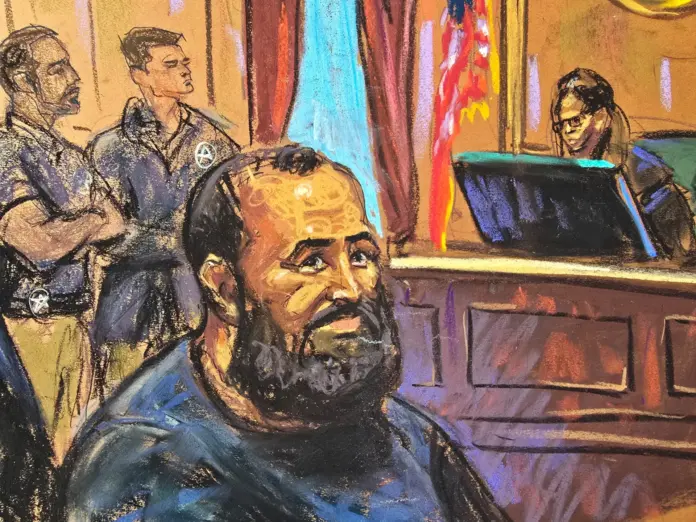
NEW YORK — A 32-year-old Iraqi national accused of directing a sweeping campaign of violence across three continents appeared in Manhattan federal court Friday, facing charges that could send him to prison for life. Mohammad Baqer Saad Dawood al-Saadi, alleged to be a senior commander of the Iran-backed militant group Kataib Hezbollah, is linked to at least 18 attacks and attempted attacks targeting American, Israeli, and Western interests in the United States, Canada, and Europe.
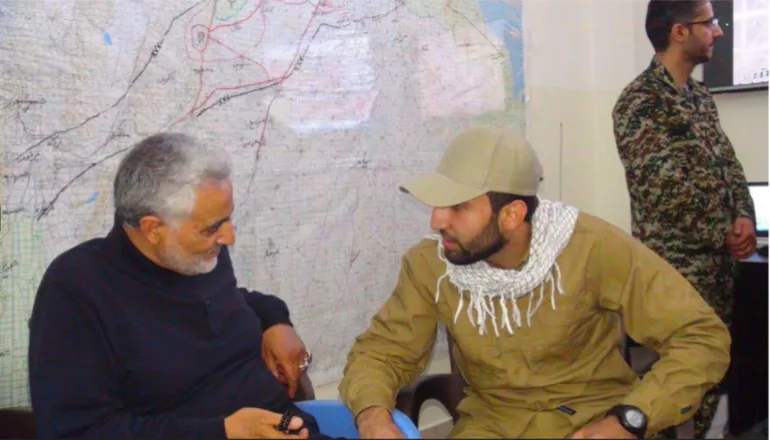
Kataib Hezbollah Commander — The criminal complaint, unsealed Friday in federal court, paints a portrait of a well-connected operative who worked closely with Iran’s Islamic Revolutionary Guard Corps and maintained personal ties to the late IRGC-Quds Force commander Qassem Soleimani. Al-Saadi has been an active member of Kataib Hezbollah since at least 2017, prosecutors allege, and the attacks he allegedly coordinated were designed to pressure the United States and Israel into halting military operations against Iran.
Al-Saadi was arrested overseas and transported to the United States, arriving at a federal jail in Brooklyn on Thursday night, where he has been held in solitary confinement. FBI Director Kash Patel confirmed that bureau personnel carried out the arrest, and US Ambassador to Türkiye Tom Barrack led the joint operation that resulted in his capture.
Recommended Reading
The alleged attacks span multiple countries and methods. In mid-March, al-Saadi allegedly coordinated a firebombing of a Bank of New York Mellon building in Amsterdam. Around the same period, he is accused of directing a shooting at the US consulate in Toronto and orchestrating a stabbing in London that left an American citizen wounded. French police thwarted a separate attack allegedly planned under his direction against a Bank of America office in Paris, where authorities discovered a bomb containing 0.65 kilograms — roughly 23 ounces — of explosives.
On American soil, al-Saadi allegedly offered $10,000 in cryptocurrency to finance simultaneous attacks on a New York City synagogue and Jewish community centres in California and Arizona. Court documents indicate he made a $3,000 cryptocurrency down-payment to advance those plots.
Al-Saadi now faces a six-count criminal complaint that includes two counts of conspiracy to provide material support to a foreign terrorist organisation. Kataib Hezbollah has been designated by the United States as a foreign terrorist organisation. If convicted on all counts, al-Saadi faces a maximum penalty of life in federal prison. His defence lawyer, Andrew Dalack, has been retained to represent him.
The charges emerge against a volatile geopolitical backdrop. A military conflict involving the United States, Israel, and Iran erupted in late February 2026, and prosecutors allege that al-Saadi’s campaign of violence was directly tied to that broader confrontation — an effort to impose costs on Western nations supporting military pressure on Tehran.
Kataib Hezbollah Commander: Regional Implications
The breadth of the alleged conspiracy — spanning firebombings, shootings, stabbings, and planned bombings across North America and Europe — underscores the reach that Iran-aligned networks have sought to project beyond the Middle East. Investigators say al-Saadi’s deep institutional ties, including his personal relationship with Soleimani before the general’s killing in a US drone strike in 2020, placed him at the heart of Kataib Hezbollah’s external operations apparatus.
The operation to apprehend al-Saadi involved coordination between US law enforcement, intelligence agencies, and diplomatic personnel, with Ambassador Barrack’s role in Türkiye suggesting the arrest took place in or near that country. Officials have not publicly disclosed the precise location of the arrest.
The case is being prosecuted in the Southern District of New York, which has historically handled some of the most significant international terrorism prosecutions in the United States. Al-Saadi’s appearance in court Friday marked the formal beginning of what is expected to be a complex legal proceeding with significant implications for US efforts to counter Iranian-backed militant networks operating globally.