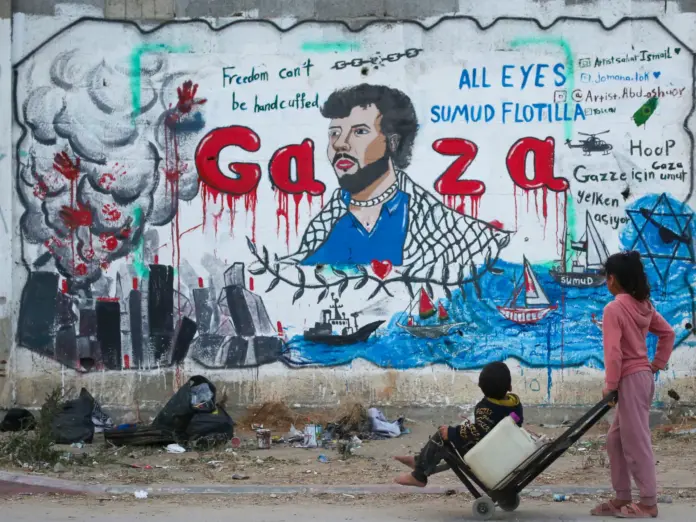
Gaza Flotilla Detainees — At least 87 people seized by Israeli forces from a Gaza-bound aid flotilla have begun a hunger strike, declaring their detention an illegal abduction and expressing solidarity with more than 9,500 Palestinians held in Israeli custody. The protest marks a sharp escalation in tensions following a sweeping naval operation that intercepted dozens of vessels in international waters off the coast of Cyprus.
The flotilla, which departed from the Turkish port city of Marmaris last week, comprised more than 50 vessels carrying activists from across the globe. Its stated mission was to break Israel’s blockade of the Gaza Strip and deliver humanitarian aid to the besieged territory. Israeli forces began intercepting the convoy on Monday, with the last remaining vessel — the Lina al-Nabulsi — boarded on Tuesday evening, when six additional people were taken into custody.
Israel’s Ministry of Foreign Affairs confirmed that a total of 430 flotilla activists were transferred to Israeli vessels during the operation. Activists and witnesses alleged that Israeli forces fired rubber bullets at participants during the interceptions, claims that have not been officially acknowledged by Israeli authorities. The ministry dismissed the entire flotilla effort as a PR stunt, framing the operation as a necessary security measure.
Recommended Reading
The detainee roster has drawn significant international attention. Among those held are nine Indonesian citizens and approximately 15 Irish nationals, including Margaret Connolly, a physician and the sister of Irish President Catherine Connolly. Her detention has amplified diplomatic pressure on Israel from Dublin, adding a personal dimension to what has rapidly become a multilateral crisis.
Indonesia issued a forceful statement demanding the immediate release of all vessels and their passengers, pledging to exhaust every available diplomatic and consular channel. The country joined a broad coalition of nations — including Turkiye, Spain, Jordan, Pakistan, Bangladesh, Brazil, Colombia, Libya, and the Maldives — in condemning the interceptions as blatant violations of international law and international humanitarian law.
The hunger strike, organised collectively by detainees, carries symbolic weight beyond the immediate crisis. Activists framed the action as an act of resistance against what they characterised as unlawful detention, while also drawing attention to the conditions faced by Palestinian prisoners in Israeli jails. The tactic has precedent: previous flotilla participants have refused food upon detention by Israel, and pro-Palestinian activists imprisoned in the United Kingdom participated in a months-long hunger strike beginning last year, an action that resulted in severe health consequences for several participants.
The United States took a markedly different position from many of its allies, imposing sanctions on four activists connected to flotilla efforts aimed at reaching Gaza. Washington alleged that the flotilla’s organisers were acting in support of Hamas, the militant group that governs the Gaza Strip and which the US designates as a terrorist organisation. The move placed Washington at odds with several European and Global South governments that have characterised the flotilla as a legitimate humanitarian endeavour.
Gaza Flotilla Detainees: Regional Implications
The interceptions have reignited debate over the legality of Israel’s naval blockade of Gaza, which has been in place for nearly two decades. Critics argue the blockade constitutes collective punishment of Gaza’s civilian population and violates international humanitarian law. Israel maintains the blockade is a lawful security measure designed to prevent weapons smuggling into the territory.
The fate of the 430 detained activists remains unresolved. With multiple governments demanding their release and diplomatic channels under strain, the episode threatens to deepen Israel’s international isolation at a moment when its military campaign in Gaza continues to draw global scrutiny. The hunger strike, meanwhile, signals that detainees intend to sustain pressure from within, regardless of how long their detention lasts.