BEIRUT/JERUSALEM — Israeli forces have seized Beaufort Castle, a UNESCO-protected Crusader-era mountain fortress in southern Lebanon, in what the Israeli military describes as the deepest penetration into Lebanese territory in more than 25 years. The advance, ordered by Prime Minister Benjamin Netanyahu, has pushed Israeli troops well past the Litani River, triggering an emergency session of the UN Security Council at France’s request and drawing urgent warnings from diplomats that the offensive is eroding any chance of a negotiated end to the conflict.
Israel Lebanon Offensive — Beaufort Castle, perched atop a strategic ridge commanding sweeping views of southern Lebanon, carries enormous symbolic weight. Israel occupied the fortress for 18 years before withdrawing in 2000. Its recapture signals a dramatic escalation in the current campaign and has alarmed heritage authorities given the site’s protected status under international law.
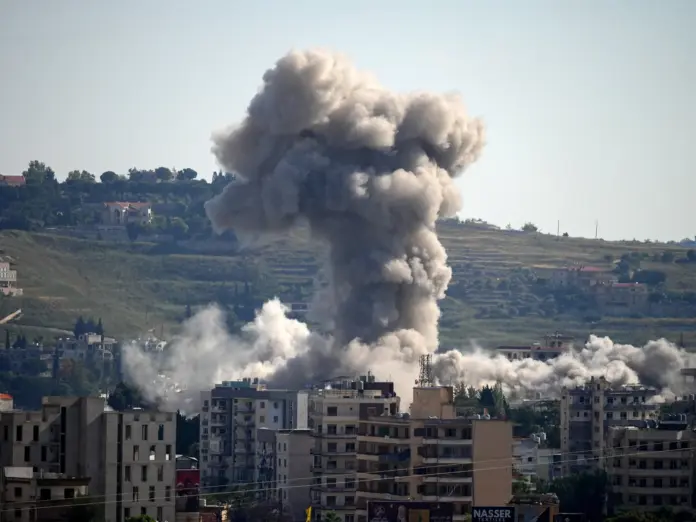
The human cost of the offensive is mounting rapidly. Lebanon’s Ministry of Health confirmed that Israeli strikes killed at least eight people and wounded 19 others, including women and children, in a single day of bombardment. At least three strikes hit the centre of Tyre, with additional strikes landing on Deir al-Zahrani to the north. The Israeli military simultaneously issued evacuation orders to more than 80,000 residents of Tyre, directing them to move northward as ground forces continued their advance.
Recommended Reading
Hezbollah mounted resistance throughout the day. The group’s fighters fired rockets and artillery shells at Israeli forces on the eastern outskirts of Yohmor al-Shaqif in southern Lebanon at 1am local time Monday. Hours earlier, at 7:30pm Sunday, Hezbollah announced it had shot down an Israeli Hermes 450 drone over southern Lebanon using a surface-to-air missile — a claim that, if confirmed, would represent a significant tactical success against Israeli aerial surveillance.
Beyond Lebanon, Israeli forces conducted new incursions into southern Syria, entering parts of Quneitra and Deraa provinces. Troops established temporary checkpoints, searched civilians and vehicles, then withdrew — a pattern that suggests probing operations rather than a sustained occupation, but one that nonetheless signals Israel’s willingness to extend its military footprint across multiple fronts simultaneously.
Diplomatic sources described the Lebanese incursions as the central obstacle in ongoing Lebanese-American talks, warning that the military pressure is actively undermining the possibility of reaching a broader solution. France’s push for an emergency Security Council session underscores the growing alarm among European powers over the trajectory of the conflict.
Against this backdrop of intensifying ground warfare, US President Donald Trump declared he is close to reaching what he called a ‘very good deal’ with Iran. Trump pushed back against characterisations that any emerging agreement lacks substance, insisting that nuclear provisions are addressed in ‘very strong and lengthy detail.’ Iranian Foreign Minister Abbas Araghchi confirmed that exchanges of messages with Washington are ongoing, lending credibility to Trump’s assertion that negotiations are at an advanced stage.
The diplomatic opening with Tehran comes even as Iran continues military operations against Kurdish opposition groups in neighbouring Iraq. Komala, an Iranian Kurdish party, reported that Iran fired two missiles at its base in Erbil province at 10:40pm local time, bringing the total number of Iranian missiles and drones fired at the group’s positions to more than 81, according to Komala leader Amjad Hussein Panahi. The Kurdistan Freedom Party separately reported being attacked between 50 and 60 times since the broader US-Israel military campaign against Iran began.
Israel Lebanon Offensive: Regional Implications
On the economic front, Iran announced it has restored gas production at three offshore platforms in the South Pars gasfield following an Israeli strike on the facility in March. The resumption of output at one of the world’s largest natural gas reserves signals Tehran’s determination to maintain energy revenues despite sustained military pressure.
A former Pentagon official, Adam Clements, offered a sobering assessment of the air campaign against Iran, stating that the operation has exposed the inherent limitations of air power when deployed without complementary ground strategy. His remarks reflect a broader debate within Western defence circles about whether the current military approach can achieve its stated objectives or whether it risks entrenching a prolonged, multi-front conflict with no clear resolution in sight.
With Israeli ground forces pushing deeper into Lebanon, rockets flying across southern borders, and nuclear diplomacy advancing fitfully in parallel, the region remains suspended between the possibility of a negotiated settlement and the risk of a far wider war.