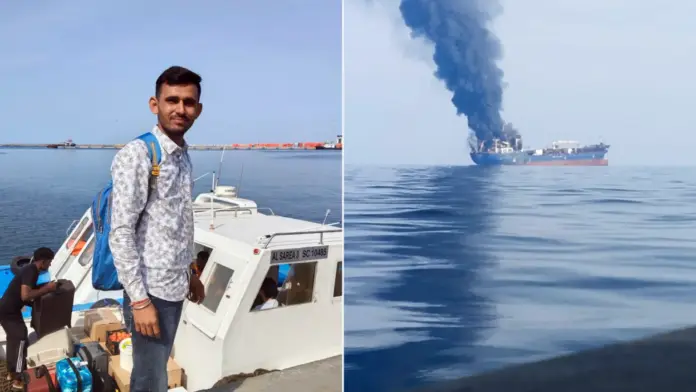
Hormuz Tanker Strike — In the early hours of 1 March, a missile tore through the engine room of the oil tanker Skylight as the vessel neared the Strait of Hormuz after departing Dubai. The explosion ignited a fire that swept through the ship, killing two young Indian crew members and marking the first commercial vessel casualty since the eruption of the US-Iran conflict in the region.
Dalip Rathore, 25, was working in the engine room when the missile struck. His body was never recovered. The ship’s captain, Ashish Kumar, also died in the attack, though some of his remains were later found. Sunil Puniya, 26, had boarded Skylight for his very first job at sea just days before the strike. Rathore had joined the vessel the day after him. The two young men came from neighbouring villages in Rajasthan, India — drawn to maritime work by the same promise of steady employment, only to find themselves aboard one of the most dangerous ships in one of the world’s most volatile waterways.
The Oman Navy launched a rescue operation within an hour of the attack, pulling survivors from the stricken vessel. Puniya survived, but says he will never return to working at sea. Before boarding, a recruiting agent in India had assured him that Skylight carried full insurance. That assurance was false.
Recommended Reading

Skylight had been sanctioned by the United States in December of the previous year for transporting Iranian oil. The designation triggered a cascade of consequences: its insurer, Hydor, terminated coverage, and Palau, its registered flag state, stripped the vessel of its registration. By the time the missile struck, Skylight was both uninsured and effectively stateless — a ghost ship carrying real people. MarineTraffic lists Red Sea Ship Management, a Dubai-based company, as the vessel’s shipowner.
The attack on Skylight is not an isolated incident. Maritime intelligence firm Kpler has documented 38 commercial vessels struck in and around the Strait of Hormuz since the conflict began. Of those, 24 were attributed to Iran and four to the United States, with the remainder unconfirmed. The Strait of Hormuz carries roughly 20 percent of the world’s oil and liquefied natural gas, making it the single most consequential chokepoint in global energy supply.
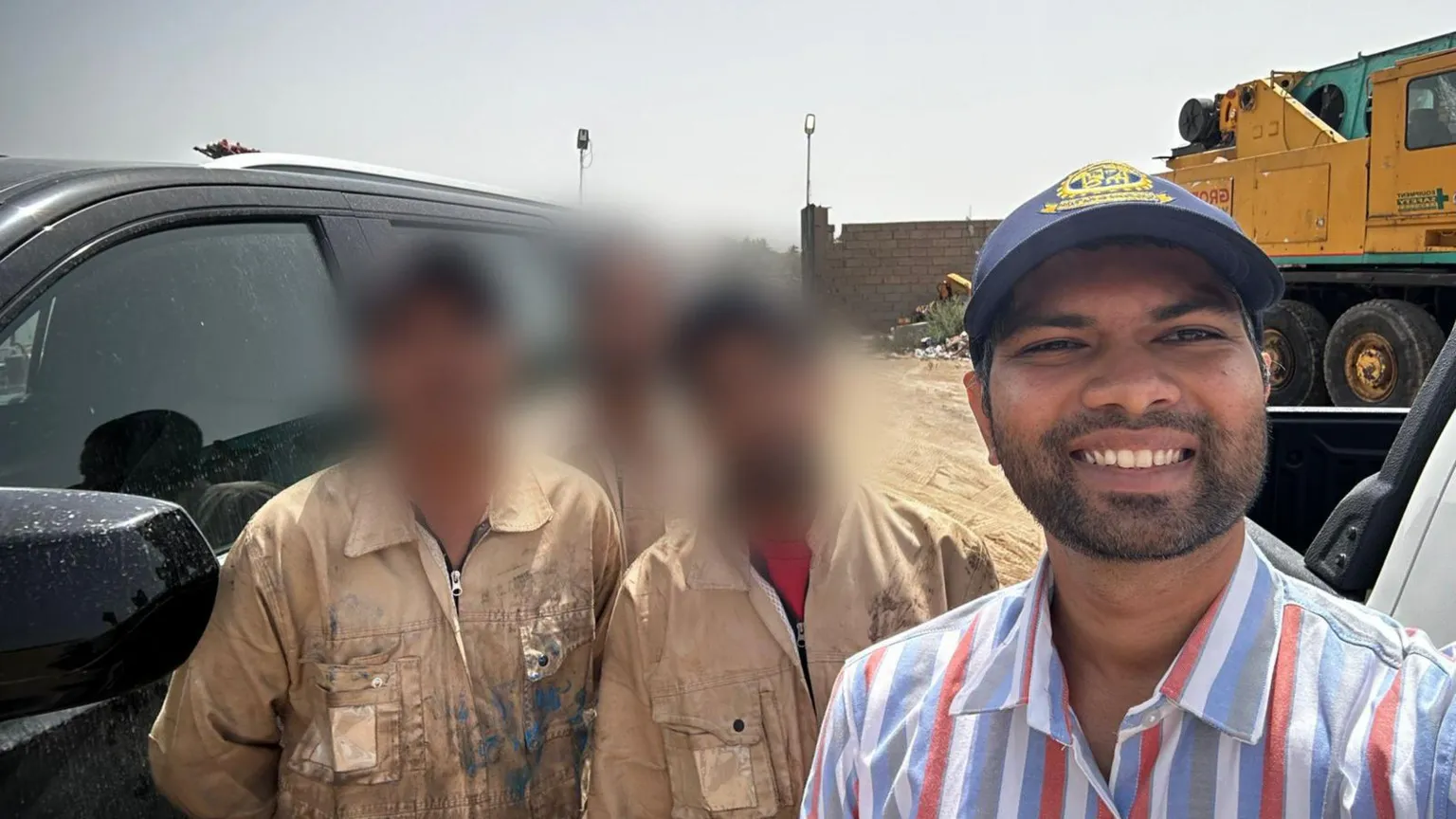
The human toll extends far beyond those killed or injured in direct strikes. The International Maritime Organization estimates more than 20,000 seafarers are currently stranded in the Gulf, unable to leave as the conflict continues. The International Transport Workers’ Federation (ITF) has fielded more than 2,000 calls for help from crew members on commercial ships trapped in or near the Strait since hostilities escalated. The ITF recorded 6,223 seafarers abandoned across 409 ships in the previous year alone — a figure that underscores how routinely maritime workers are left without recourse when commercial arrangements collapse.
Rex Pereira, 28, from Mumbai, was recruited by the same agents who placed Puniya aboard Skylight. He had already endured more than four months of difficult conditions at sea before the war began, stationed off the coast of Iraq when hostilities erupted. He witnessed missiles being fired in close proximity to his vessel — a reminder that the danger is not confined to ships that are directly hit.
Hormuz Tanker Strike: The Energy Security Dimension
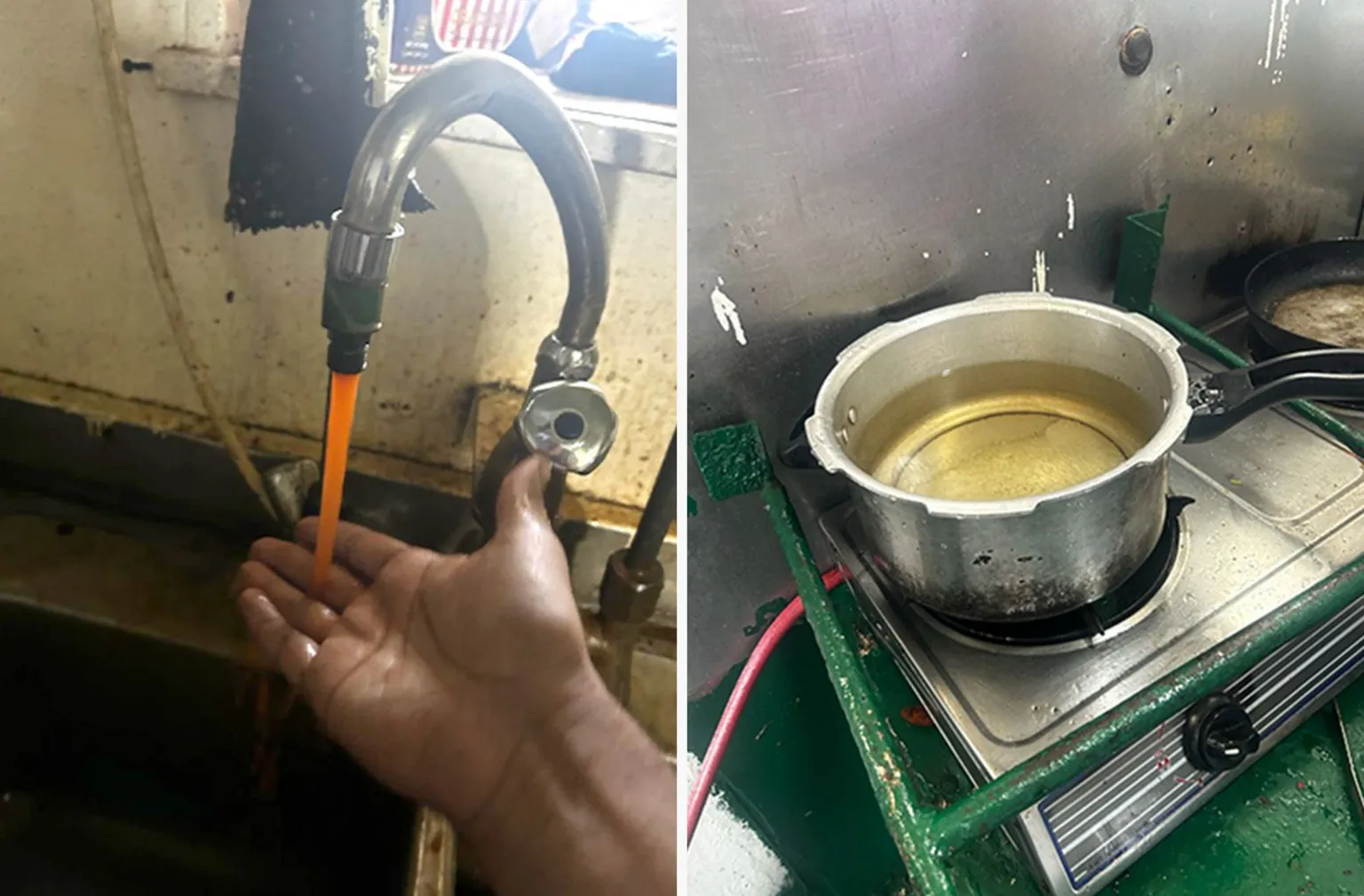
The stories of Puniya, Rathore, and Pereira illuminate a structural vulnerability at the heart of global shipping. Vessels operating under sanctions, stripped of insurance and flag registration, continue to recruit crew — often from economically vulnerable communities in South Asia — without fully disclosing the legal and physical risks involved. When those ships are struck, the absence of insurance leaves survivors and the families of the dead with little formal recourse.
On the diplomatic front, US President Donald Trump stated that a peace agreement with Iran has been largely negotiated, referencing the Strait of Hormuz specifically in connection with the prospective deal. Whether any agreement materialises in time to ease the crisis for the tens of thousands of seafarers still caught in the Gulf remains deeply uncertain. For the family of Dalip Rathore — whose body the sea has not returned — the question of accountability is already long overdue.