Lebanon Ceasefire Violations — Lebanon’s death toll from Israeli military strikes has surpassed 3,000, the country’s health ministry confirmed Monday, as a fragile US-brokered truce extended just days earlier continued to fracture under sustained attacks from both sides of the frontier.
The ministry placed the cumulative death toll at 3,020 killed and 9,273 wounded since Israeli strikes began on March 2 — the day Lebanon was drawn into a broader regional conflict after Hezbollah fired rockets into Israel following an Israeli strike that killed Iran’s supreme leader. At least seven more people were killed in Israeli attacks on Monday alone, even as Lebanese and Israeli officials had concluded talks in Washington, DC just three days prior, agreeing to extend the ceasefire for another 45 days.
The truce, which first came into effect on April 17, has been marked by persistent violations on both sides. More than 400 people have died since the ceasefire began — a figure that underscores the agreement’s fragility. Despite the extension announced Friday, Israeli forces struck more than 30 targets across southern Lebanon and the Bekaa Valley over the weekend, hitting what the Israeli military described as weapons warehouses, observation posts, and buildings used to coordinate attacks. The military also said it killed several Hezbollah fighters it accused of preparing operations against Israeli forces.
Recommended Reading
![Emergency workers inspect the damage after an Israeli strike on an apartment building in Baalbek on May 18, 2026 [AFP]](https://world-tension.s3.us-east-2.amazonaws.com/articles/1023/a418e93a6e9246e3a4e63b7700102aac.webp)
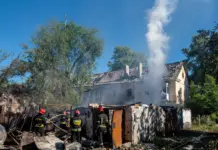
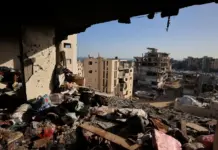
Saturday’s assault was particularly sweeping, encompassing more than two dozen villages. Evacuation warnings preceded strikes on only nine of those locations. The Israeli military issued five additional forced evacuation orders Monday evening, directing residents of Harouf, Borj El Chmali and Debaal to leave before planned attacks. Strikes were also reported in Hanaway, Dibal, Deir Ammar, Deir Amess and Meirka in the Tyre district, as well as in Harouf and other areas across the south.
Among those killed was Wael Abdel Halim, identified as a leader within the Palestinian Islamic Jihad movement, who died in an Israeli air strike on an apartment building in Douris, in the eastern Baalbek district. His 17-year-old daughter, Rama, was killed in the same strike.
Hezbollah, the Iran-backed armed Shia Islamist group, responded with a series of its own operations. Its fighters launched a swarm of attack drones at the Yaara barracks in northern Israel on Saturday and claimed additional strikes against Israeli troops in southern Lebanon, including a drone attack on an Israeli bulldozer near Deir Siryan, the destruction of an Israeli military communications drone in the same area, and a missile strike on a gathering of Israeli soldiers and vehicles in Rashaf.
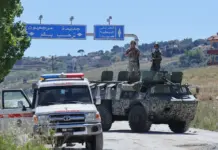
Israel’s military confirmed that one soldier was killed during fighting in southern Lebanon on Saturday. Since the conflict escalated in early March, 20 Israeli soldiers and four civilians have been killed. Israeli ground forces continue to occupy a strip of Lebanese territory stretching roughly 10 kilometres from the border, land seized during the initial phase of the conflict.
Lebanon Ceasefire Violations: Regional Implications
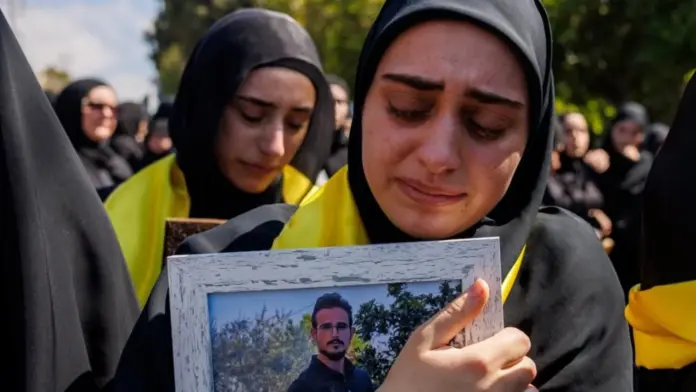
The humanitarian toll extends well beyond the casualty figures. The Danish Refugee Council estimates that more than 1.2 million people were displaced from their homes between March and April. The scale of displacement has compounded pressure on Lebanese authorities already struggling with a protracted economic crisis.
The ceasefire extension, the product of a third round of US-mediated negotiations, allows Israel to continue carrying out strikes aimed at countering what it describes as Hezbollah’s military activity — a provision that critics argue renders the truce structurally unenforceable. Hezbollah, which publicly opposes any negotiated settlement with Israel, has nonetheless continued engaging in the conflict while the Lebanese government participates in diplomatic talks.
A US-facilitated security track was expected to begin on May 29, with a further round of talks scheduled for June 2 and 3 in Washington, DC. Whether those negotiations can produce a more durable arrangement remains deeply uncertain, as strikes and counter-strikes continue to reshape the ground realities both delegations are ostensibly trying to resolve.