Iran War Escalation — The war pitting the United States and Israel against Iran entered its 80th day Monday, with no diplomatic breakthrough in sight and fresh signs of escalation rippling across the Middle East — from a drone strike on a nuclear facility in the United Arab Emirates to renewed Israeli bombardment in Lebanon and mounting pressure from Washington hawks to strike Iranian energy infrastructure.
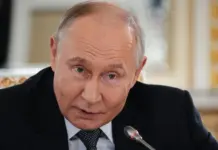
Donald Trump issued a stark warning to Tehran, declaring that "the clock is ticking" for Iran to clinch a deal to end the conflict. The warning came as reports circulated that Washington and Israel were actively considering air strikes on Iranian energy sites. Republican Senator Lindsey Graham publicly urged Trump to "hurt" Iran, explicitly endorsing attacks on its energy infrastructure. The stalled peace efforts pushed Brent crude oil prices to approximately $111 per barrel on Monday.
Iran’s Ministry of Defence spokesperson Reza Talaei-Nik responded defiantly on Sunday, stating that the military is "fully prepared" to confront any new aggression from the US and Israel. Mohsen Rezaei, a member of Tehran’s Expediency Council and former commander of the Islamic Revolutionary Guard Corps, issued a separate warning demanding the United States lift its blockade of Iranian ports.
Recommended Reading
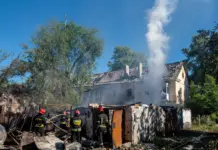
The most alarming development of the day came from the UAE, where a drone struck the Barakah Nuclear Energy Plant, hitting an electrical generator located outside the facility’s inner perimeter. The UAE’s Federal Authority for Nuclear Regulation confirmed the plant remained safe and that no radioactive material was released. The UAE Ministry of Defence reported that two additional drones were "successfully" intercepted after being launched from the country’s western border. Across the border, Saudi Arabia intercepted three separate drones on Monday, with Riyadh confirming the unmanned aircraft had entered from Iraqi airspace.
The drone incidents underscore the widening geographic footprint of the conflict. Dozens of US cargo planes carrying ammunition departed from bases in Germany and landed in Tel Aviv, a visible signal of continued American military support for Israel. Israeli media reported simultaneously that the military is preparing for renewed hostilities with Iran.
A separate and troubling disclosure emerged regarding Israeli military operations inside Iraq. The Israeli military operated two covert outposts in Iraq’s western desert, and soldiers killed both a shepherd and an Iraqi soldier near the town of al-Nukhaib in an apparent effort to conceal one of the sites.
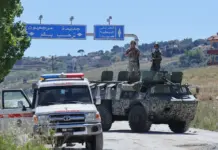
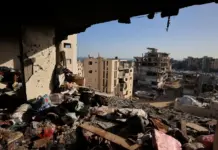
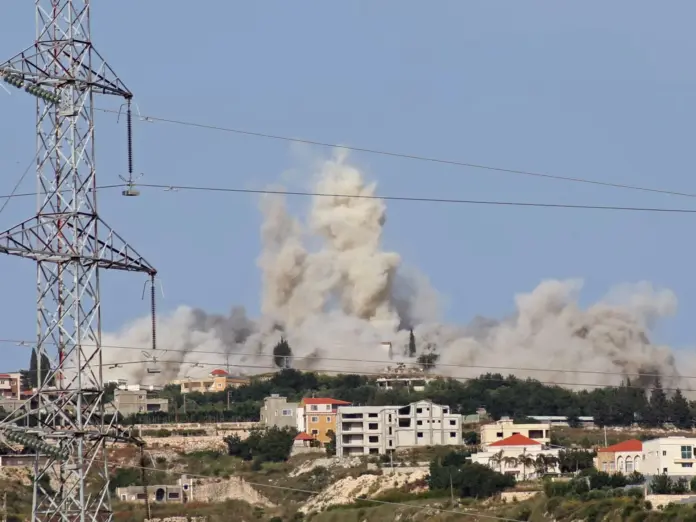
In Lebanon, Israel continued its bombardment despite an extension of a nominal ceasefire. Israeli forces issued evacuation orders for four towns and villages in southern Lebanon before striking two of those same locations. Strikes were reported in Az-Zrariyah, targeting a moving vehicle, and in Tayr Debba. The US and Israel have struck civilian targets multiple times during the course of the 80-day war.
Iran War Escalation: Regional Implications
Diplomatic manoeuvring continued on the margins of the conflict. Mikhail Ulyanov, Russia’s envoy to international organisations in Vienna, suggested Iran appoint a special envoy to Moscow — a signal that the Kremlin is positioning itself as a potential mediator or partner for Tehran. In France, Jean-Luc Melenchon, the leading figure of the left-wing La France Insoumise party, condemned what he called "European complicity" in US-Israeli strikes on Iran, reflecting growing unease within European political circles over the conflict’s trajectory.
Within the United States, political divisions over the war’s direction sharpened. While Graham pressed for more aggressive action, Republican congresswoman Marjorie Taylor Greene warned that any attempt to deploy US ground troops into Iran would trigger a "political revolution" at home — a rare moment of restraint from the right flank of Trump’s political coalition.
The convergence of drone attacks on Gulf energy and nuclear infrastructure, continued Israeli operations in Lebanon and Iraq, and the absence of any credible diplomatic channel marks a dangerous inflection point. With oil markets already reacting to the impasse and Iran’s military on declared high alert, the 80-day-old conflict shows no signs of approaching resolution.