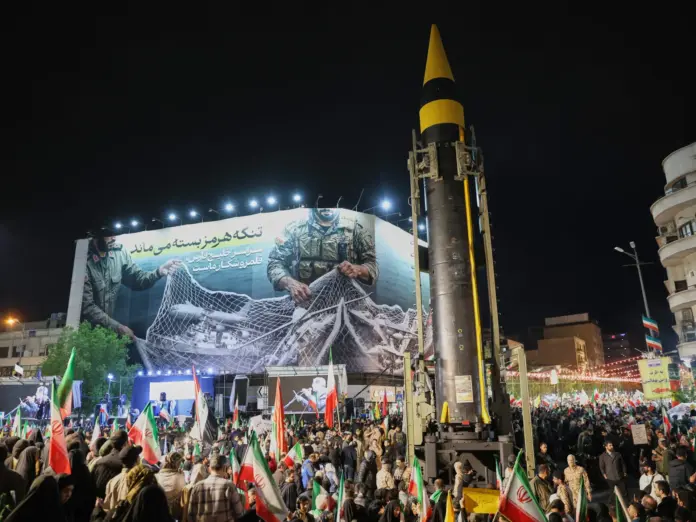
Iran Hormuz Closure — Iranian Foreign Minister Abbas Araghchi issued a stark warning Friday, declaring that Tehran stands ready to re-engage in direct military confrontation with the United States should diplomatic negotiations collapse without producing an acceptable outcome. The statement, delivered on the sidelines of a BRICS ministerial meeting in New Delhi, underscored the fragility of ceasefire efforts more than two months after the conflict erupted on February 28.
The war’s most immediate global consequence has been the effective closure of the Strait of Hormuz, the narrow waterway through which roughly one-fifth of the world’s oil and gas normally flows. The disruption has driven significant increases in US energy and inflation costs, rippling through financial markets with mounting force. On Wednesday, the US government auctioned $25 billion worth of 30-year Treasury bonds at a five percent yield — a threshold not breached in nearly two decades. By Friday, benchmark 10-year Treasury yields had climbed to their highest level in approximately a year, reflecting deepening investor anxiety over the conflict’s economic trajectory.
Iranian officials have made clear that any diplomatic settlement must include formal recognition of Tehran’s sovereignty over the Strait of Hormuz — a demand Washington has shown no public willingness to accept. Ebrahim Azizi, head of the Iranian parliament’s National Security Commission, stated that Tehran has developed a mechanism to manage maritime traffic through the strait along a designated route, framing the proposal as a basis for negotiation rather than a concession.
Recommended Reading
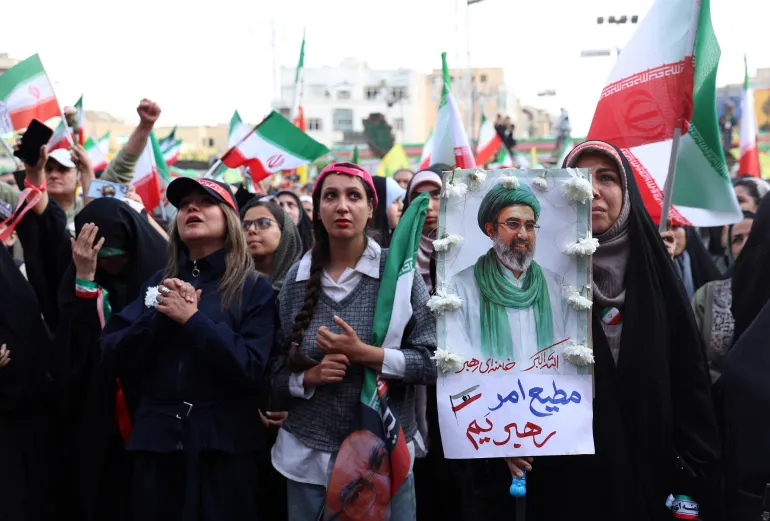
Talks held in Islamabad last month between Iranian and American delegations failed to end the fighting. Mohammad Bagher Ghalibaf, the Iranian parliament speaker, led Tehran’s delegation during the first round of negotiations in April. Araghchi indicated Friday that Iran welcomes mediation from Beijing, a signal that carries weight given that Donald Trump recently visited China and held direct talks with President Xi Jinping. Whether Beijing is prepared to play an active intermediary role remains unclear.
Inside Iran, the economic toll of the conflict has become catastrophic. Food inflation reached 115 percent during the first Persian calendar month ending in late April, with staples including cooking oil, rice and chicken tripling in price over the past year. The Iranian rial traded at approximately 1.8 million to the US dollar on the open market in Tehran on Saturday, hovering near an all-time low registered earlier in the month. The currency’s collapse has compounded the suffering of ordinary Iranians already battered by years of sanctions and economic mismanagement.
The government’s grip on internal dissent has tightened considerably since the conflict began. Thousands of anti-government protesters were killed during nationwide demonstrations in January, and authorities imposed a near-total internet shutdown lasting 78 days. The judiciary announced executions of alleged dissidents on a near-daily basis throughout the war. Major squares and arterial roads in Iranian cities remain occupied by armoured vehicles, with checkpoints manned by masked armed personnel.
State television has taken on an overtly militaristic character. On Friday evening, the state-run Ofogh channel broadcast a masked commander of the Islamic Revolutionary Guard Corps (IRGC) instructing viewers on how to load an AK-47 assault rifle variant. On a separate channel, host Mobina Nasiri appeared on air brandishing an assault rifle and declared her readiness to sacrifice her life for Iran. The broadcasts reflect a government effort to mobilise nationalist sentiment as battlefield and economic pressures intensify simultaneously.
Iran Hormuz Closure: Regional Implications
Despite the bellicose messaging, the Prime Minister stated that fuel supply has now risen above pre-war levels, a claim intended to reassure a domestic audience increasingly strained by shortages and price shocks. The assertion sits in uneasy tension with the rial’s near-record collapse and the triple-digit food inflation gripping Iranian households.
The conflict has entered a phase of dangerous stalemate. Neither side has demonstrated a willingness to make the concessions required for a durable ceasefire, while the economic costs — borne disproportionately by Iranian civilians and felt increasingly by global energy consumers — continue to mount. With Chinese mediation now openly courted by Tehran and US Treasury markets signalling sustained financial stress, the coming weeks may determine whether diplomacy can gain traction before the situation deteriorates further.