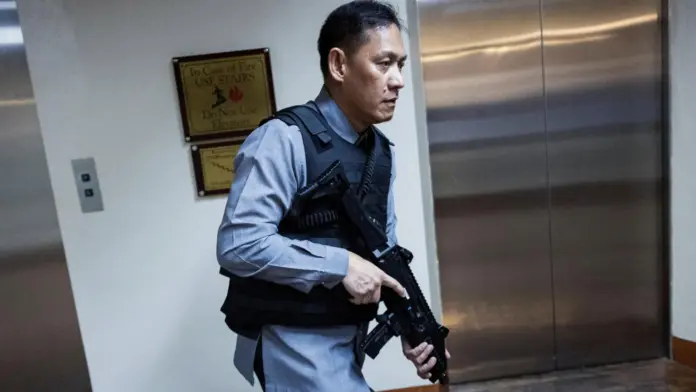
Icc-Wanted Dela Rosa — Shots rang out at the Philippine Senate in Manila on Wednesday evening as Senator Ronald Dela Rosa, a former national police chief facing an International Criminal Court arrest warrant, barricaded himself inside the building and declared he believed his detention was imminent.
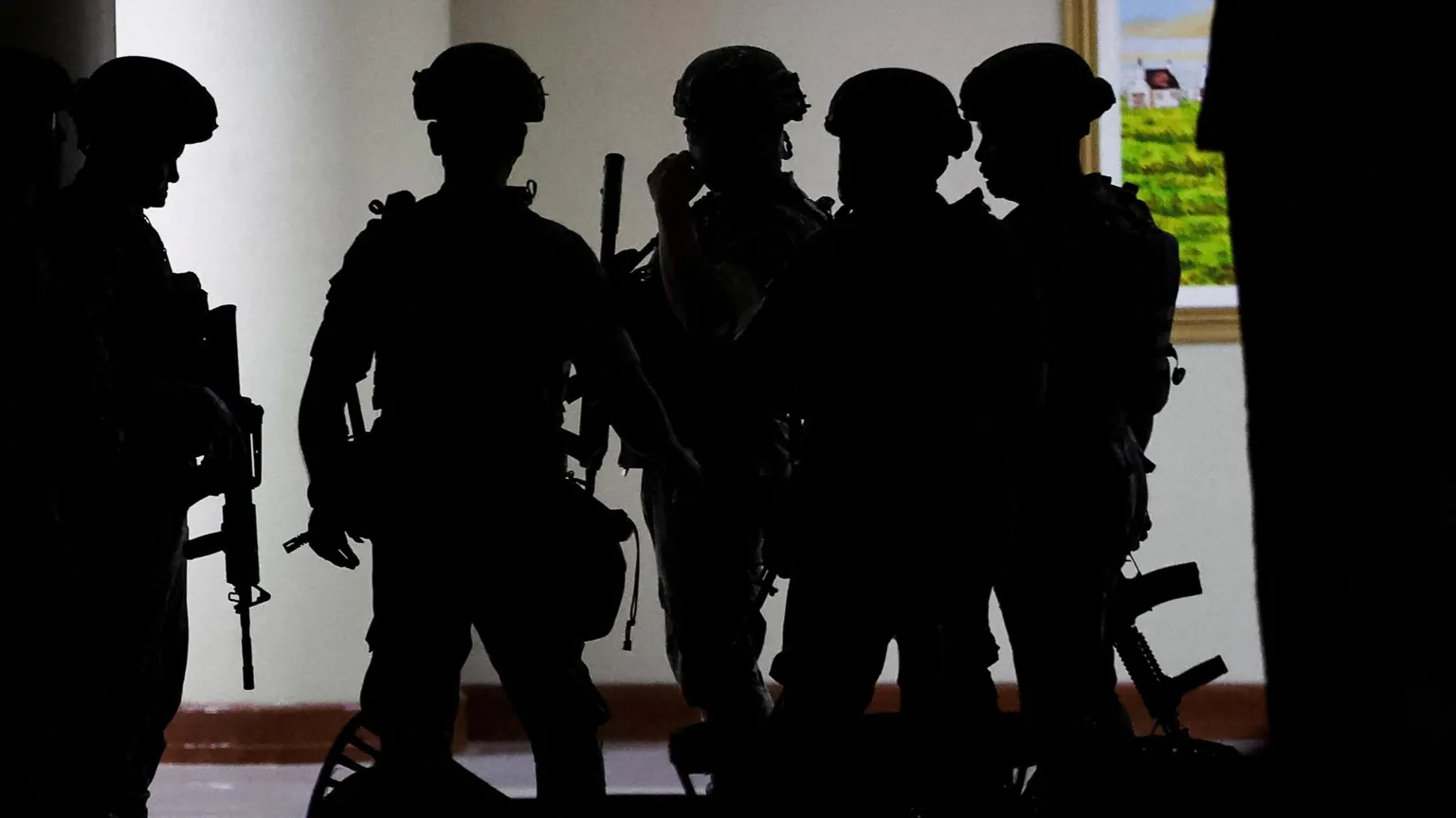
Police commandos in military fatigues entered the Senate complex while anti-riot officers carrying shields and helmets formed a tight perimeter around the building’s exterior. The lockdown sent shockwaves through the capital, though officials confirmed no casualties resulted from the gunfire. No arrests have been made in connection with the shooting, and Senate speaker Alan Peter Cayetano appealed to the public to submit video footage to assist investigators.
The government denied any active operation to detain Dela Rosa. Interior Secretary Jonvic Remulla stated that President Bongbong Marcos had issued strict instructions to ensure the safety of senators inside the building, adding that Dela Rosa was safe and in the company of security personnel.
Recommended Reading
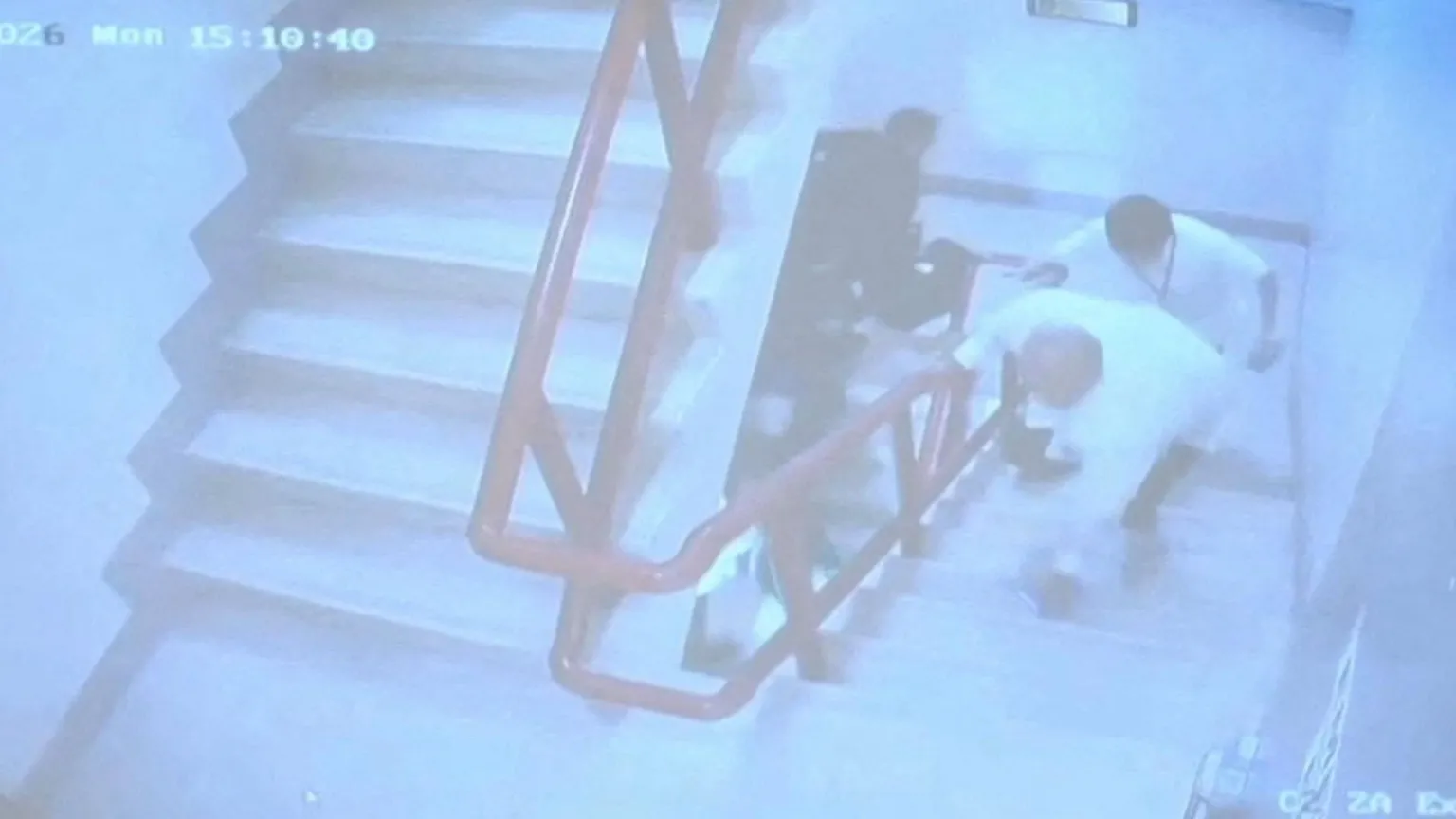
Dela Rosa’s lawyers moved swiftly, filing an emergency appeal with the Supreme Court to block any extradition proceedings. Outside the Senate, protesters gathered to demand his detention and called for him to stand trial alongside former president Rodrigo Duterte, who has been held at The Hague since March 2025.
The ICC is pursuing Dela Rosa over allegations that he oversaw the killing of dozens of people during his tenure as national police chief under Duterte’s administration. That period was defined by a brutal war on drugs in which thousands of alleged drug dealers were shot and killed. The alleged crimes are documented as occurring between 2011 and 2019 — a window during which the Philippines remained a member of the Rome Statute.
Duterte himself attempted to argue before ICC judges that the Philippines had withdrawn from the Rome Statute in 2019 and therefore fell outside the court’s jurisdiction. The judges rejected that argument, ruling that the court retained authority over crimes committed while Manila was still a signatory. The Philippines formally exited the treaty in 2019, but the alleged offences predate that withdrawal.
The standoff arrives at an extraordinarily volatile moment in Philippine politics. The Senate, which is currently dominated by allies of the Duterte family, holds the constitutional power to block the impeachment of Vice President Sara Duterte, Rodrigo Duterte’s daughter. The lower house of congress voted on Monday to initiate impeachment proceedings against her, setting up a direct confrontation between the two chambers. The political alliance between the Duterte family and President Marcos collapsed roughly two years ago, transforming former partners into bitter rivals.
Icc-Wanted Dela Rosa: Indo-Pacific Security Context
The scene at the Senate — armed commandos, encircling riot police, and an elected senator seeking sanctuary from an international court — illustrated the extraordinary pressure now bearing down on figures connected to the Duterte-era drug campaign. Critics have long argued that the crackdown amounted to state-sanctioned extrajudicial killings on a mass scale, while supporters maintain it was a necessary law enforcement operation.
With Rodrigo Duterte already in ICC custody and his former police chief now at the centre of a dramatic standoff, the question of accountability for one of Southeast Asia’s most controversial governance periods is moving from legal abstraction to immediate political reality. How the Marcos administration navigates the competing pressures — from an international court, a Duterte-aligned Senate, and a restive public — may define the trajectory of Philippine democracy in the months ahead.