Hormuz Crisis Gulf — One of the Arab world’s most experienced diplomats has delivered a sweeping assessment of Middle Eastern geopolitics, warning that the Strait of Hormuz has become the most dangerous flashpoint to emerge from the recent conflict — and that the Gulf’s greatest vulnerability lies not in foreign adversaries but in its own internal divisions.
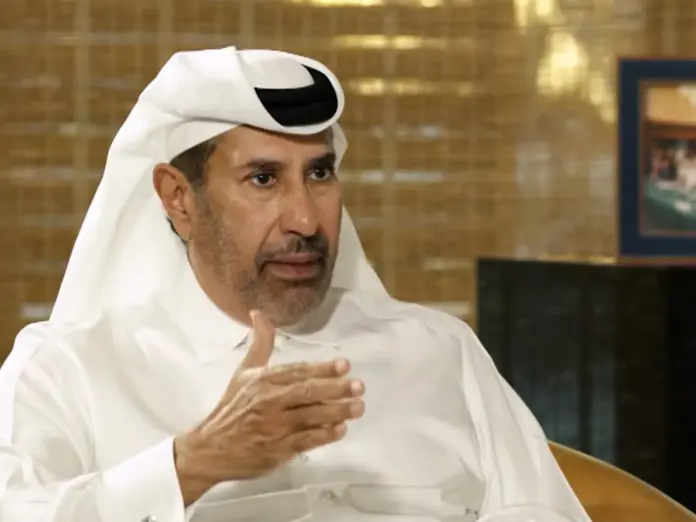
Sheikh Hamad bin Jassim Al Thani, the former Prime Minister and Foreign Minister of Qatar, spoke at length in an interview with Al Jazeera’s Al Muqabala programme, touching on Iran‘s nuclear ambitions, the war in Gaza, the fall of Bashar al-Assad in Syria, and the long-term reliability of American security guarantees in the Gulf.
At the centre of his analysis was a pointed critique of Israeli Prime Minister Benjamin Netanyahu, whom Sheikh Hamad accused of harbouring ambitions to draw the United States into a military confrontation with Iran — an effort he said stretches back to the administration of President Bill Clinton in the 1990s. A hardline faction within Israel, led by Netanyahu, has been systematically pushing for such a conflict, Sheikh Hamad argued, adding that Netanyahu persuaded the current US administration that any war would be short, decisive, and would topple the Iranian regime within weeks.
Recommended Reading
Sheikh Hamad also described Netanyahu’s vision of a ‘Greater Israel’ — a concept he attributed to Israel’s far-right — as a blueprint for expanding the country’s borders into neighbouring Arab states, a prospect he warned the region cannot afford to dismiss.
The former prime minister disclosed a little-known episode of personal diplomacy from the late 1990s, revealing that Qatar’s leadership dispatched him to Tehran to deliver a message from the Clinton administration. That message demanded Iran either hand over its nascent nuclear programme to Russia or submit to international oversight arrangements. Tehran, he noted, viewed Doha at the time as aligned with the American position — a perception that complicated Qatar’s role as a potential intermediary.
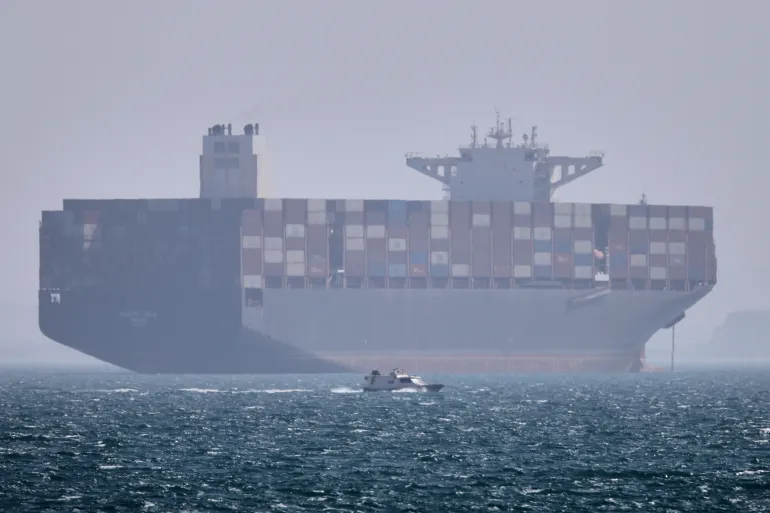
On the current diplomatic landscape, Sheikh Hamad acknowledged that two weeks of talks held in Geneva earlier this year, led by Oman, represented a serious effort to prevent war. The negotiations ultimately failed to produce a breakthrough, leaving the Strait of Hormuz — the narrow waterway through which roughly a fifth of the world’s oil passes — as a live pressure point. Iran, he said, is treating the strait as sovereign territory, a posture that carries profound implications for global energy markets.
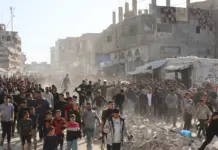
The human cost of the conflict in Gaza drew some of Sheikh Hamad’s sharpest language. He stated that more than 72,500 Palestinians have been killed since Israel launched its military campaign in October 2023, describing the conduct of the war as a ‘moral and political disaster.’ He also cited intelligence suggesting that financial incentives are being offered to encourage Palestinians to leave Gaza — a claim that, if accurate, would represent a significant escalation in efforts to alter the territory’s demographic composition.
Sheikh Hamad praised Saudi Arabia‘s refusal to normalise relations with Israel in the absence of a credible roadmap toward Palestinian statehood, calling it a principled stance that the broader Arab world should support. He proposed that Riyadh serve as the backbone of a new ‘Gulf NATO’ — a joint political and defence architecture that would give the region greater strategic autonomy.
Hormuz Crisis Gulf: Regional Implications
That call for self-reliance was underpinned by a candid assessment of American intentions. While acknowledging that US military bases have provided essential deterrence in the Gulf for decades, Sheikh Hamad warned that Washington’s strategic pivot toward Asia and its focus on containing China means the Gulf cannot count on indefinite American protection. He urged Gulf states to build durable partnerships with Turkiye, Pakistan, and Egypt as part of a broader realignment.
On Syria, Sheikh Hamad expressed relief at the collapse of Assad’s government, while revealing that he had personally urged the Syrian president early in the revolution to heed his people’s demands. Assad’s failure to do so, he implied, made his eventual fall inevitable.
The interview offered a rare window into the thinking of a statesman who shaped Gulf diplomacy for decades, and whose warnings about regional fragmentation carry weight precisely because he has witnessed — and in some cases participated in — the events he now describes. His central message was unambiguous: the Gulf’s future security depends less on external alliances than on the willingness of Arab states to close ranks among themselves.