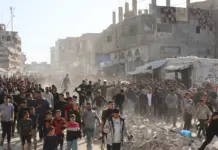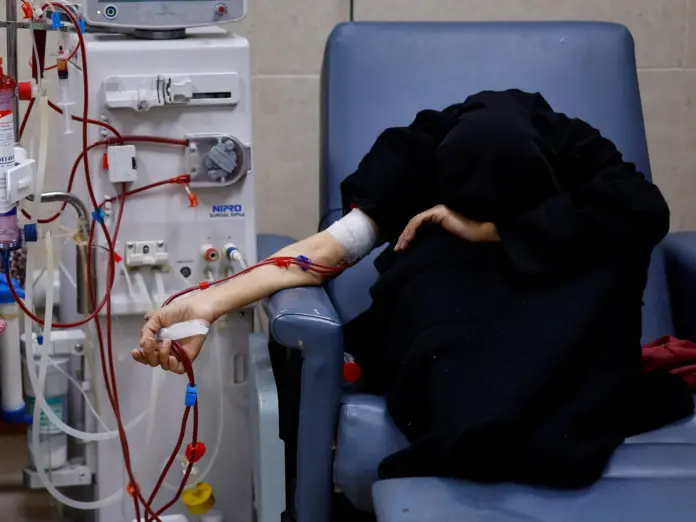
Gaza Maternal Mortality — On the day much of the world pauses to honour mothers, the women of Gaza are dying — in hospitals reduced to rubble, in tents without running water, and on operating tables where surgeons work without electricity or adequate supplies. The human cost of the war on Gaza, now stretching across two and a half years, has fallen with devastating weight on the women who hold families together amid the destruction.
At least 22,000 women have been killed since the conflict began. More than 22,000 others have lost their husbands, left to raise children alone in conditions that have been described by aid workers as incompatible with survival. Over 21,000 children have also perished, and more than 150 mothers have endured the unbearable task of burying children who starved to death. Seventy thousand children are currently suffering from malnutrition.
The collapse of Gaza’s medical infrastructure has turned routine health crises into death sentences. Every hospital in the territory has been bombed. The only specialised oncological facility has been destroyed entirely. The consequences are measured not just in statistics but in individual lives suspended between diagnosis and death.
Recommended Reading
Among those lives is Najat, a 46-year-old Palestinian woman whose cancer went undetected for nearly two years before she finally received a diagnosis. Her eldest daughter describes a mother who has now completed three rounds of chemotherapy, requires a full mastectomy, and has been prescribed radiation therapy — a treatment that does not exist anywhere in Gaza. A medical referral for evacuation has been submitted. It has not been approved.
Najat is not alone. Across Gaza, more than 20,000 Palestinians are in urgent need of medical evacuation. The Rafah crossing, the territory’s primary exit point to Egypt, remains subject to severe restrictions, effectively sealing patients inside a war zone. For cancer patients, the delay is not merely an inconvenience — it is a countdown.
The crisis in maternal health is equally stark. Between January and June 2025, 220 Palestinian women died during childbirth — a maternal mortality rate three times higher than before the war. There is no running water. There is no reliable electricity. Food is not normally accessible. Families are living in tents on land that was once home to functioning neighbourhoods.
The destruction of Gaza’s oncology hospital has drawn particular attention from medical professionals monitoring the conflict. Cancer care requires continuity — regular imaging, chemotherapy cycles, surgical intervention, and radiation. The elimination of that infrastructure does not merely disrupt treatment; it ends it. Patients like Najat, who might have had viable treatment pathways in peacetime, are left dependent on evacuation approvals that move through bureaucratic channels at a pace incompatible with disease progression.
The contrast with the wider world is difficult to ignore. Elsewhere, cancer patients are benefiting from emerging therapies. Actor Sam Neill recently announced he is cancer-free following a trial of CAR T-cell therapy, a cutting-edge immunological treatment that researchers believe could represent a transformative weapon against multiple cancer types. For patients in Gaza, such advances are not merely distant — they are entirely inaccessible.
Gaza Maternal Mortality: Regional Implications
The situation facing Gaza’s mothers sits within a broader pattern of civilian suffering that has drawn condemnation from humanitarian organisations. The combination of destroyed medical facilities, blocked evacuation routes, food insecurity, and the psychological toll of sustained bombardment has created conditions in which survival itself has become an act of resistance.
Najat’s youngest child is three years old. Her eldest daughter, who describes herself as the family’s anchor, continues to wait for word on the evacuation referral. Each round of chemotherapy her mother has endured has taken place in a territory where the infrastructure to support it barely exists. The next steps in her treatment — surgery and radiation — require resources that are simply not present.
Mother’s Day is observed on May 10 in the United States and Canada. In Gaza, the date carries a different weight — not of celebration, but of absence, grief, and the particular anguish of mothers who are fighting not only for their children’s lives, but for their own.