Sudan War Leaders — The commanders driving Sudan’s civil war have made clear they intend to keep fighting — potentially for decades — as a sweeping new economic and humanitarian assessment lays bare the staggering human cost of a conflict that has already become one of the world’s worst modern catastrophes.
Rapid Support Forces (RSF) commander Mohamed Hamdan Dagalo, widely known as Hemedti, declared his fighters were prepared to continue the war until 2040 if necessary. His counterpart, army chief and Transitional Sovereign Council head Abdel Fattah al-Burhan, matched that defiance, vowing to fight until Sudan was, in his words, cleansed of the RSF — a campaign he estimated could run until 2033. The duelling timelines underscore a conflict with no diplomatic resolution in sight.
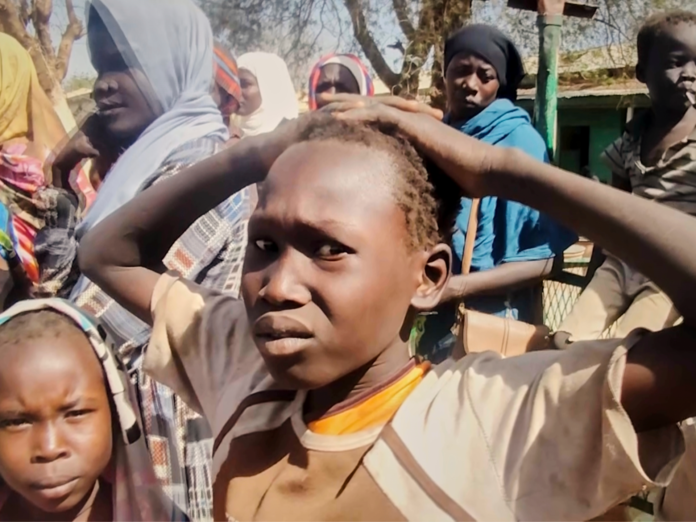
Since fighting erupted in April 2023, more than 150,000 people have been killed, according to a joint report by the United Nations Development Programme (UNDP) and the Institute for Security Studies. The toll from conflict-related injuries alone reached an estimated 61,000 deaths between April 2023 and June 2024. Nearly 15 million people have been displaced — one of the largest displacement crises anywhere on earth — while up to 24 million face acute food shortages and at least 19 million lack access to safe drinking water and sanitation.
Recommended Reading
Sudan’s healthcare infrastructure has been shattered. Between 70 and 80 percent of health facilities in active conflict zones are no longer functional, and at least 145 verified attacks on healthcare facilities and personnel have been documented. In the capital, Khartoum, only one in four hospitals remains operational. Across the country, roughly 65 percent of the population lacks adequate access to medical care.
Education has fared no better. Nineteen million school-aged children have had their schooling disrupted, and only one in five schools is currently open. Markets have been destroyed, agricultural production has collapsed, and manufacturing and services sectors have been severely weakened. State institutions are described in the report as being on the verge of total collapse, with governance effectively paralysed across large swaths of the country.
The economic projections are equally alarming. Under a Protracted Conflict scenario — in which fighting continues until 2030 — Sudan’s gross domestic product in 2043 would be US$34.5 billion lower than it would be in the absence of war. GDP per capita would fall by roughly US$1,700, and more than 60 percent of Sudan’s population would be living in extreme poverty. An additional 34 million people would be pushed below the poverty line under that scenario.
The tragedy is compounded by what Sudan could otherwise become. The country possesses significant oil reserves, substantial gold deposits, and some of the most fertile agricultural land on the African continent. Under a Sudan Rising scenario — one premised on peace, institutional reform, and economic recovery — the country’s GDP could reach US$58.2 billion by 2043, with average annual economic growth accelerating to five percent. That pathway could lift 17.3 million people out of extreme poverty by the same year. The gap between those two futures represents one of the starkest illustrations of war’s long-term economic destruction.
Sudan War Leaders: The Broader African Context
The conflict began in April 2023 when tensions between the Sudanese Armed Forces and the RSF — a paramilitary force that grew out of the notorious Janjaweed militias — erupted into open warfare in Khartoum and quickly spread across the country. What began as a power struggle between two former allies who had jointly orchestrated a 2021 military coup has since metastasised into a multi-front war marked by widespread atrocities, mass displacement, and the systematic destruction of civilian infrastructure.
International efforts to broker a ceasefire have repeatedly stalled, and with both commanders now publicly committing to timelines measured in years or decades, the prospect of a negotiated settlement appears increasingly remote. Humanitarian agencies warn that without an immediate cessation of hostilities and sustained access for aid workers, the death toll and displacement figures will continue to climb — and the window for preventing a full generational collapse of Sudanese society will narrow further with each passing month.