Washington / Strait of Hormuz — The United States declared an end to Operation Epic Fury on Tuesday and suspended a parallel naval escort mission through the Strait of Hormuz, signalling a cautious diplomatic pivot after weeks of military confrontation with Iran that rattled global energy markets and drew the wider region into conflict.
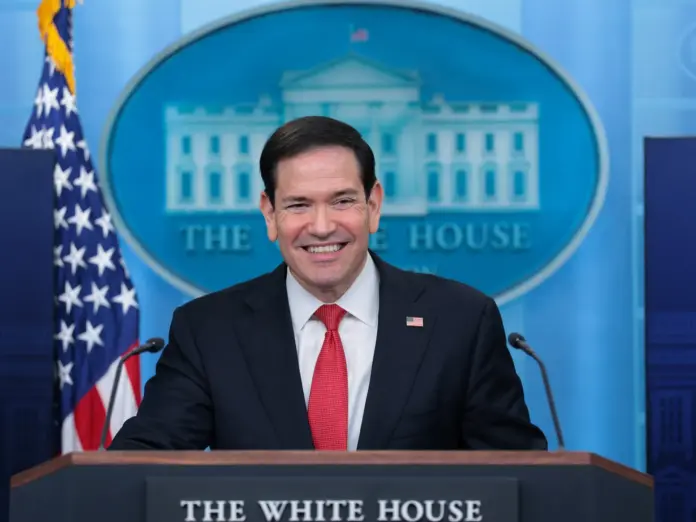
Secretary of State Marco Rubio announced that Operation Epic Fury — the joint US-Israeli strike campaign that commenced on February 28 — had achieved its stated objectives. Speaking on the same day, President Donald Trump announced the pause of Project Freedom, a military operation launched just one day earlier to escort stranded commercial vessels out of the strait. Trump described the suspension as temporary, saying it would last "for a short period of time" to allow space for a potential agreement to be finalised and signed.
Iran Hormuz Blockade — The twin announcements mark a significant, if fragile, shift in the crisis that has gripped one of the world's most strategically vital waterways. In peacetime, roughly 20 percent of the world's oil and liquefied natural gas supplies transit the Strait of Hormuz. Since the US-Israeli strikes began, Iranian threats to attack commercial shipping have effectively blockaded the passage, sending energy prices surging and stranding vessels across the region.
Recommended Reading
Trump attributed the pause directly to diplomatic pressure, stating it came "based on the request" of Pakistan and other countries. He cited what he described as "great progress" toward a "complete and final agreement" with Iranian representatives as justification. Rubio echoed that framing, saying Washington would prefer "the path of peace" and that Trump remained open to a deal.
Pakistan has played a central role in facilitating direct talks between Tehran and Washington. A first round of negotiations held in Islamabad ended without resolution, but both sides have since submitted new proposals, keeping the diplomatic channel open. Iran had not publicly responded to Trump's pause announcement at the time of publication.
The military confrontation in and around the strait has been intense. Iran declared that any vessel attempting to use the waterway without permission from the Islamic Revolutionary Guard Corps (IRGC) would be fired upon, and Tehran published a new map extending its claimed area of maritime control deep into waters the United Arab Emirates considers its own. Iran's state-affiliated Fars news agency claimed IRGC forces struck a US warship with drones. US Central Command flatly denied any American vessel had been hit, and said it had sunk at least six IRGC boats during the engagements — a claim Iran also denied.
The UAE has not been a passive bystander. Fujairah port, a critical bunkering and oil export hub on the Gulf of Oman, was struck in what Emirati officials described as Iranian attacks, triggering a fire at an oil refinery within the port complex. Tehran has not acknowledged responsibility for those strikes.
Iran Hormuz Blockade: Regional Implications
Despite the pause on Project Freedom, Trump was unambiguous that broader pressure on Iran would continue. In a post on Truth Social, he stated that the US naval blockade on Iranian ports "will remain in full force and effect," underscoring that the diplomatic opening does not represent a wholesale withdrawal of American coercive leverage.
The economic consequences of the crisis are already reverberating far beyond the Gulf. Reserve Bank of Australia Governor Michele Bullock stated bluntly that Australians are "poorer because of war on the other side of the world," as the RBA raised interest rates for a third consecutive meeting amid warnings that rates could be pushed above five percent. The disruption to global energy supply chains has compounded inflationary pressures across multiple economies.
Operation Epic Fury, which commenced on February 28, triggered the regional conflict that has since drawn in multiple actors and threatened the stability of Gulf shipping lanes. Whether the diplomatic track now being pursued through Islamabad can produce a durable settlement remains deeply uncertain. Both sides have shown a willingness to escalate — and, for now, a willingness to pause. The gap between those two positions is where the next phase of this crisis will be decided.