Iran Hormuz Deal — US President Donald Trump has ordered a temporary halt to Project Freedom, a military operation launched just days ago to shepherd commercial shipping through the Strait of Hormuz, saying meaningful progress toward a comprehensive deal with Iran justified the pause. The decision, announced Tuesday, suspends US naval escorts through the strategically vital waterway for what Trump described as a "short period of time" to allow diplomacy to run its course.
"Great progress" had been made toward a "complete and final agreement" with Iranian representatives, Trump said, adding that the pause was reached by "mutual agreement." He also cited a request from Pakistan, which has played a quiet but significant role shuttling messages between Washington and Tehran over recent weeks, as a contributing factor in his decision.
Project Freedom had begun only on Monday, when US forces said they attacked seven Iranian fast boats in the strait. Iran countered that it had fired warning shots at a US vessel the same day. Two commercial ships reported attacks Monday, though one successfully exited the strait under American military escort. The operation was conceived as a direct response to Iran’s blockade of the waterway — a move Tehran made after the US and Israel launched Operation Epic Fury on 28 February, a joint air campaign against Iran that Secretary of State Marco Rubio declared complete after achieving its stated objectives.
Recommended Reading
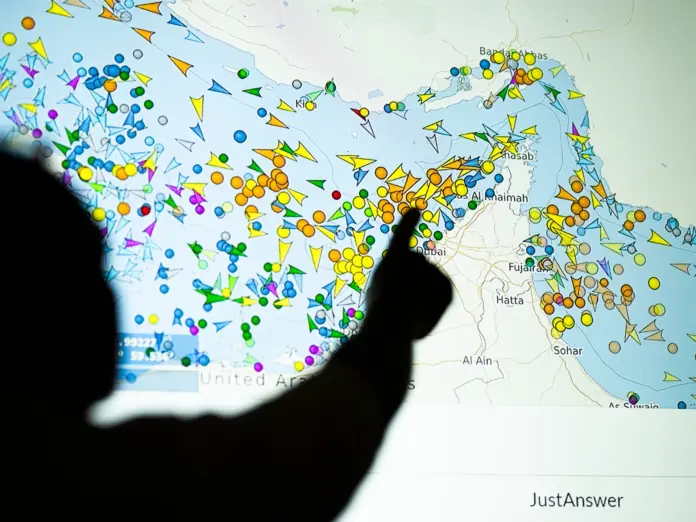
![Vessels in the Strait of Hormuz, near Bandar Abbas, Iran, on May 4, 2026 [Amirhosein Khorgooi/ISNA/WANA via Reuters]](https://world-tension.s3.us-east-2.amazonaws.com/articles/784/d1ef3318502c49db9422db378ca3c395.webp)
Despite the suspension of naval escorts, the US blockade of Iranian ports remains in force. Defense Secretary Pete Hegseth was emphatic that the broader ceasefire agreed in early April — under which Iran pledged to end drone and missile strikes on Gulf states — had not collapsed. “The ceasefire is not over,” Hegseth said Tuesday. However, Dan Caine, Chairman of the Joint Chiefs of Staff, acknowledged that Iran had attacked US forces ten times since the ceasefire took effect, characterising those incidents as falling “below the threshold” of resuming full hostilities — at least for now.
The diplomatic backdrop is complex. Weeks of back-channel communication, including direct talks in Islamabad brokered by Pakistan, have so far failed to produce a formal agreement. Iranian parliamentary speaker Mohammad Ghalibaf served as Tehran’s lead negotiator in last month’s discussions. Rubio, speaking at the White House, offered a pointed assessment of Iran’s position, saying the country has a “high pain threshold” but not an “unlimited” one — a signal that Washington’s patience, while extended, is not indefinite.
Iranian President Masoud Pezeshkian pushed back sharply, accusing the United States of pursuing a “policy of maximum pressure” and demanding that Iran capitulate to unilateral conditions. The rhetorical gap between the two governments remains wide even as their representatives continue to talk.
Complicating the diplomatic picture, the United Arab Emirates reported a second consecutive day of missile and drone attacks Tuesday, including a strike Monday on an oil port in Fujairah — a facility located outside the strait itself. UAE air defences were actively engaging incoming projectiles. Both Iran’s army spokesperson and the Islamic Revolutionary Guard Corps denied any involvement, with the army spokesman insisting that had Iran taken such action, it would have announced it "firmly and clearly." The IRGC also accused the US and its allies of "unfair media attacks, baseless accusations, and propaganda."
Iran separately accused US forces of killing five civilians in an attack on passenger boats in the strait Monday, claiming the vessels targeted were not IRGC craft. Washington has not publicly responded to that allegation. Late Tuesday, the UK Maritime Trade Operations authority reported that a cargo vessel had been struck by an unknown projectile in the strait, underscoring how volatile the waterway remains even as diplomacy proceeds.
Iran Hormuz Deal: Regional Implications
The IRGC Navy issued a stark warning that vessels transiting the strait via what it termed "unauthorised routes" would face a "decisive response," a statement that signals Tehran’s intent to maintain leverage over the chokepoint regardless of any diplomatic progress. Approximately 20 percent of the world’s oil and liquefied natural gas passes through the Strait of Hormuz under normal circumstances. Since the ceasefire in early April, few commercial vessels have been able to transit freely. Trump said he is also in discussions with Japan about the strait’s reopening, reflecting the global economic stakes involved.
Meanwhile, fighting continued on a separate front. Israel pressed ahead with strikes in southern Lebanon, issuing new evacuation orders for residents ahead of military operations. Israeli strikes killed two people in Deir Kifa. Hezbollah carried out retaliatory attacks on Israeli targets, including the town of Rashaf. The parallel conflict underscores the broader regional volatility that any US-Iran agreement would need to address — or at minimum, contain.
Whether the diplomatic window Trump has opened will produce results remains deeply uncertain. The architecture of the current standoff — a ceasefire that neither side fully honours, a blockade that squeezes Iran’s economy, and a strait that the world depends on but no single power fully controls — leaves little margin for miscalculation.