Syria Hezbollah Arrests — Syria’s Ministry of Interior announced Tuesday the dismantling of an alleged militant cell linked to Hezbollah, accusing the group of orchestrating a plot to assassinate senior Syrian government officials in one of the most significant security operations since the fall of Bashar al-Assad in December 2024.
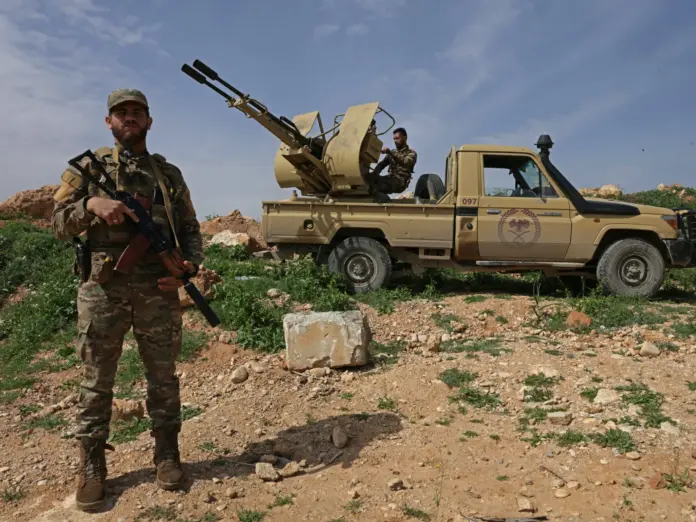
Security forces conducted coordinated raids across five regions — the Damascus countryside and the provinces of Aleppo, Homs, Tartous, and Latakia — seizing a cache of military equipment that included explosive devices and RPG launchers. The ministry released photographs of 11 suspects but did not disclose their nationalities.
In a formal statement, the ministry described the detainees as members of an "organised cell affiliated with the Hezbollah militia," alleging they had crossed into Syrian territory after completing intensive specialised training in Lebanon. The cell’s stated objective, according to authorities, was the targeted killing of high-level figures within Syria’s new governing structure.
Recommended Reading
The announcement drew an immediate and forceful rebuttal from Hezbollah. The Iran-backed organisation issued a statement categorically rejecting the accusations, asserting it maintains no presence inside Syrian territory. Hezbollah went further, accusing Syrian security authorities of deliberately seeking to inflame tensions between the Syrian and Lebanese peoples.
The denial does little to resolve the deep suspicion that has characterised relations between Syria’s new authorities and Hezbollah since Assad’s ouster. Since December 2024, Syrian officials have repeatedly announced the discovery and disruption of alleged plots they attribute to the Lebanese militant group — a pattern that reflects the profound geopolitical realignment now underway in the country.
The history between Hezbollah and the Assad government is well documented. The group’s military intervention on behalf of Damascus during Syria’s prolonged civil conflict was widely regarded as pivotal in turning the tide of the war in Assad’s favour. For years, Syria also served as an indispensable corridor for the transfer of Iranian weapons to Hezbollah, cementing a strategic triangle between Tehran, Damascus, and Beirut that shaped the region’s balance of power for over a decade.
That architecture has now collapsed. Assad’s removal has severed the land bridge that Iran relied upon to arm its Lebanese proxy, and Syria’s new leadership has made clear it views Hezbollah not as a former ally but as a destabilising threat. The string of alleged plot disclosures since the transition of power underscores how quickly the relationship has inverted.
Whether Tuesday’s arrests represent a genuine security breakthrough or form part of a broader political messaging campaign by Damascus remains difficult to independently verify. The ministry’s decision not to reveal the suspects’ nationalities adds a layer of ambiguity to the case, leaving open questions about the cell’s true composition and command structure.
Syria Hezbollah Arrests: Regional Implications
What is clear is that Syria’s new authorities are moving aggressively to signal control over a country still navigating an extraordinarily fragile transition. The simultaneous operations across five geographically dispersed provinces suggest a degree of coordination and intelligence capacity that the new government is keen to project publicly.
For Hezbollah, the accusations arrive at a moment of significant institutional strain. The group has faced mounting pressure following military setbacks and the broader weakening of the so-called "axis of resistance" that Iran has cultivated across the region. Being cast as a covert destabilising force inside post-Assad Syria — a country it once helped keep afloat — represents a sharp reversal of its regional narrative.
The situation remains fluid. With Syria’s political transition still in its early stages and armed factions of various loyalties still active across the country, the risk of further confrontations — real or alleged — between Damascus and Hezbollah-linked networks is likely to persist in the months ahead.