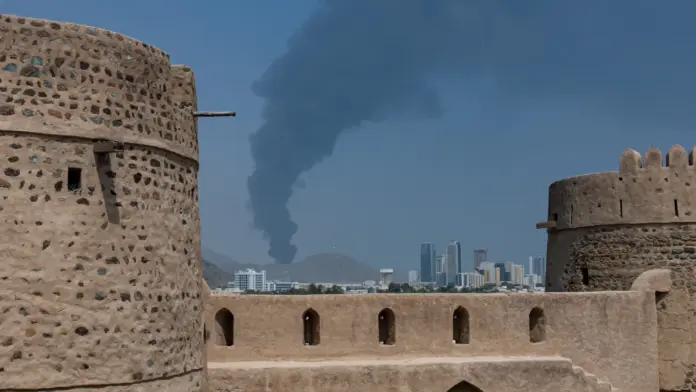
FUJAIRAH, United Arab Emirates — Iran launched a coordinated missile and drone assault on the UAE’s strategically vital port of Fujairah on Monday, triggering a fire at a major oil refinery, injuring three Indian nationals, and plunging the Gulf region into its most dangerous confrontation in weeks. The attack came despite a ceasefire between Washington and Tehran that had been in effect since April 8.
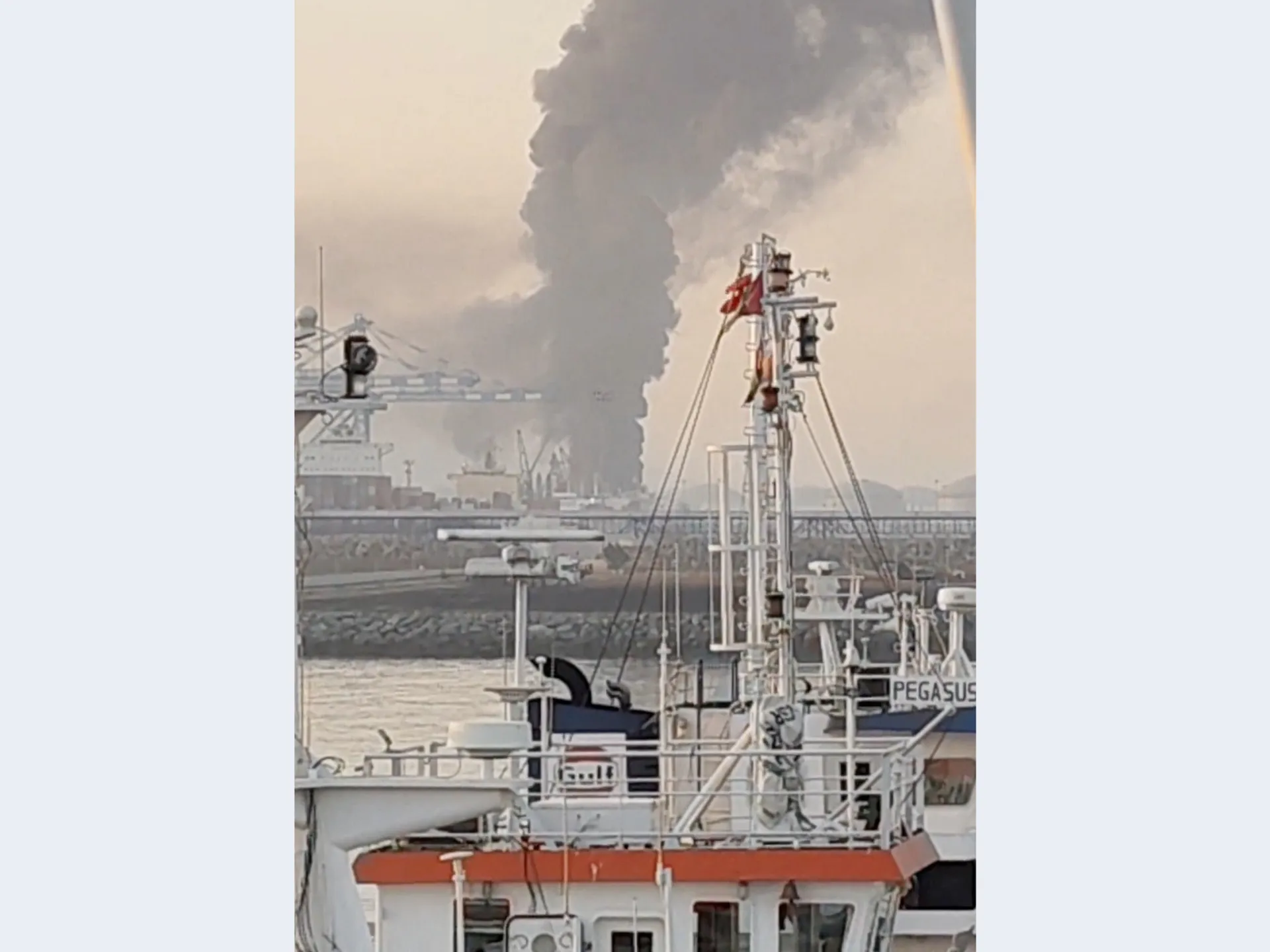
Iran Strikes Fujairah — The UAE’s Ministry of Defence said its air defence systems engaged 12 ballistic missiles, three cruise missiles, and four drones fired from Iranian territory. A separate salvo of 15 missiles — the majority ballistic — was also directed at the emirate, with Emirati authorities confirming all were intercepted. Nevertheless, at least one drone penetrated defences sufficiently to ignite a fire at a facility within the Fujairah Petroleum Industries Zone, a hub that handles approximately 1.7 million barrels of oil per day — roughly half of the UAE’s total export capacity.
The UAE government described the strikes as a serious escalation and formally reserved the right to respond. India’s Ministry of External Affairs issued a sharp rebuke on Tuesday, calling the attack on the UAE "unacceptable" after confirming that three of its nationals sustained injuries in the strikes.
Recommended Reading
Iranian state television offered a starkly different framing, with military officials attributing the offensive to what they characterised as US military adventurism. Iranian forces separately claimed to have fired on US warships in the region. US Central Command confirmed that Iran launched cruise missiles at American naval assets and US-flagged commercial vessels, adding that US forces destroyed six Iranian small boats along with incoming missiles and drones.
The timing is particularly volatile. The attacks represent what would be Iran’s first direct strikes on the UAE since the US-Iran ceasefire took effect on April 8 — a truce reached after five weeks of open conflict during which the UAE endured at least 2,800 missiles and drone strikes, more than any other Gulf state or Israel during that period. Washington, however, stopped short of declaring the ceasefire broken, stating that Iran had not technically breached its terms despite the exchange of fire.
Monday’s assault was not an isolated incident. On April 6, authorities in Fujairah had already responded to a drone approaching from Iran toward a du telecommunications company building in the emirate. The UAE’s Defence Ministry also confirmed the country came under attack for a second consecutive day, underscoring the sustained nature of the Iranian campaign.
Fujairah’s strategic importance cannot be overstated. Located on the Gulf of Oman, approximately 130 kilometres east of Dubai and 70 nautical miles outside the Strait of Hormuz, the port was developed precisely to allow UAE oil exports to bypass the strait entirely. The Habshan-Fujairah pipeline — formally known as the Abu Dhabi Crude Oil Pipeline — stretches 380 kilometres from the Habshan oil and gasfield in southwestern Abu Dhabi to Fujairah port, carrying up to 1.5 million barrels per day since becoming operational in 2012. That bypass capacity has proven critical: Iranian threats have kept the Strait of Hormuz effectively closed since late February, when joint US-Israeli strikes on Iran triggered retaliatory attacks on shipping.
The closure of the strait has reshaped regional energy flows. Oil exports from Fujairah surged to an average of 1.62 million barrels per day in March, up sharply from 1.17 million barrels per day in February, as tankers rerouted to avoid the strait. The port, already a major global hub for ship refuelling and a provider of general cargo, dry bulk, and container services, has absorbed much of that redirected traffic.
Iran Strikes Fujairah: Regional Implications
In response to the maritime crisis, President Donald Trump announced on Monday that US forces would begin escorting stranded commercial vessels through the Strait of Hormuz under an initiative designated ‘Project Freedom.’ US Defense Secretary Pete Hegseth described the operation as temporary. The strait remains one of the world’s most critical energy chokepoints, with approximately one-fifth of global oil and liquefied natural gas supplies transiting it under normal conditions.
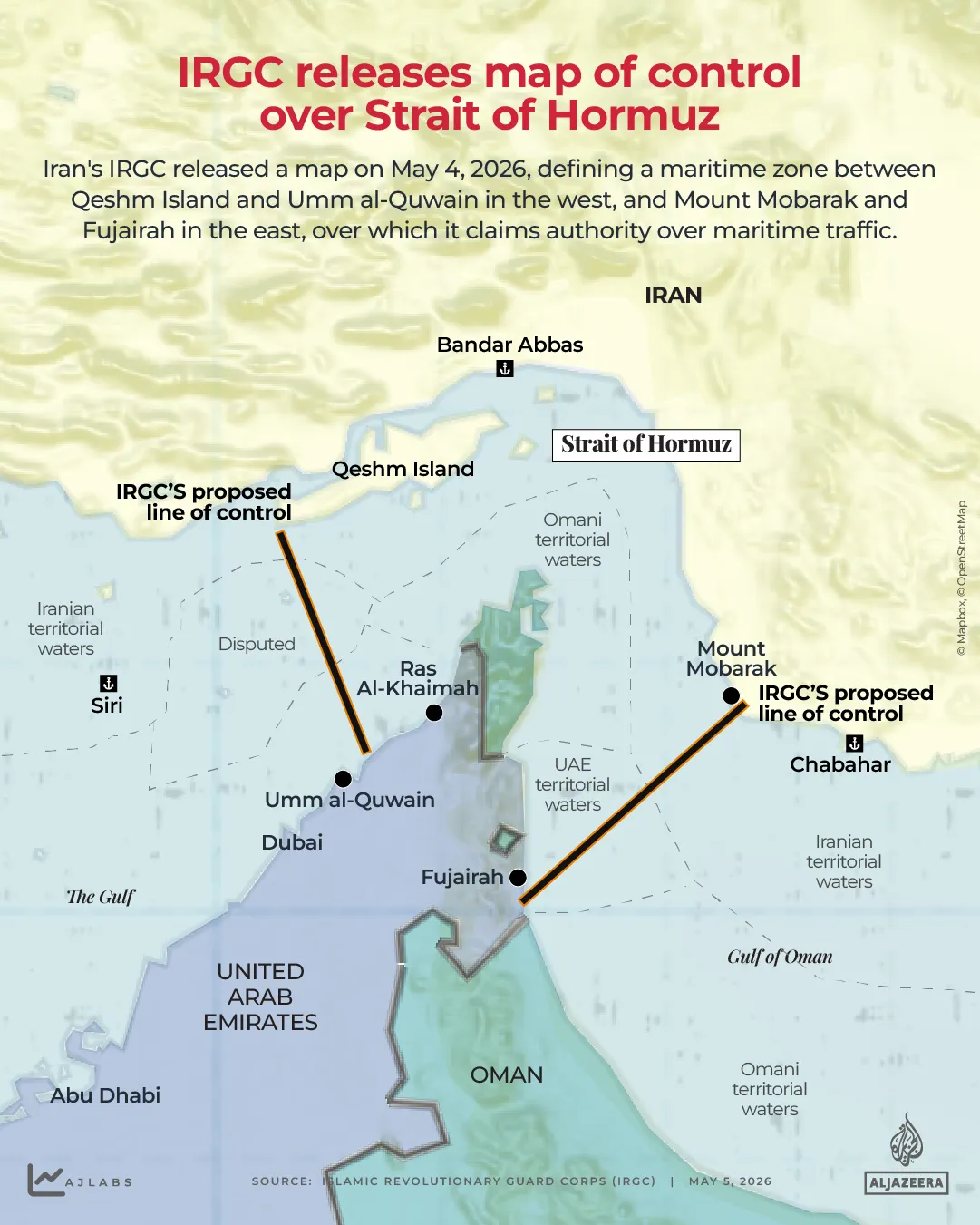
Iran has also released a map asserting an expanded maritime zone under its control, claiming jurisdiction stretching beyond the strait to encompass sections of the UAE coastline — a move that, if acted upon, would represent a fundamental challenge to Gulf sovereignty and international shipping law.
The US imposed a naval blockade on Iranian ports and shipping on April 13, further tightening the economic and military pressure on Tehran. Oil and gas prices have climbed to multi-year highs in the wake of the escalation, reflecting deep market anxiety over the security of Gulf energy infrastructure and the durability of any diplomatic arrangement in the region.
Iranian authorities have not acknowledged responsibility for the Fujairah strikes in terms that align with the UAE’s account, but the scale and precision of the assault — targeting one of the Gulf’s most important energy export nodes — signals a deliberate strategic calculation, one that has left the ceasefire’s future deeply uncertain.