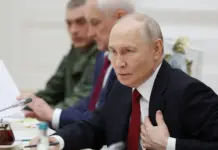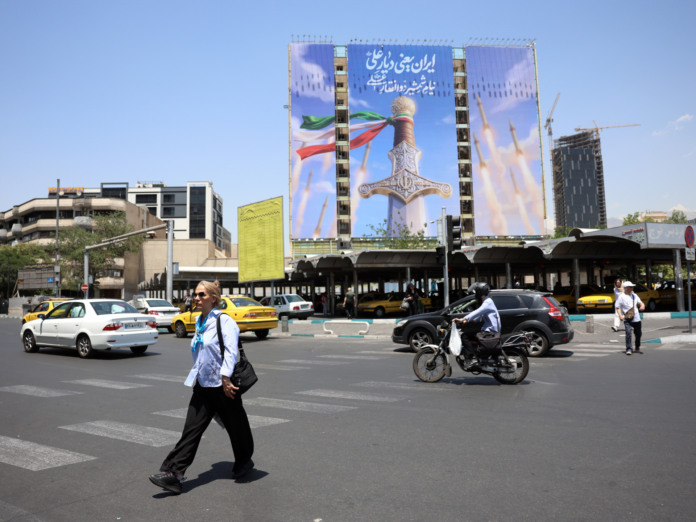
Washington / Tehran — US President Donald Trump cancelled a third consecutive day of strikes against Iran on Thursday, declaring that a landmark deal with Tehran could be signed as early as this weekend — even as the two countries remained locked in a dangerous military standoff across the Gulf region.
Iran Nuclear Deal Talks — Trump, who had earlier warned that Iran would be struck "very hard," abruptly reversed course, claiming a "great settlement" had been reached. The White House signalled that negotiations are in their final stages, with Trump suggesting the agreement could be formalised within days.
Iranian officials offered a more cautious assessment. Foreign Ministry spokesman Esmaeil Baghaei confirmed that Tehran had agreed to much of the draft text of a potential deal but stressed that red lines remain. A senior Iranian official said a proposed memorandum of understanding is currently under consideration by Iran’s supreme leader, and the country’s Foreign Ministry confirmed no final decision has been made. The proposal had previously been agreed upon in principle through Pakistani mediation, though Washington subsequently demanded modifications to the agreed text.
Recommended Reading
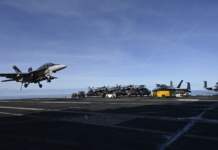
The diplomatic overtures unfolded against a backdrop of intensifying military activity. Iran’s Islamic Revolutionary Guard Corps (IRGC) announced the complete closure of the Strait of Hormuz — one of the world’s most critical oil shipping lanes — and claimed responsibility for attacks on US military assets in Bahrain, Kuwait, and Jordan. Trump, in turn, threatened that US forces would seize Kharg Island and other Iranian oil infrastructure if hostilities continued.
The human cost of the broader regional conflict extended beyond Iran’s borders. Three Indian seafarers were killed Wednesday when a US strike hit an oil tanker in the Gulf, according to India’s Shipping Minister Sarbananda Sonowal. The incident underscored the widening danger to civilian maritime traffic as military operations intensify across the waterway.
In Lebanon, Israeli military operations showed no sign of abating. The Israeli army continued its bombardment of southern Lebanon on Thursday, and military commanders announced the seizure of operational control over territory north of the Wadi Saluki stream — approximately 10 kilometres inside Lebanese territory from the Israeli border. Ten hospital staff members were injured in an Israeli strike on the southern city of Tyre.
Lebanon’s Health Ministry placed the cumulative death toll from Israeli attacks at 3,711 people, with a further 11,483 wounded. The International Rescue Committee warned that thousands of civilians displaced by the fighting are at breaking point, with humanitarian infrastructure struggling to absorb the scale of displacement and injury.
Iran Nuclear Deal Talks: Regional Implications
The economic reverberations of the conflict are being felt globally. The World Bank cautioned that a prolonged war involving Iran could slow global economic growth to its lowest levels since the COVID-19 pandemic. Financial markets reacted sharply, with oil prices climbing on news of US-Iran strikes and energy stocks rising even as broader indices fell. The warning reflects deep concern among international institutions about the consequences of a sustained disruption to Gulf energy supplies, particularly given the strategic importance of the Strait of Hormuz to global oil flows.
The diplomatic path forward remains narrow. While Trump’s repeated cancellation of strikes suggests a preference for a negotiated outcome, the IRGC’s military posture — including the Hormuz closure and strikes on US bases — signals that Tehran is simultaneously applying maximum pressure. Iran’s insistence that its supreme leader has not yet approved any agreement introduces further uncertainty into a process that both sides are publicly describing in optimistic terms.
The proposed memorandum of understanding, if finalised, would represent one of the most significant diplomatic breakthroughs between Washington and Tehran in decades. However, the gap between Trump’s claim of a "great settlement" and Iran’s acknowledgement that red lines persist illustrates the fragility of the current moment. With military assets positioned across the Gulf, oil markets on edge, and a humanitarian catastrophe deepening in Lebanon, the coming days will test whether diplomacy can hold.