Iran Strait Of Hormuz — Iran ordered the full closure of the Strait of Hormuz on Thursday following the latest round of American strikes on Iranian territory, plunging global energy markets into fresh turmoil and pushing the conflict between Washington and Tehran toward a potentially catastrophic new threshold. Donald Trump simultaneously threatened to seize Kharg Island, the strategic oil terminal that handles nine-tenths of Iran’s crude exports, warning that the US military would be hitting Iran ‘very hard tonight.’
The closure marks the third time Iran has shut the waterway since hostilities erupted on February 28, when US and Israeli strikes on Tehran triggered an immediate military response. Under normal conditions, roughly 20 million barrels of oil transit the strait each day, representing approximately 20 percent of all globally traded oil and liquefied natural gas. The economic consequences have been severe: oil prices, which stood at around $65 per barrel before the war began, surged above $100 following the initial closure and have since climbed as high as $126 per barrel since a US naval blockade was announced on April 13. Brent crude was trading at $93.18 by early Thursday morning, reflecting continued market anxiety.
Iran’s Islamic Revolutionary Guard Corps (IRGC) has been the primary instrument of Tehran’s military response throughout the conflict. On March 2, IRGC commander Ebrahim Jabari declared the strait ‘closed’ and warned that the corps would ‘set those ships ablaze’ if vessels attempted to cross. Despite that declaration, Iran has at times permitted select ships to transit — reportedly charging tolls of up to $2 million per vessel — while allowing passage to ships from Malaysia, China, Egypt, South Korea and India. Between February 28 and April 12, some 279 ships transited the strait, though traffic has fallen dramatically from the pre-war average of roughly 100 vessels per day. More than 60 of those vessels crossed with their automatic identification systems switched off.
Recommended Reading
![A satellite image shows likely oil spill covering dozens of square kilometers near Iran's Kharg Island, May 6, 2026. [File: European Union/Copernicus Sentinel2/Handout via Reuters]](https://world-tension.s3.us-east-2.amazonaws.com/articles/1420/53cace25addf4b4d974991fa1866edb2.webp)
The violence around the waterway has intensified sharply in recent days. Two Indian vessels were struck on April 18, and the IRGC Navy announced Wednesday that it had hit two additional ships it accused of attempting to ‘illegally pass’ through the strait. Iran separately announced the capture of two foreign commercial vessels on April 22. At least 22 ships have been attacked since the conflict began. Three Indian sailors were killed when US forces struck the tanker M/T Settebello. Since the blockade began in mid-April, US forces have disabled eight vessels, redirected 134 others and permitted 42 ships carrying humanitarian aid to pass.
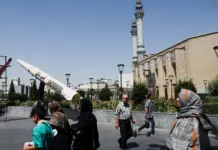
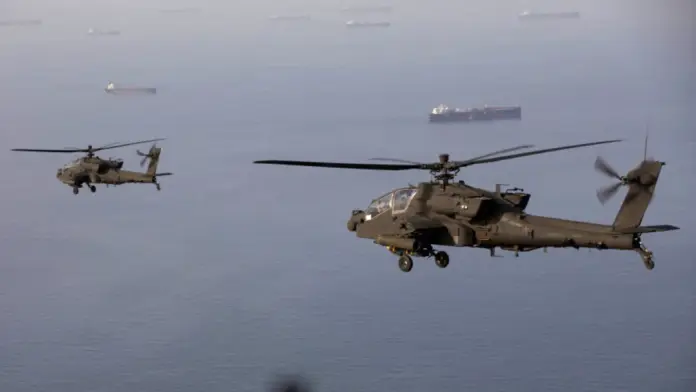
The conflict has spread well beyond the strait itself. Iran’s Aerospace Force launched long-range, solid-fuel missiles at a US airbase in Jordan; Jordanian military forces intercepted five of the incoming projectiles. The IRGC also launched drone attacks against the US Fifth Fleet in Bahrain in retaliation for American strikes. Iran has struck US military installations in Bahrain, Kuwait and Jordan, while a US Apache attack helicopter was downed over the Strait of Hormuz on Monday — an incident Trump publicly attributed to Iranian action.
Diplomatic efforts have repeatedly stalled. A temporary truce called on April 8 briefly reopened the strait and set the stage for talks in Islamabad, but those negotiations collapsed on April 12. The waterway was reopened for a matter of hours on April 17 following a US-mediated ceasefire between Israel and Lebanon, only for Iran to close it again the following day after Washington announced its naval blockade of Iranian ports. Iran’s deputy foreign minister Kazem Gharibabadi condemned the latest American strikes as ‘a widespread and utter nullification of the ceasefire.’
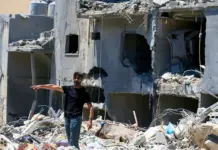
Defense Secretary Pete Hegseth confirmed Wednesday that Washington was launching new strikes against ‘key facilities’ inside Iran. Recent US operations have targeted the port city of Bandar Abbas, Qeshm Island and the southern towns of Sirik and Minab, as well as Karaj, west of Tehran. Explosions were reported in Bandar Abbas and on Qeshm Island as early as Tuesday.
Iran Strait Of Hormuz: The Energy Security Dimension
Trump’s threat to take Kharg Island — which he described as his longstanding ‘preference’ in a Fox News interview — represents the most dramatic escalation yet signalled by Washington. Known as the ‘Forbidden Island’ for its strict military controls, Kharg processes the overwhelming majority of Iran’s oil revenue. Trump said he remained averse to deploying ground troops inside Iran, suggesting any operation would rely on air and naval power. In a letter circulated to 176 members of the International Maritime Organization on March 26, Iran had asserted that non-hostile vessels retained the right to safe passage — a position now rendered moot by Thursday’s full closure order.
The financial dimensions of the standoff are also escalating. US Treasury Secretary Scott Bessent warned that any damage Iran inflicts on American allies in the Gulf will be offset by funds drawn from Iran’s frozen overseas assets, estimated at approximately $100 billion. The broader conflict has its roots in Trump’s 2018 withdrawal from the 2015 Joint Comprehensive Plan of Action, and Washington has now struck Iran twice since Trump returned to office, even as negotiations over Tehran’s nuclear programme have continued in parallel — and in growing peril.