PYONGYANG — Chinese President Xi Jinping wrapped up a two-day state visit to North Korea on Tuesday, emerging from high-level talks with Kim Jong Un with pledges of expanded cooperation and renewed strategic alignment — but no public discussion of Pyongyang’s accelerating nuclear weapons programme.
Xi Jinping Pyongyang Visit — The visit, Xi’s first trip outside China in 2024 and his first to North Korea in seven years, carried unmistakable symbolic weight. It coincided with the 65th anniversary of the China-North Korea friendship and defence treaty — the only formal defence pact China holds with any country — and came as Pyongyang’s deepening military partnership with Moscow has raised concerns in Beijing about its leverage over a strategically indispensable neighbour.
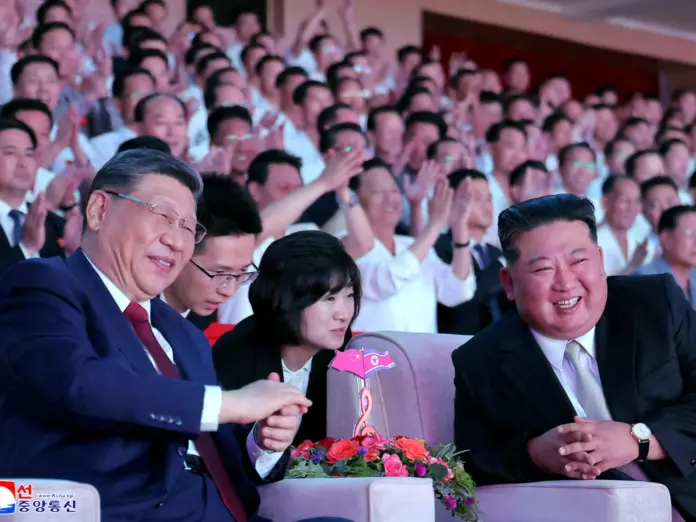
Kim received Xi with an elaborate display of deference. A red carpet, a guard of honour, and a 21-gun salute greeted the Chinese leader upon his arrival Monday, followed by acrobatic performances and a joint concert of Chinese and North Korean songs attended by both leaders, their wives, and senior officials. Kim then hosted a formal banquet for the Chinese delegation.
Recommended Reading
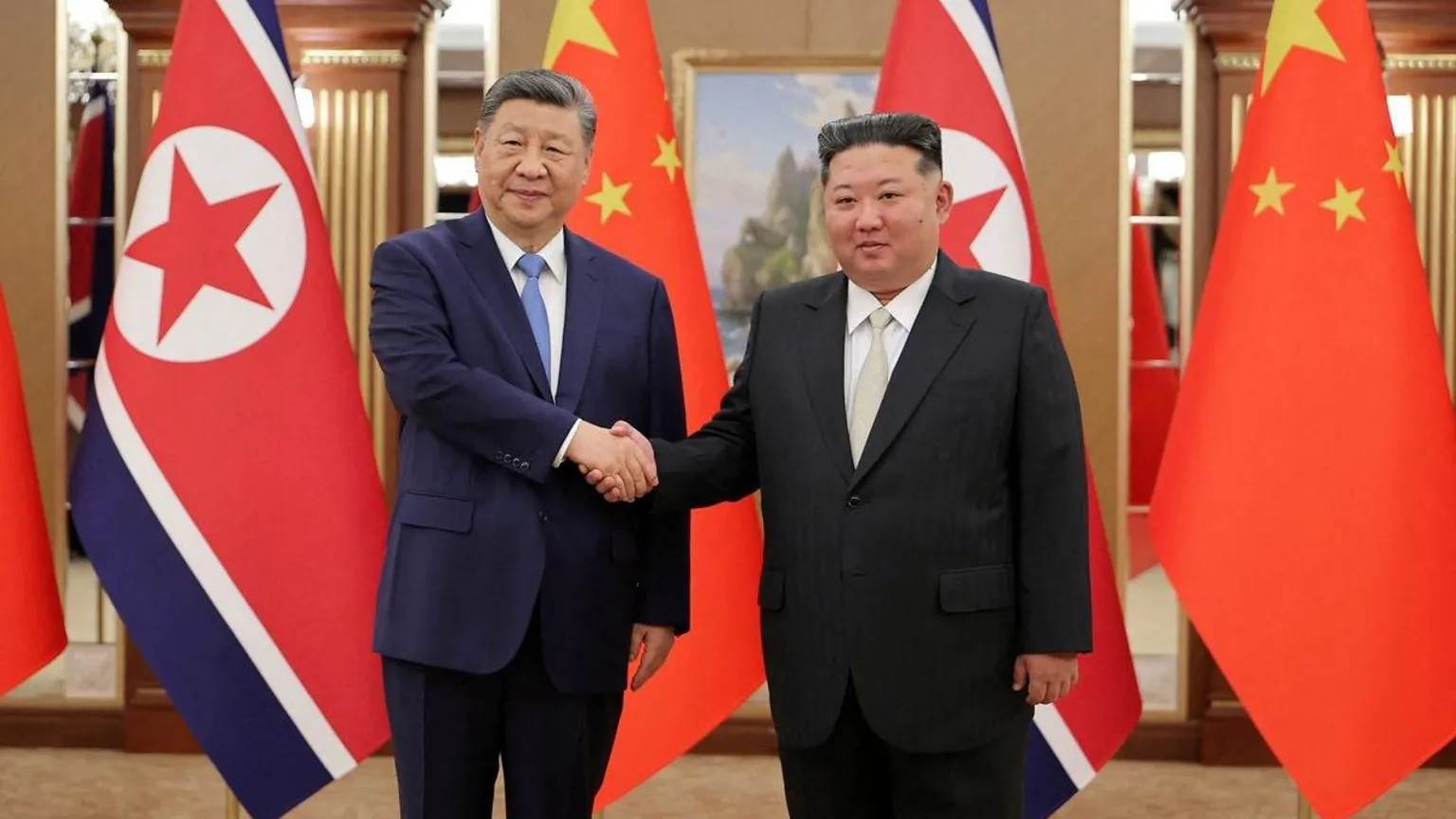
"The greatest state guest," Kim called Xi — adding that the Chinese president’s decision to make Pyongyang the destination for his first foreign trip of the year represented "the most encouraging support" North Korea could receive, and demonstrated the "utmost importance" Beijing places on bilateral ties.
Xi, speaking at the evening banquet, declared that China and North Korea "are linked by mountains and rivers and share a common destiny," and said relations between the two countries had reached "a new historical starting point." He expressed hope the visit would "jointly open up a brighter future for the socialist cause of both countries."
Both leaders agreed to pursue closer strategic communication, and Xi outlined China’s willingness to expand cooperation across trade, agriculture, construction, and technology. Kim, in turn, reaffirmed North Korea’s support for Beijing’s One China principle on Taiwan and pledged to uphold the friendship with China as a top foreign policy priority.
On Tuesday, the two leaders visited the Sino-Korean Friendship Tower in Pyongyang, a monument honouring Chinese soldiers who died fighting on the Korean peninsula during the 1950s war. They also planted a fir tree at Pyongyang’s top cadre school — a gesture officials framed as a symbol of their nations’ "evergreen friendship." Xi was accommodated at the Kumsusan State Guest House, a facility reportedly constructed specifically for his 2019 visit and which has since hosted Russian President Vladimir Putin and Belarusian President Alexander Lukashenko.
Xi was accompanied by a high-powered delegation that included Defence Minister Dong Jun, Foreign Minister Wang Yi, Commerce Minister Wang Wentao, and Cai Qi, widely regarded as Xi’s de facto chief of staff — a lineup that signalled the breadth of engagement Beijing is seeking.
What was absent from the summit’s reported agenda was as telling as what was present. Denuclearisation did not feature in state media readouts from either side. The omission is consistent with a broader shift: in recent years, Beijing has significantly scaled back its public calls for a nuclear-free Korean peninsula, a position it once championed as a cornerstone of regional diplomacy. North Korean state media made no mention of whether Pyongyang’s weapons programme or its fraught relationship with Washington were raised during the talks.
Xi Jinping Pyongyang Visit: Peninsula Security in Context
The timing of the visit reflects mounting strategic anxieties for Beijing. North Korea has drawn markedly closer to Russia since Moscow’s full-scale invasion of Ukraine, supplying Pyongyang’s weapons and soldiers to the Russian front in exchange for oil and economic assistance. That realignment has eroded China’s traditional role as North Korea’s primary patron and lifeline — a position Beijing is now visibly working to reclaim.
Compounding the pressure, Kim announced plans before Xi’s arrival to exponentially increase North Korea’s nuclear production capacity. The weapons programme has simultaneously driven tighter trilateral defence cooperation among the United States, Japan, and South Korea — a security architecture Beijing views with deep unease.
China remains North Korea’s dominant trading partner and its most critical economic lifeline amid sweeping international sanctions. Beijing had previously backed those sanctions, straining ties with Pyongyang. The current rapprochement reflects a recalibration: China appears increasingly willing to prioritise strategic proximity over non-proliferation commitments.
Xi’s Pyongyang trip followed meetings earlier in 2024 with both Putin and US President Donald Trump, making it his sole overseas journey of the year — a choice of destination that, in diplomatic terms, speaks volumes about where Beijing perceives its most urgent interests to lie.