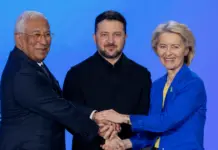
KYIV — Ukrainian President Volodymyr Zelenskyy proposed an Easter ceasefire on attacks against energy infrastructure Tuesday, asking American mediators to carry the offer to Moscow as US-brokered peace negotiations remain deadlocked and a fourth round of high-level talks faces indefinite postponement.
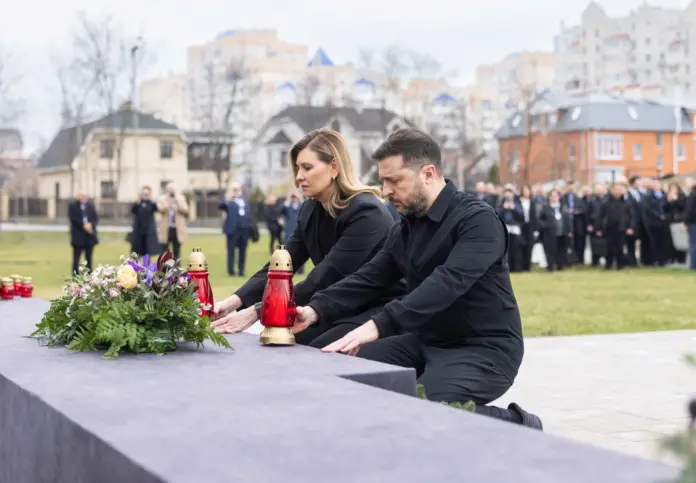
Zelenskyy made the announcement on the sidelines of a ceremony in Bucha, the town near Kyiv where Russian forces summarily executed hundreds of civilians in March 2022. European diplomats, including EU foreign policy chief Kaja Kallas and the foreign ministers of Germany, Poland, Italy and other member states, gathered there to mark the fourth anniversary of the massacre.
The Ukrainian president said he would raise the energy truce proposal during online talks scheduled for Wednesday with US envoys Steve Witkoff and Jared Kushner, President Donald Trump’s son-in-law, as well as NATO Secretary-General Mark Rutte. The meeting is intended to assess the current state of American-led diplomatic efforts to end the war.
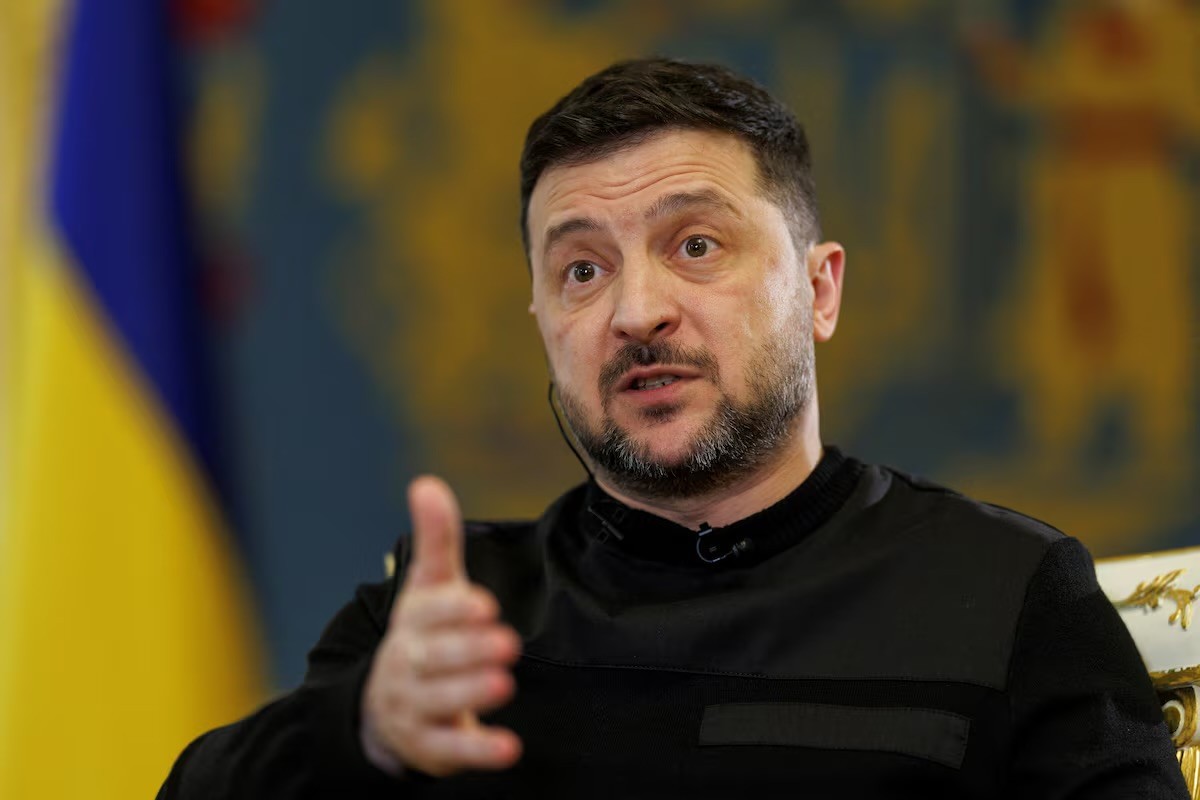
Zelenskyy framed the proposal as a reciprocal measure. Ukraine, he said, had received signals from some of its allies urging Kyiv to scale back long-range strikes on Russia’s oil sector. He indicated Ukraine was prepared to do so — but only if Russia ceased its own attacks on Ukrainian energy systems. "Ukraine would reciprocate," he said, if Moscow agreed to halt strikes on Ukrainian power and heating infrastructure.
The Kremlin’s response was dismissive. Spokesman Dmitry Peskov said Moscow had not seen any clearly formulated initiative for an Easter truce from Zelenskyy, offering no indication that Russia was prepared to engage with the proposal.
Ukraine’s escalation of strikes against Russian energy facilities in recent months was itself a deliberate strategy — aimed at preventing Moscow from capitalising on elevated global oil prices and the easing of some international sanctions. A mutual halt, Kyiv calculates, could offer both sides a face-saving pause without requiring territorial concessions.
Territorial disputes remain the central obstacle to any lasting settlement. Russia is demanding that Ukraine formally cede roughly one-fifth of the eastern Donbas region as a condition for peace — territory Moscow has been unable to fully conquer despite four years of fighting. Zelenskyy has flatly refused, noting that surrendering Ukrainian land is prohibited under the country’s constitution.
Russian officials have told their American counterparts they could seize the remainder of Donbas within two months — an assertion Kyiv disputes. Ukrainian military planners believe the country can defend its remaining network of fortified industrial towns and cities in the east for years. Russia’s front-line advances have been grinding and incremental since 2023, as Ukrainian drone defences have significantly slowed armoured progress.
Moscow is also reported to be pushing to conclude negotiations before US mid-term congressional elections later this year, calculating that the current American administration’s appetite for brokering a deal may diminish thereafter.
Three rounds of high-level trilateral talks involving the US, Russia and Ukraine have already taken place this year, held in Abu Dhabi and Geneva. A fourth round, originally scheduled for this month, was postponed amid the broader regional turbulence surrounding the conflict with Iran.
On the diplomatic margins, Ukraine’s national security council secretary Rustem Umerov travelled to Turkiye on Tuesday for consultations with representatives of several countries, underscoring Kyiv’s effort to maintain parallel diplomatic channels even as the primary US-led process stalls.
Within the European Union, Ukraine faces a separate financial obstacle. Hungary, an EU member state with close ties to Moscow, has blocked a 90-billion-euro loan package intended for Kyiv, adding economic pressure to an already strained war effort.
The Bucha anniversary served as a stark backdrop to Tuesday’s diplomatic activity — a reminder of the atrocities that have defined international perceptions of the conflict and complicated any path toward normalisation with Russia. For Zelenskyy, the setting was deliberate: a proposal for even a limited ceasefire, offered from the site of one of the war’s most documented war crimes, carries unmistakable symbolic weight.