Yemen Prisoner Swap — Yemen’s warring parties have signed a landmark prisoner exchange agreement in the Jordanian capital Amman, committing to the release of more than 1,600 detainees in what officials are calling the most significant humanitarian breakthrough of the decade-long civil war.
Under the accord, brokered with United Nations support, the Houthi movement will free 580 prisoners while Yemen’s internationally recognised government will release 1,100 Houthi detainees. Yahya Kazman, deputy head of the government’s negotiating team, put the total figure at nearly 1,728 individuals from both sides — a number that underscores the scale of human suffering the war has generated since the Houthis seized the capital Sanaa in 2014.
The detainee population spans a broad cross-section of the conflict’s participants and victims. Those held by the Houthis include coalition forces personnel, members of Yemen’s armed forces and security services, fighters from various military formations, popular resistance members, politicians, and journalists. Among those the Houthis have agreed to release are seven Saudi nationals and 20 Sudanese citizens, reflecting the war’s regional dimensions.
Recommended Reading
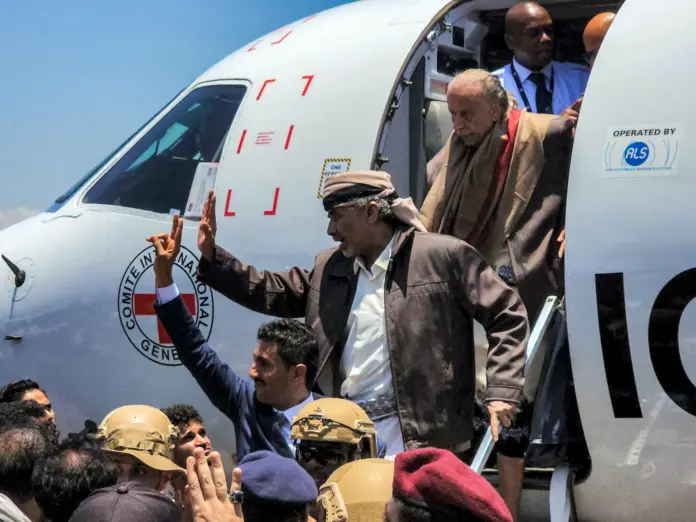
Negotiations stretched over more than three months of talks in Amman, with a foundational agreement reached in December following UN-facilitated consultations in Muscat, Oman. The International Committee of the Red Cross will serve as the neutral intermediary overseeing the physical exchange. Christine Cipolla, the ICRC’s head of delegation in Yemen, confirmed the organisation is prepared to assume that role. ‘The ICRC is ready to assume its role as neutral intermediary in implementing the operations,’ Cipolla stated.
Mahdi al-Mashat, head of the Houthis’ Supreme Political Council, described the deal as a historic accomplishment, while the movement characterised it as an important humanitarian step toward resolving the broader prisoner issue. Both sides also agreed to hold further talks on additional releases and to permit mutual visits to detention facilities — provisions that could lay the groundwork for deeper confidence-building measures.
The agreement eclipses a previous major exchange conducted in April 2023, when the two sides transferred nearly 900 prisoners in an operation also coordinated by the ICRC. That earlier swap was itself considered a milestone; the current deal more than doubles its scope.
The backdrop to this agreement is one of the world’s most devastating humanitarian catastrophes. The conflict ignited when Houthi forces swept into Sanaa in late 2014, prompting a Saudi-led military coalition to intervene in support of the internationally recognised government the following year. In the decade since, tens of thousands of people have been killed, vast stretches of the country’s infrastructure have been reduced to rubble, and Yemen has become synonymous with famine, disease, and displacement on a mass scale.
Yemen Prisoner Swap: Regional Implications
Prisoner exchanges have long been viewed by mediators as one of the few areas where tangible progress remains possible even when broader peace negotiations stall. The Houthis used the occasion to call on the United Nations and international bodies to play a more effective role in ensuring that agreements, once signed, are actually implemented — a pointed reminder that previous commitments have often gone unfulfilled.
Whether this deal translates into sustained momentum toward a wider political settlement remains uncertain. The war’s underlying fault lines — territorial control, governance, the role of external powers — remain deeply entrenched. Yet for the families of more than 1,600 detainees, the agreement signed in Amman represents something immediate and concrete: the prospect of reunion after years of separation in a conflict that has shown few signs of ending.