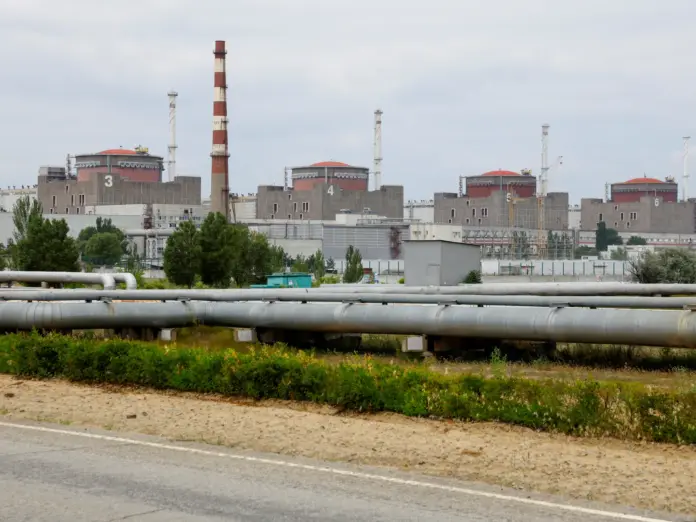
Zaporizhzhia Nuclear Ceasefire — The International Atomic Energy Agency brokered a localised ceasefire around the Zaporizhzhia nuclear power plant on Friday, creating a narrow window of calm around Europe’s largest nuclear facility as deadly drone strikes continued to claim civilian lives across Ukraine.
The truce, which took effect Friday morning, allows technicians from both Russian and Ukrainian sides to begin repairing war-related damage to the Dniprovska power line — the plant’s sole connection to the external electricity grid. Zaporizhzhia was severed from that line more than two months ago, leaving the facility dangerously dependent on emergency diesel generators to power the cooling systems for its six shutdown reactors.
The vulnerability is acute. In recent weeks, the plant has repeatedly lost access to even that single remaining line, forcing operators to rely on backup generators each time. A complete and sustained loss of power at a nuclear facility risks catastrophic overheating, a scenario that has haunted nuclear safety experts throughout the more than four years of Russia’s war on Ukraine.
Recommended Reading
Rafael Grossi, the IAEA’s director general, has now negotiated six such temporary ceasefires around the plant since the conflict began in 2022. The front line of the war cuts directly across the eastern Zaporizhzhia region, placing the facility in a uniquely precarious position. Grossi’s persistent diplomacy has been credited with preventing the plant’s situation from escalating into a full nuclear emergency, though critics note that temporary truces offer no lasting solution to the structural risks created by an active war zone surrounding a major nuclear installation.
The ceasefire agreement does not extend beyond the plant’s immediate perimeter. Elsewhere in Ukraine on Friday, the human cost of the broader conflict continued to mount.
A Russian drone struck a food production facility near Kyiv in the early hours of Friday morning, killing four people. Regional governor Mykola Kalashnyk confirmed the strike. In the southern city of Kherson, a 75-year-old man was killed in a Russian drone attack on Thursday evening, according to military administration head Yaroslav Shanko. An overnight drone assault on the wider Zaporizhzhia region killed one woman and wounded 16 others. In the northeastern city of Konotop, three children were among those wounded in Russian attacks, Mayor Artem Semenikhin reported.
The wave of strikes came as President Vladimir Putin declared on Thursday that Russia must improve and strengthen its air defence system — a statement that underscored the intensifying aerial dimension of the conflict even as Moscow continued its own drone campaign against Ukrainian cities and infrastructure.
The Zaporizhzhia plant’s precarious status has been a defining anxiety of the war since Russian forces seized the facility in the early weeks of the 2022 invasion. With six reactors in cold shutdown, the plant no longer generates electricity for Ukraine’s grid, but it still requires a continuous and reliable power supply to maintain cooling and prevent radioactive material from overheating. The reliance on a single external power line — and, when that fails, on diesel generators with finite fuel supplies — has been described by nuclear safety officials as an unacceptable long-term risk.
Zaporizhzhia Nuclear Ceasefire: The Nuclear Dimension
The IAEA has maintained a permanent monitoring presence at the site throughout the conflict, with inspectors providing regular assessments of the plant’s safety status. Their reports have repeatedly flagged the power supply situation as the most urgent concern, alongside the physical integrity of structures near the front line.
Whether Friday’s ceasefire will hold long enough for meaningful repairs to the Dniprovska line remains uncertain. Previous truces have been fragile, with shelling resuming in the broader region shortly after agreements were reached. Technicians from both sides are expected to begin work in the coming days, but the timeline for restoring a stable power connection has not been specified.
The broader war shows no sign of abating. With the conflict now in its fifth year and no diplomatic resolution in sight, the Zaporizhzhia plant remains a symbol of the catastrophic risks that armed conflict poses when it intersects with critical nuclear infrastructure — and of the painstaking, incremental diplomacy required to manage those risks in the absence of peace.