![Control over the Strait of Hormuz has been a widely discussed factor in the ongoing US-Israel war against Iran [Dado Ruvic/Reuters]](https://www.world-tension.com/app/uploads/2026/04/wt-image-124-696x522.webp "wt-image-124")
Iran Hormuz Tensions — Two serious maritime incidents in the Gulf of Oman have sharpened international concern over freedom of navigation near one of the world’s most critical energy chokepoints, triggering diplomatic intervention at the highest levels between Washington and Beijing.
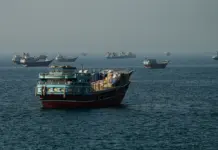
Iranian military personnel seized the Hui Chuan, a Honduras-flagged vessel, in the Gulf of Oman, with the UK’s Maritime Trade Operations (UKMTO) confirming the ship is being directed toward Iranian territorial waters. The vessel had spent the previous month operating off the north-eastern coastlines of Oman and the United Arab Emirates before its last recorded position — broadcast 70 kilometres north-east of Fujairah in the UAE on Wednesday — went dark.
The Hui Chuan was functioning as a floating armoury, a type of vessel used to store weapons for maritime security firms operating in high-risk waters. Such vessels are a common feature of security operations across the Red Sea, Gulf of Aden and Gulf of Oman, providing a legal mechanism for armed guards to transfer weapons without bringing them into port. Maritime risk management company Vanguard reported on the seizure, while ship-tracking data from MarineTraffic was used to verify the vessel’s last known position.
Recommended Reading
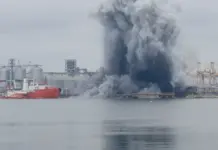
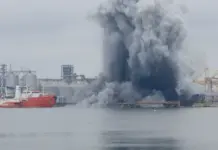
Hours earlier, a second vessel met a more violent fate. The Haji Ali, a 57-metre Indian-flagged cargo ship, was attacked off the Omani coast and subsequently sank following a suspected explosion. Investigators believe the blast was caused by a drone or missile strike. A fire had broken out aboard the vessel, which was carrying livestock when the incident occurred.
The Haji Ali had departed Berbera Port in Somalia on 6 May, bound for Sharjah in the UAE. All crew members survived. Fourteen Indian nationals were rescued and transferred by Oman Coast Guard units to Diba Port, with Omani authorities coordinating the evacuation. India's Ministry of External Affairs condemned the attack in unequivocal terms, calling it unacceptable.
The near-simultaneous incidents sent a jolt through diplomatic channels. On Thursday, US President Donald Trump and Chinese President Xi Jinping addressed the deteriorating situation during talks in Beijing. The two leaders reached agreement that the Strait of Hormuz must remain open to ensure the unimpeded flow of global energy supplies — a rare point of convergence between the two powers amid broader geopolitical friction.
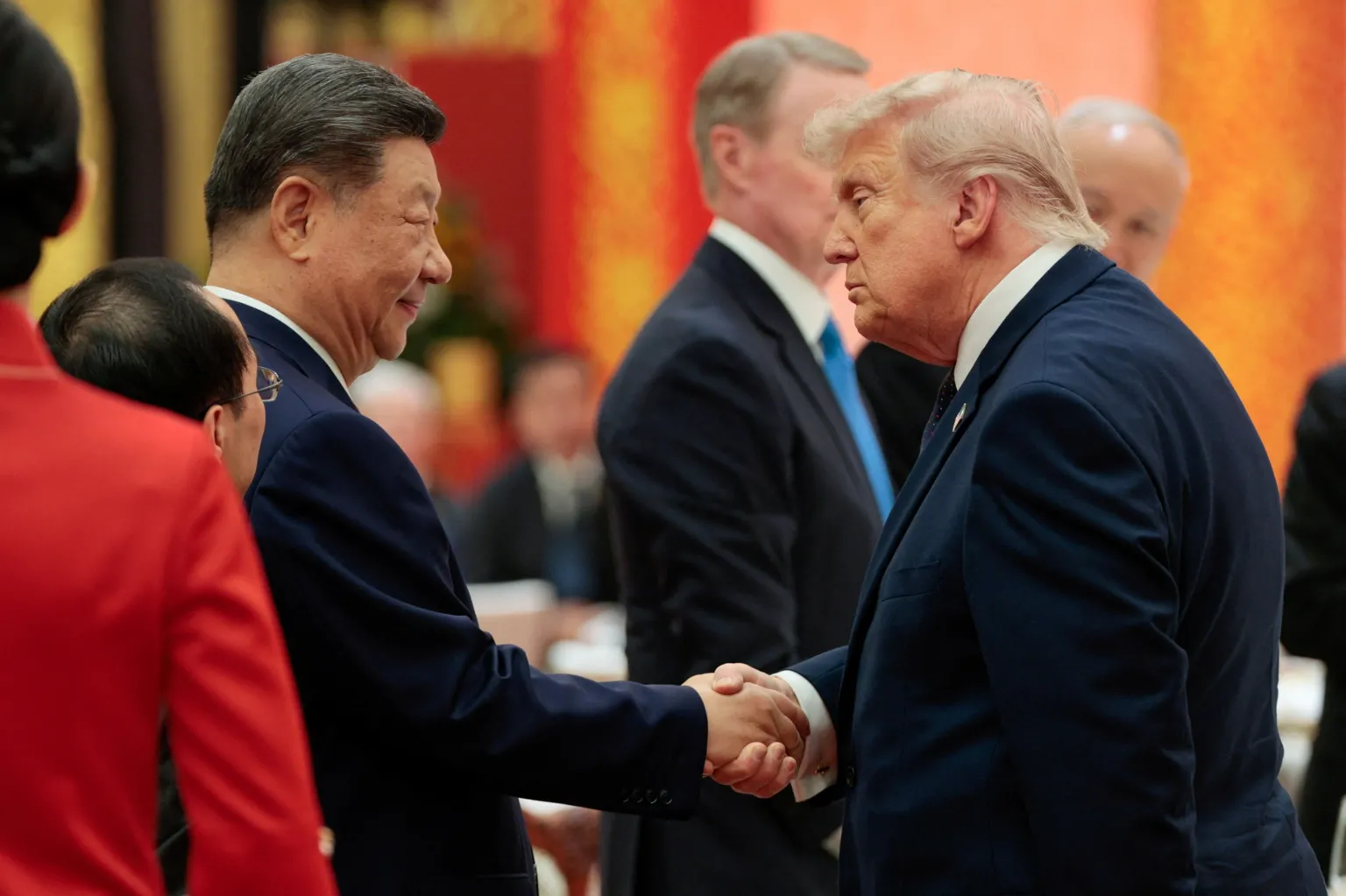
Xi Jinping made China's position explicit, stating clear opposition to any militarisation of the strait. Roughly 20 percent of the world's oil supply transits the Strait of Hormuz, making any disruption to navigation there a matter of acute concern for energy markets and importing nations alike.
Iran Hormuz Tensions: Regional Implications
The seizure of the Hui Chuan adds to a pattern of Iranian interdictions of commercial and security-related vessels in Gulf waters in recent years. Floating armouries occupy a legally ambiguous space in maritime security — they are widely used but operate outside the jurisdiction of any single port state, making their seizure a complex matter under international law. The vessel's Honduras flag adds a further jurisdictional dimension to what is likely to become a diplomatic dispute.
The attack on the Haji Ali, meanwhile, remains unclaimed. No group or state has asserted responsibility for the strike, though the use of a drone or missile is consistent with tactics employed by Iran-aligned forces in the region over recent years, including Houthi forces in Yemen who have repeatedly targeted commercial shipping in adjacent waters.
Together, the incidents underscore the persistent vulnerability of commercial maritime traffic in the Gulf of Oman and the broader Persian Gulf corridor — a vulnerability that major powers are now openly acknowledging requires coordinated international attention.