US Vice President JD Vance boarded a plane bound for Islamabad on Friday morning, leading the American delegation to what may prove the most consequential diplomatic encounter of the Trump presidency — ceasefire negotiations with Iran following a 12-day war that ended with US strikes on three of Tehran’s key nuclear facilities.
The talks, scheduled for Saturday in Pakistan, were convened on the basis of a 10-point Iranian proposal rather than the 15-point framework put forward by President Donald Trump. Trump himself described the Iranian plan as a ‘workable’ foundation, a concession that reflects the asymmetric leverage both sides have brought to the table. Tehran’s government has already cast the ceasefire as a victory, projecting strength domestically and across the region.
Vance was selected to lead the delegation in part because Iran expressed deep distrust of Trump’s special envoy Steve Witkoff and senior adviser Jared Kushner, who had conducted two earlier rounds of indirect nuclear talks before the latest conflict erupted on February 28. Speaking to reporters as he departed, Vance said he expected ‘positive’ results — provided Iran negotiated in good faith. Trump, he confirmed, had given him ‘pretty clear guidelines’ for the meeting.
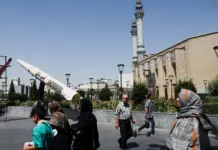
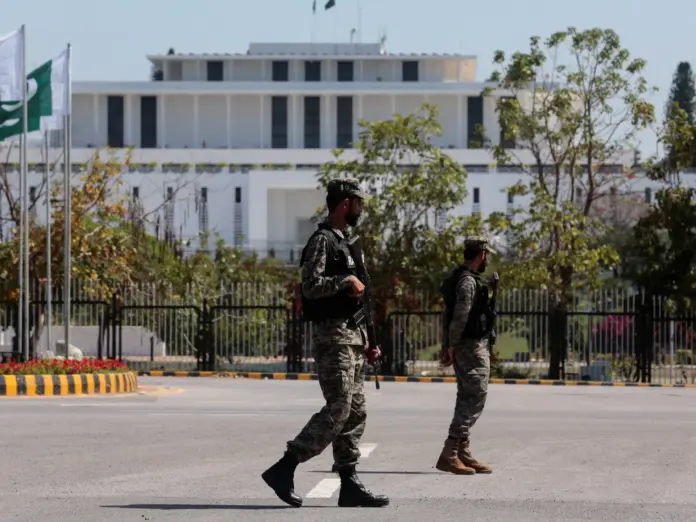
![Police officers walk towards bus for their deployment in Islamabad, Pakistan before planned US-Iran ceasefire talks [File: Anjum Naveed/The Associated Press]](https://world-tension.s3.us-east-2.amazonaws.com/articles/398/d3f123926301462ea67225c632a9c6fc.webp)
The diplomatic atmosphere, however, is anything but settled. Iranian Parliament Speaker Mohammad Bagher Ghalibaf, who is expected to attend alongside Foreign Minister Abbas Araghchi, stated publicly that a ceasefire in Lebanon and the release of Iran’s blocked assets must be implemented before negotiations formally begin. Iranian state media reinforced that position, indicating talks would proceed only if Washington accepted Tehran’s preconditions. The Iranian military’s joint command issued a stark warning, saying it has its ‘fingers on the trigger’ due to what it described as repeated breaches of trust by the US and Israel.
Iran’s demands are sweeping. They include formal recognition of continued Iranian control over the Strait of Hormuz — with Tehran retaining the right to collect transit fees from passing vessels — acceptance of uranium enrichment, the lifting of all US primary and secondary sanctions, removal of UN sanctions, and a full withdrawal of American combat forces from the region. Critically, Tehran is also demanding a comprehensive ceasefire that extends to Israel‘s ongoing military operations in both Lebanon and Gaza.
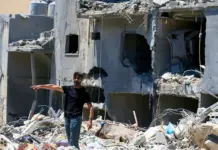
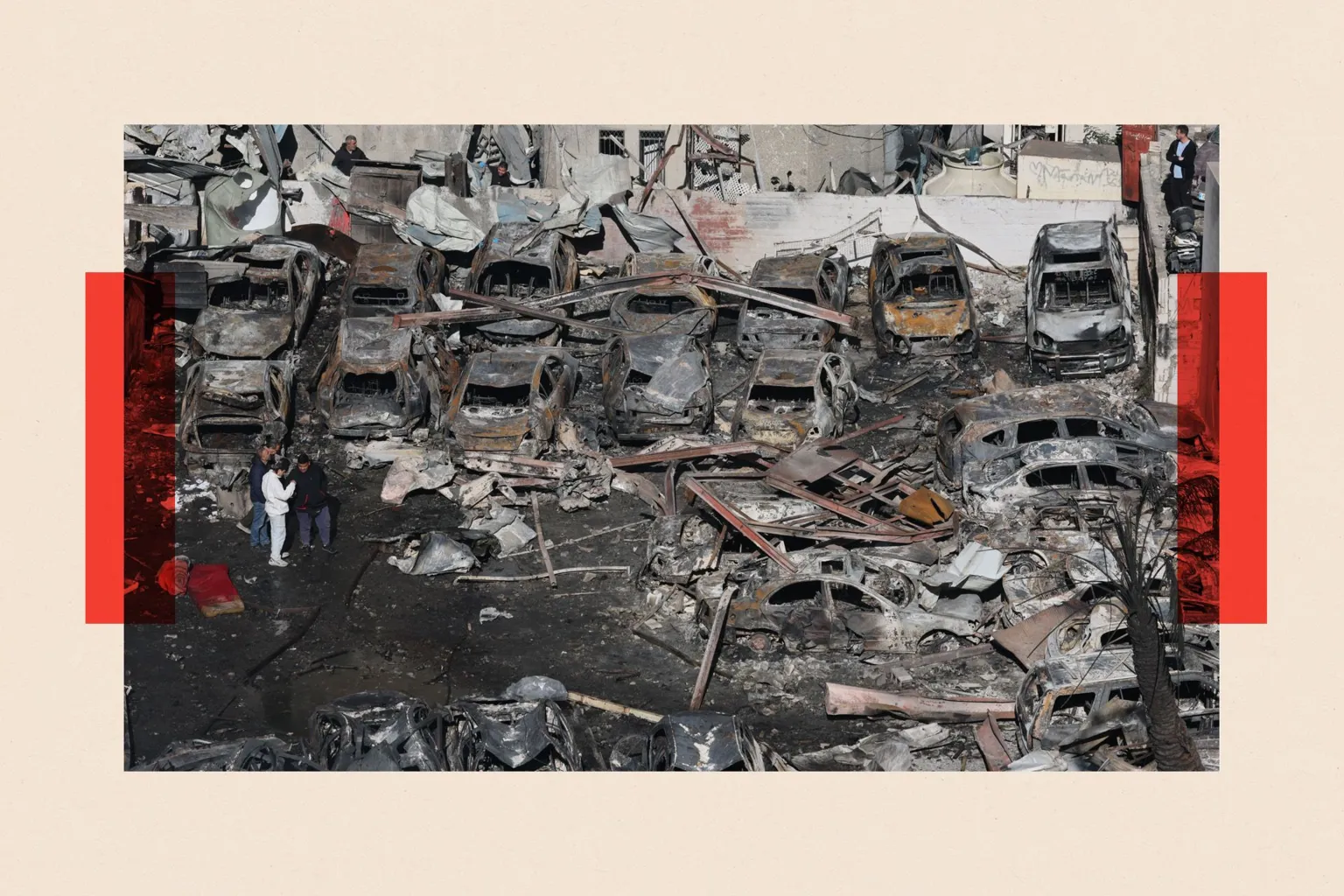
That last demand has become a flashpoint. The US and Israel maintain that a Lebanon ceasefire was never part of Tuesday’s agreement to pause fighting. Iran and Pakistan have directly contradicted that position. On the ground, the dispute is rendered almost academic: Israeli strikes on Wednesday killed at least 300 people, marking one of the deadliest single days of the offensive. By Friday, a correspondent reporting from Tyre in southern Lebanon observed no sign of any reduction in military activity, despite Trump having privately encouraged Prime Minister Benjamin Netanyahu to make Israeli operations more ‘low-key’ ahead of the Islamabad talks.
Trump’s public posture has oscillated sharply. Just hours before Tuesday’s ceasefire deal was reached, he threatened that a ‘whole civilization will die tonight.’ Days later, he posted on Truth Social that Iranians hold ‘no cards except short-term extortion through control of international waterways,’ while simultaneously acknowledging that the US itself is not dependent on the oil that flows through the strait. He also told reporters the administration is ‘loading up the ships with the best weapons ever made’ and would use them ‘very effectively’ if no agreement materialises.
![US Vice President JD Vance speaks to the press before boarding Air Force Two for a departure to Pakistan at Joint Base Andrews [Jacquelyn Martin-Pool/Getty Images/AFP]](https://world-tension.s3.us-east-2.amazonaws.com/articles/398/8fbab5616881405088386c8d7be87856.webp)
The regional picture is further complicated by Kuwait‘s announcement that it had ‘dealt with’ seven Iranian drones that entered its airspace over the preceding 24 hours — a reminder that the ceasefire remains fragile and contested across multiple theatres.
Israel is not a party to the Islamabad talks and has historically resisted being bound by agreements it played no role in shaping. The Israeli-Iranian confrontation has flared twice since the Hamas attacks of October 7, 2023, and Iran’s broader network of allied groups — operating across Lebanon, Palestine, Iraq, and Yemen — remains intact despite the military setbacks of the past year.
Analysts close to Iran’s security establishment have raised a different concern: that Tehran may have sacrificed strategic momentum by accepting anything short of an immediate and complete end to hostilities. Iran was widely seen as having distanced itself from its Gaza and Lebanon constituencies in 2024, and voices within the establishment question whether the current framework adequately compensates for that political cost.
One plausible trajectory emerging from the diplomatic uncertainty is not a formal agreement at all, but a sustained status quo built on mutual constraint — a de facto equilibrium in which the US avoids direct military re-engagement, Iran maintains effective control over Strait of Hormuz traffic, and Israel and Iran continue a low-level conflict below the threshold of all-out war. Some analysts suggest that China‘s involvement may ultimately be necessary to stabilise any durable diplomatic architecture.
The risk that Saturday’s meeting may not take place at all remains real. Even so, the logic of mutual exhaustion — and the memory of how close both sides came to catastrophic escalation just days ago — may prove sufficient to keep both delegations at the table, at least for now.