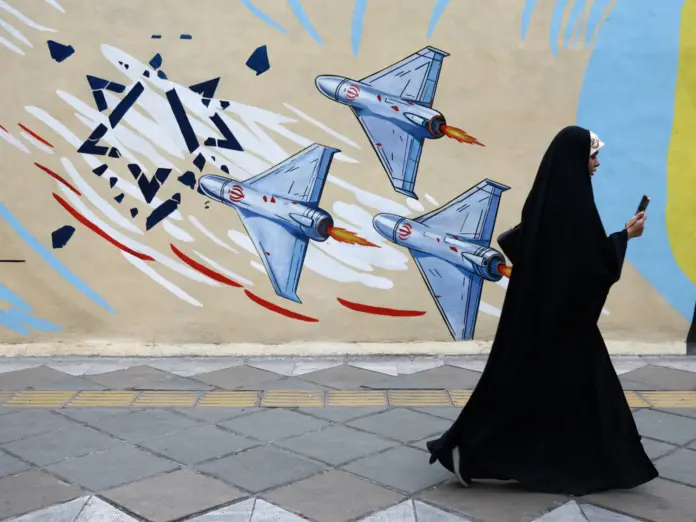
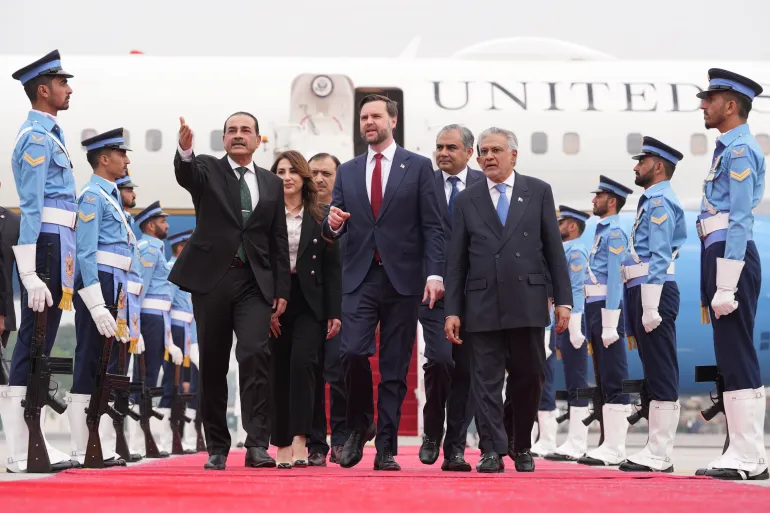
ISLAMABAD — Vice President JD Vance departed for Pakistan on Tuesday to lead a second round of direct negotiations with Iran, racing against a ceasefire deadline that President Donald Trump has extended by just 24 hours and described as almost certainly final. The talks, hosted in Islamabad with Pakistan acting as facilitator, carry enormous stakes: if they fail, Trump has threatened to destroy every power plant and bridge in Iran.
The ceasefire, announced by Trump on April 7, was originally set to expire Tuesday evening Washington time. Trump confirmed Monday that he had pushed the deadline back by one day, placing the new expiry at 8pm Wednesday in Washington — midnight GMT, or 3:30am Thursday in Tehran. He told PBS News that if the truce lapses without an agreement, ‘lots of bombs start going off.’ Asked whether he would grant a further extension, Trump called it ‘highly unlikely.’
Vance is joined in the US delegation by Steve Witkoff, Trump’s special envoy, and Jared Kushner, the president’s son-in-law. All three led the American side during the first round of talks in Islamabad on April 11, which ended without a breakthrough. At least nine US military aircraft have landed in Pakistan over the past three days, underscoring the logistical weight Washington is placing on the effort.
![Police personnel stand guard near the Serena Hotel in the Red Zone area of Islamabad on April 21, 2026, amid heightened security measures in advance of anticipated US-Iran peace talks [AFP]](https://world-tension.s3.us-east-2.amazonaws.com/articles/522/291752d9db7c44c2b99b9e8f41e6122b.webp)
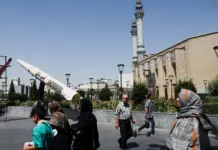
Iran’s participation remains uncertain. Mohammad Bagher Ghalibaf, the parliament speaker who heads Tehran’s negotiating team, is expected to lead the Iranian delegation if it attends, alongside Foreign Minister Abbas Araghchi. But Ghalibaf struck a combative tone on Tuesday, accusing Trump of trying to ‘turn this negotiating table into a table of surrender’ and warning that Tehran had ‘prepared to reveal new cards on the battlefield.’ A member of Iran’s parliament National Security Commission, Mohammad Reza Mohseni Sani, went further, stating that negotiations are not acceptable under current conditions.
The hostility from Tehran is rooted in part in a sharp escalation at sea. On Sunday, US naval forces fired on and seized the Iranian-flagged cargo vessel Touska in the Gulf of Oman. Iran condemned the action as piracy and a ceasefire violation, and threatened retribution. On Tuesday, US forces boarded a second vessel, the M/T Tifani, in the Asia-Pacific region; that ship was already under US sanctions for transporting Iranian oil. The incidents have rattled regional powers — India summoned Iran’s ambassador in New Delhi to raise concerns after two of its ships came under fire in the Strait of Hormuz.
![The USS Spruance is seen intercepting the Iranian-flagged cargo ship M/V Touska in the north Arabian Sea in this screengrab from a video released on April 19, 2026 [Handout/CENTCOM via Reuters]](https://world-tension.s3.us-east-2.amazonaws.com/articles/522/1593b1b7b172470c9f48037e2035c91f.webp)
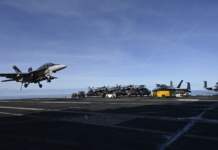
The Strait of Hormuz, through which roughly a fifth of the world’s oil supply passes, has become the conflict’s most volatile flashpoint. Washington imposed a naval blockade on all Iran-linked vessels transiting the waterway on April 13, and Trump has stated the blockade will remain in place until Tehran agrees to negotiate. Iran has responded by firing on ships attempting to pass through the strait, dramatically raising the risk of broader maritime confrontation.
At the core of the diplomatic impasse lies a fundamental disagreement over Iran’s nuclear programme. During the April 11 talks, US negotiators proposed a 20-year pause on Iranian uranium enrichment. Tehran countered with five years. Trump has since hardened his position, demanding that Iran cease all enrichment entirely and surrender its existing stockpile of enriched uranium — terms Iran has flatly rejected. Pakistan’s mediators are working to bridge that gap, with the goal of producing at minimum a memorandum of understanding that could extend the ceasefire and set parameters for further negotiations.
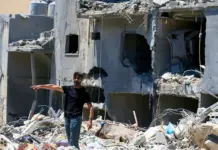
The conflict itself began on February 28, when US and Israeli forces launched coordinated strikes against Iran, triggering eight weeks of fighting that has reshaped the security architecture of the Middle East. The war has placed immense pressure on regional states, with Pakistan now occupying an unusual and delicate role as host to both delegations.
Time is running short. Vance is expected to arrive in Islamabad late Wednesday morning local time — hours after the ceasefire technically expires in the Middle East. Whether Iran’s delegation will be present at the table when he lands remains, as of Tuesday, an open question.