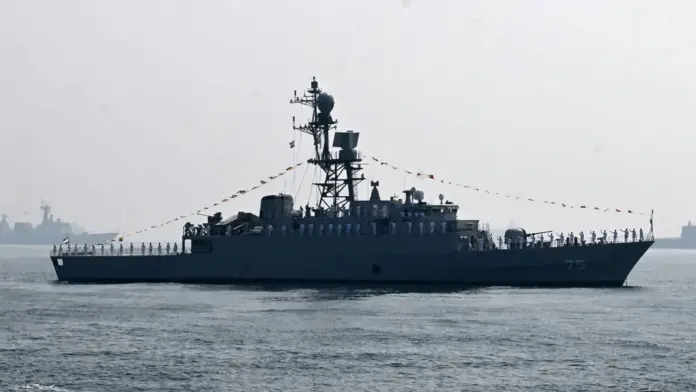
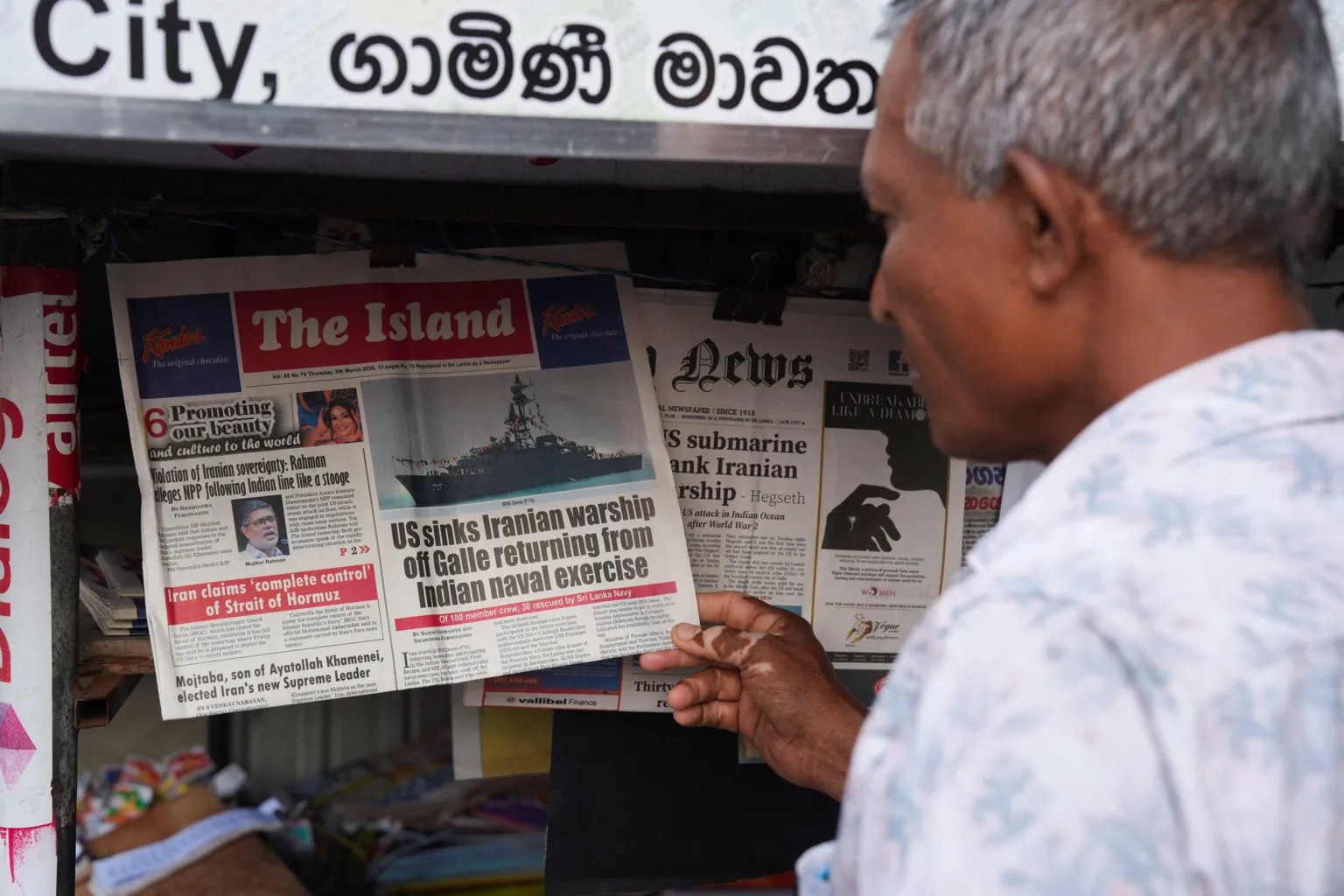
A United States submarine torpedoed the Iranian frigate IRIS Dena in the early hours of 4 March, sending the warship to the bottom of the Indian Ocean within minutes and killing 98 of the 130 sailors on board. Sri Lankan rescue teams recovered at least 87 bodies, while only 32 crew members survived the strike — one of the most lethal naval engagements in the region in decades.
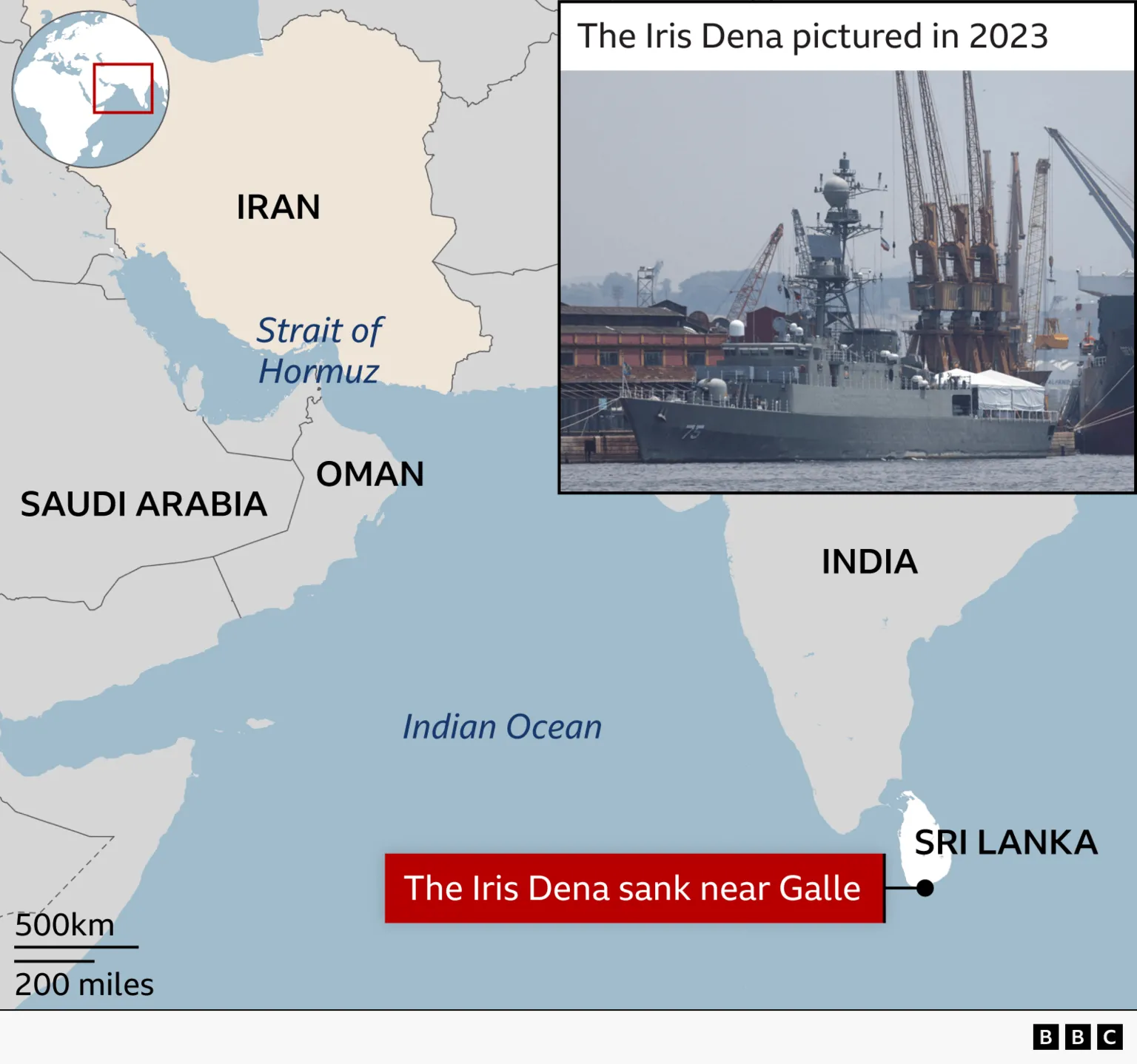
The attack occurred approximately 20 nautical miles west of Galle, in waters falling under Sri Lanka’s designated search-and-rescue zone. A distress call from the stricken vessel was received by the Sri Lanka Maritime Rescue Coordination Centre in Colombo in the early hours of the morning. Sri Lanka’s navy launched the initial rescue operation, with India subsequently deploying a long-range maritime patrol aircraft and naval vessels to assist the search effort.
The IRIS Dena sank within two to three minutes of being struck — a speed of destruction consistent with the weapon believed to have been used. Defence analysts assess that the submarine fired a single Mark-48 torpedo, a weapon capable of carrying approximately 650 pounds of high explosive, from a distance of three to four kilometres at around 05:30 local time. Video footage reviewed by analysts supports this assessment. The frigate, a Moudge-class vessel commissioned in 2021 and assigned to Iran’s Southern Fleet, had been designed to patrol strategic chokepoints including the Strait of Hormuz and the Gulf of Oman.
The timing and location of the attack carry particular diplomatic weight. Less than three weeks before the sinking, the Indian Navy had formally welcomed IRIS Dena to the port of Visakhapatnam on 17 February, where the ship participated in the International Fleet Review 2026 and Exercise Milan — a prestigious multinational gathering that drew representatives from 74 countries and 18 warships. Participating vessels departed Visakhapatnam on 21 February for the sea phase of the exercise, which concluded on 25 February. The Iranian frigate was transiting home when it was struck.
Iran’s Foreign Minister Abbas Araghchi condemned the attack in unequivocal terms, describing it as ‘an atrocity at sea’ and pointedly noting that IRIS Dena had recently been ‘a guest of India’s Navy.’ The framing was deliberate — an implicit appeal to New Delhi and the broader international community to register the diplomatic context in which the ship was operating when it was destroyed.
The sinking did not occur in isolation. US-Iran military hostilities had been under way since 28 February, and claims circulating in the days following the attack suggested that 17 Iranian naval vessels had already been destroyed before IRIS Dena was struck. At any given time, roughly a quarter of America’s submarine fleet — estimated at 65 to 70 vessels — is deployed at sea, giving the United States a persistent and largely invisible presence across the world’s oceans.
The geopolitical reverberations extended rapidly beyond the two belligerents. Indian Prime Minister Narendra Modi called broadly for ‘dialogue and diplomacy’ to resolve global conflicts but stopped short of directly addressing the sinking — a careful posture for a government that had hosted the Iranian vessel just days before the attack and maintains complex relationships with both Tehran and Washington. The attack took place in international waters beyond India’s jurisdiction, but the proximity to Indian shores and the recent naval hospitality extended to IRIS Dena placed New Delhi in an acutely uncomfortable position.

Sri Lanka, whose maritime rescue zone encompassed the site of the attack, found itself drawn further into the crisis the following day when its authorities took control of a second Iranian naval vessel off its coast after the ship suffered an engine failure — a development that raised immediate questions about whether the vessel had been damaged in related hostilities or was simply a casualty of mechanical misfortune.
The destruction of IRIS Dena marks a significant escalation in the naval dimension of the US-Iran conflict, bringing open warfare into waters that had previously remained outside the primary theatre of confrontation. For Iran, the loss of a modern frigate and nearly a hundred sailors in the Indian Ocean — far from the Persian Gulf — signals a dramatic geographic expansion of the conflict’s reach. For the region’s maritime powers, the episode underscores how rapidly a bilateral confrontation can transform shared sea lanes into contested and dangerous waters.