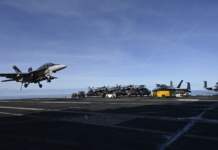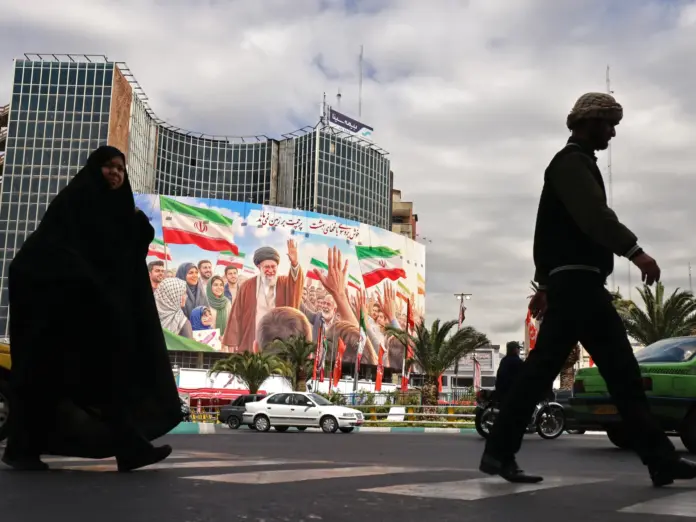
The Middle East crisis entered a dangerous new phase on Monday as the United States Navy seized an Iranian-flagged cargo ship in the Gulf of Oman, Iran accused Washington of shredding a ceasefire agreement, and a second round of high-stakes nuclear negotiations in Pakistan hung in the balance — all with a Wednesday deadline looming over the entire diplomatic effort.
The guided-missile destroyer USS Spruance intercepted the Touska, a nearly 900-foot-long Iranian container vessel, after US Marines boarded and took control of the ship. President Donald Trump announced the seizure on his Truth Social platform, claiming the Touska had been attempting to breach an American naval blockade imposed on Iranian ports since April 13. Trump said US forces disabled the vessel by blowing a hole in its engine room, and alleged the ship was already under US Treasury sanctions for prior illegal activity.
Tehran’s response was immediate and furious. Iran’s top joint military command, Khatam al-Anbiya, declared the seizure a direct violation of the ceasefire currently in force between the two sides. The Foreign Ministry’s spokesman, Esmaeil Baghaei, went further, stating that Washington had been violating the ceasefire from the very first day of its implementation. Iranian state media reported that Tehran was rejecting new peace talks entirely, citing the ongoing blockade and what officials described as threatening rhetoric from the Trump administration.
![Pakistani soldiers on patrol near the president's house in Islamabad, as the city prepares to host a second phase of peace talks, April 19, 2026 [Akhtar Soomro/Reuters]](https://world-tension.s3.us-east-2.amazonaws.com/articles/493/d4e5362a05794256bfe3c53fc2145436.webp)
The seizure was not an isolated incident. Iranian gunboats fired on vessels transiting the Strait of Hormuz on Saturday, targeting a French ship and a British freighter. French shipping giant CMA CGM confirmed that warning shots were fired at one of its vessels in the strait. Iran’s armed forces also turned back two tankers attempting to pass through the waterway on Sunday. Oil prices surged Monday morning as markets absorbed the renewed hostilities.
Despite the deteriorating atmosphere, Trump announced Sunday that his representatives were travelling to Islamabad for a second round of negotiations. The first round, held on April 11 at Pakistan’s Serena Hotel, lasted 21 hours and ended without agreement. Preparations for the follow-on talks were extensive: Islamabad’s Red Zone was sealed, thousands of additional police and paramilitary personnel flooded the capital, and at least four US government aircraft carrying communications equipment and motorcade support landed at the Nur Khan air force base in Rawalpindi. Both the Marriott and Serena hotels asked guests to vacate by Sunday afternoon.
The composition of the American delegation itself became a point of last-minute confusion. Trump initially indicated that Vice President JD Vance would not travel to Pakistan due to security concerns, but White House press secretary Karoline Leavitt subsequently confirmed that Vance would join the delegation alongside Special Envoy Steve Witkoff and presidential adviser Jared Kushner.
Iran’s participation, however, remained unconfirmed as of Monday. Pakistani Prime Minister Shehbaz Sharif spoke by phone with Iranian President Masoud Pezeshkian for approximately 45 minutes on Sunday, briefing him on recent diplomatic visits to Saudi Arabia, Qatar and Turkey. Whether that conversation produced any Iranian commitment to attend the talks was not disclosed. Turkey’s Foreign Minister Hakan Fidan expressed optimism Sunday that the two-week ceasefire would be extended beyond its Wednesday expiration, though the seizure of the Touska significantly complicated that prospect.
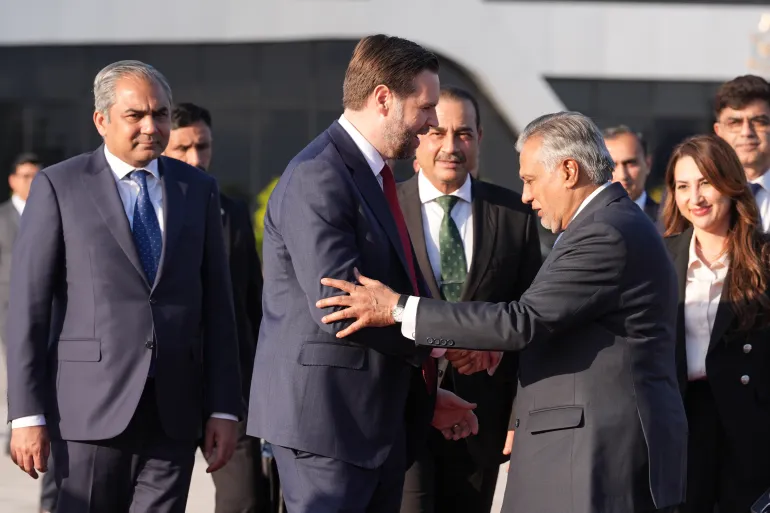
Trump, meanwhile, issued a stark warning to Tehran, threatening to destroy every power plant and every bridge in Iran if no deal is reached — language that drew no public response from Iranian officials but underscored the coercive framework Washington is applying to the negotiations.
On Sunday, Iran executed two men convicted of cooperating with Israel’s Mossad intelligence service, a move that added further tension to an already volatile day. The executions came as Argentine President Javier Milei, on his third visit to Israel since taking office, reaffirmed Buenos Aires’ support for the campaign against Iran. Argentina simultaneously designated Iran’s Revolutionary Guards as a terrorist organisation.
The crisis extended into Lebanon, where the situation remained fragile despite a separate 10-day ceasefire between Israel and Hezbollah. The Israeli military issued warnings Monday to residents in southern Lebanon not to move south of a specified line of villages. Defence Minister Israel Katz warned that the military would deploy full force if Israeli troops faced any threat from Hezbollah. A French peacekeeper was killed in Lebanon during the ceasefire period, and the Israeli army acknowledged the authenticity of an image showing a soldier striking a statue of Jesus Christ in southern Lebanon — an incident likely to inflame tensions with Christian communities in the region.
![The Serena Hotel is scheduled to host the anticipated next round of talks between the US and Iran [File: Sohail Shahzad/EPA]](https://world-tension.s3.us-east-2.amazonaws.com/articles/493/ee65d0f7e5d049a0b56a393a08034964.webp)
Lebanon’s military reopened a road and bridge between Nabatieh and Khardali damaged by earlier Israeli strikes, a small sign of reconstruction amid continued uncertainty. French President Emmanuel Macron is scheduled to meet Lebanese Prime Minister Nawaf Salam in Paris on Tuesday, as European powers seek to consolidate the fragile calm.
International flights from Iran’s Mashhad airport in the northeast resumed Monday, a modest indicator of partial normalisation. But with the ceasefire expiring in 48 hours, an Iranian ship in American hands, and Tehran publicly refusing to confirm its presence at the negotiating table, the window for diplomacy is narrowing rapidly.